

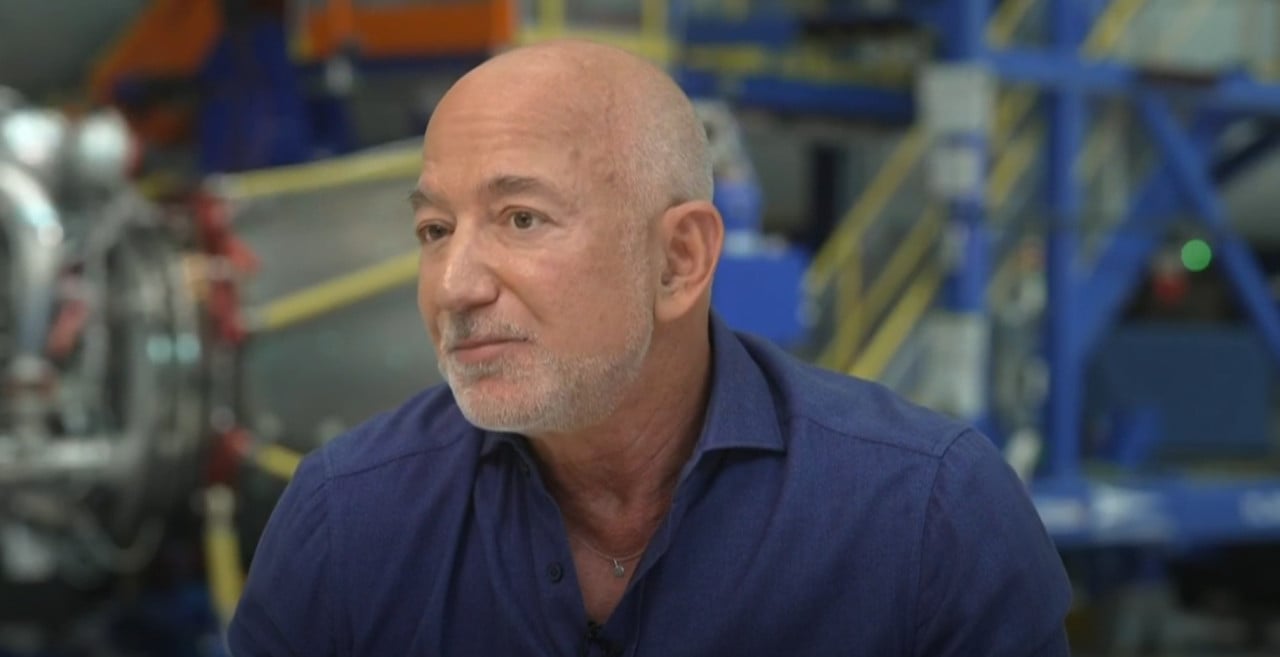
Jeff Bezos appeared in a live CNBC interview and, for the first time, spoke publicly about two things at once: the race among technology companies to build space-based data centers and his previously mysterious startup Prometheus. Bezos did not dispute that data centers will one day be built in orbit. He merely tempered the pace at which others are talking about them.
At the beginning of the year, Elon Musk said at the World Economic Forum in Davos that orbital data centers would be operational within two, or at most three, years. Google's Sundar Pichai is also moving toward space-based infrastructure.
Bezos agrees on the goal. In his view, space-based data centers make sense. The sun shines there continuously, with no clouds, no weather, and none of the cooling problems that are increasingly troubling technology companies on Earth. "These giant AI training clusters will be better located in space," Bezos said in Turin last fall. But they disagree on the timeline. "Some of the timelines we hear are very short. People are talking about two or three years. That's probably a little ambitious," Bezos said in an interview with CNBC.
What Is Slowing the Journey to Orbit
Bezos identified two specific obstacles. The first is chips. Modern artificial intelligence chips are extraordinarily expensive and consume enormous amounts of energy. Until their price falls, corporate budgets have no room for the costs associated with operating in space. The second obstacle is launch prices. Even with reusable rockets, the cost of putting hardware into orbit remains enormous.
It is not just about technology. Technology companies themselves, such as Google, Microsoft, Meta, and Amazon, face growing pressure on the power grids and water supplies they need to cool their data centers. All four companies have already signed an agreement with the White House to finance their own electricity generation. At the same time, they are signing nuclear power contracts. Under the right conditions, then, orbit appears to be the right path.
Bezos and His Projects
While Bezos is publicly tempering expectations, Blue Origin is already taking the necessary steps. In March, the company filed an application with the U.S. Federal Communications Commission outlining a plan to launch 51,600 data center satellites into low Earth orbit. The project was named Project Sunrise. The satellites are intended to operate as part of the TeraWave communications network. Blue Origin requested permission to begin deploying the TeraWave network in the fourth quarter of 2027.
Bezos also has further ambitions. He is working with NASA on a base on the Moon, and the plans there include producing solar cells directly from lunar rock.
Alongside the discussion about space, Bezos spoke publicly for the first time about his previously secret startup Prometheus. During the interview, host Andrew Ross Sorkin described it as a project focused on "AI robotics," at which point Bezos interrupted him. "It's a little premature to talk about it, but we have nothing to do with robotics," he said.
So what does Prometheus do? Bezos described it as a project developing an "artificial general engineer," meaning tools for designing next-generation physical objects. According to him, these tools "will be an enormous help to companies like Blue," as he referred to Blue Origin. At the same time, however, he emphasized that Prometheus deserves attention in its own right as a major standalone idea, not as part of Amazon or Blue Origin.
The startup was founded in November. Bezos co-founded it with Vikram Bajaj, a former Google X executive. Prometheus launched with $6.2 billion in initial funding. In April, Bloomberg reported that the company had closed another $10 billion round at a valuation of $38 billion, with JPMorgan and BlackRock among the investors. The total capital raised thus exceeded $16 billion less than six months after the company was founded. The Prometheus team comprises more than 120 employees recruited from OpenAI, xAI, DeepMind, Meta, and Nvidia. The company is headquartered in San Francisco and has offices in London and Zurich.
Bezos also mentioned that until now, he had funded Blue Origin entirely out of his own pocket, primarily by selling some of his Amazon shares. He now intends to change that. "We finally have sufficient visibility into our future," he said. "It's a good time to start thinking about the future."
The company has been through a difficult period. At the beginning of the year, the New Glenn rocket placed a communications satellite into the wrong orbit, the payload was destroyed, and questions remain about the rocket's reliability, especially in the context of its planned role in NASA's Artemis lunar program.


