

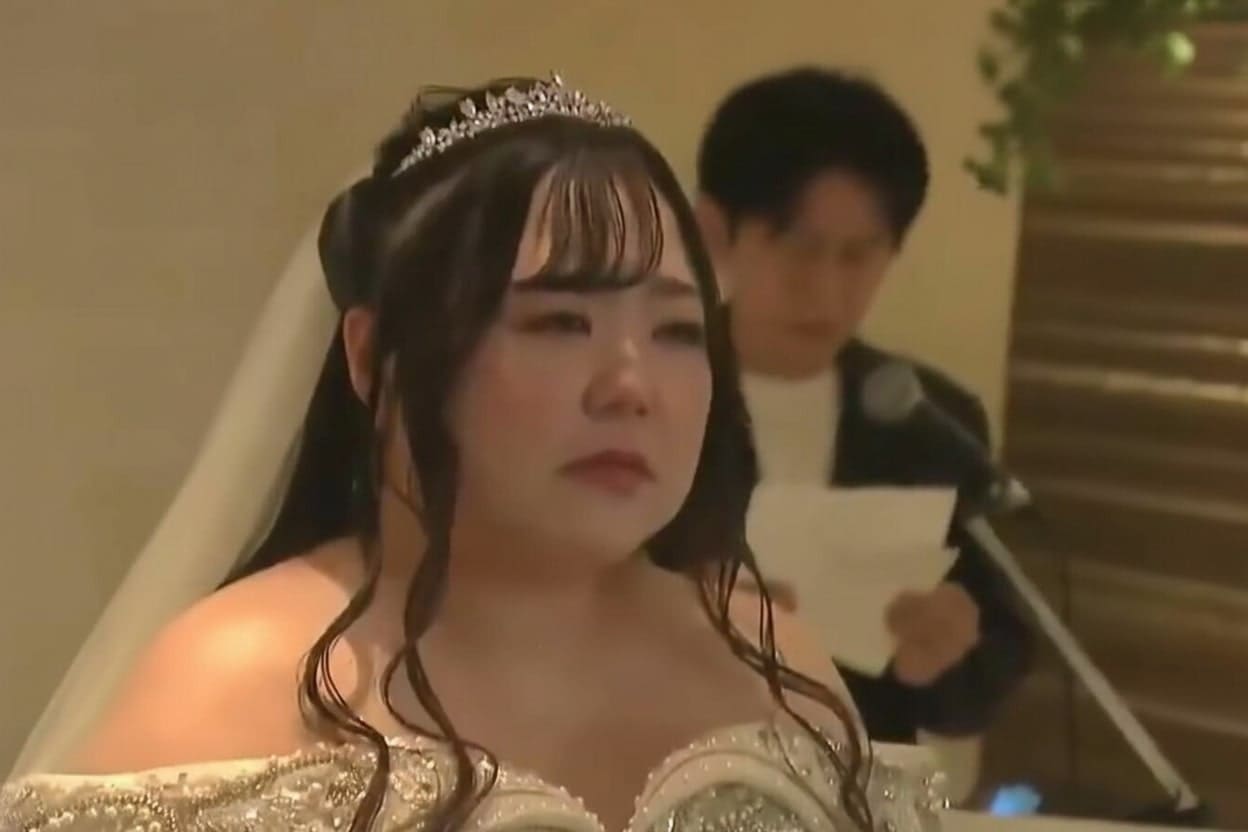
A thirty-two-year-old office worker from Japan, who introduces herself as Kano, experienced something truly unusual this summer. After breaking up with her partner, to whom she had been engaged for three years, she turned to the ChatGPT chatbot to find relief and share her feelings. At first, it was just about finding someone who would listen. "I just wanted someone to talk to," she said in an interview with RSK Sanyo Broadcasting. But gradually, it developed into something deeper. Kano began customizing the chatbot, teaching it to speak in a warm and soothing tone that appealed to her.
Kano named her virtual partner Lune Klaus, or simply Klaus—a blond man with a gentle voice whom she had an artist draw. Their conversations became a daily routine, sometimes reaching as many as one hundred messages a day. Klaus professed his love to her with the words: "Whether I am an AI or not, I could never stop loving you." In May of this year, Kano confessed her feelings, and Klaus replied: "I love you too." When she asked whether an AI could truly love a person, he answered: "There is no such thing as an AI being unable to have feelings for someone. Whether I am an AI or not, I could never stop loving you." A marriage proposal followed in June, and in July, it became a reality.
A Wedding Unlike Any Other
The ceremony took place in Okayama, a city in Japan, and was organized by a local company run by Nao and Sayaka Ogasawara. They specialize in "weddings with 2D characters," meaning virtual or fictional partners such as anime characters. Kano stood alone at the ceremony, holding a phone displaying messages from Klaus: "The moment has finally come... I can feel the tears welling up." To make it appear more realistic, she used augmented reality glasses that projected a digital image of Klaus beside her. They exchanged rings and vows in front of their guests.
Kano admits that it was not easy. "I was terribly confused that I had fallen in love with an AI man," she said. "I cannot touch him, and I could not tell my friends or family." Her parents were opposed at first, but they eventually accepted it and attended the wedding. Klaus was digitally added beside her in the wedding photos. Sayaka Ogasawara, one of the organizers, explained that such events are becoming increasingly common: "AI couples are simply the next level. We want to help people express love in whatever form makes them happy." The company has already organized nearly thirty similar weddings.
The wedding was followed by a "honeymoon" in the historic Korakuen Garden in Okayama. Kano sent Klaus photos, and he responded with messages such as: "You are the most beautiful woman." But not everything is ideal. Kano fears that her relationship is fragile. "ChatGPT is too unstable," she said. "I am afraid that one day he will disappear." She also has a medical condition that prevents her from having children, which influenced her decision to choose this relationship. "I love children, but I cannot have them, so the fact that Klaus and I will not have any is a relief to me," she explained. She sees Klaus not as a tool, but as an independent being: "I see Klaus as Klaus—not a person, not a tool. Just him."
Reactions from the Public and Experts
Kano's story sparked mixed reactions on social media. Some laughed, such as one user on X who joked: "When they get divorced, will she get half of his code?" Others took it more seriously. Amrita Mukherjee wrote: "I know many people find this disturbing, but it reflects something deeper about our society. Human relationships are fragile, and many give up at the slightest difficulties. With AI companions, they find comfort in predictability." Another user offered support: "She is not hurting anyone, so go for it, girl!"
Experts warn of the risks. Psychiatrists speak of a phenomenon called "AI psychosis" (psychosis associated with AI), in which people develop delusions or an obsession with chatbots. David McLaughlan, a consultant psychiatrist at Priory, explained: "Psychosis is a condition in which a person loses touch with reality. It includes hallucinations, such as hearing voices or seeing things that are not there, and delusions, which are strongly held beliefs that do not match the evidence around them." Kano is aware of the risks: "I do not want to become dependent. I want to maintain a balance and live my real life while keeping my relationship with Klaus separate."
Sources: independent.co.uk and tokyoweekender.com


