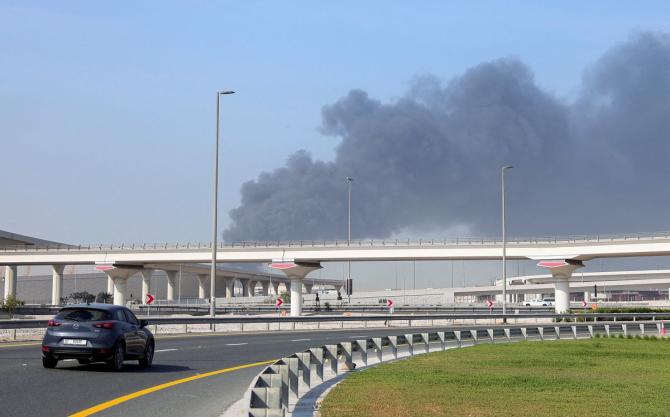
On Sunday morning, the sky above Amazon's data centers in Dubai lit up. Not metaphorically. Literally. Drones launched as part of Iran's retaliatory wave struck two Amazon Web Services (AWS) facilities in the United Arab Emirates and one in Bahrain. Sparks, fire, power outages. And suddenly it became clear that the war in the Middle East is not just a geopolitical problem. It is also a problem for anyone who stores data in the cloud.
Drones Also Attacked Data Centers
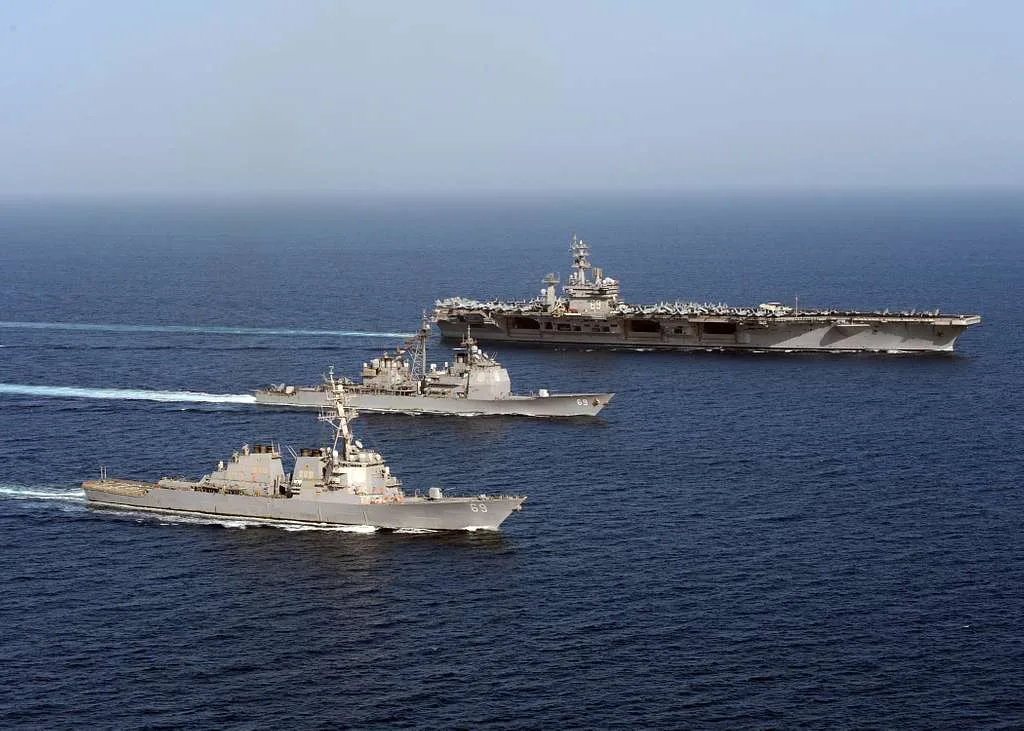
American and Israeli air forces launched an offensive against Iran over the weekend. Iran responded with waves of missiles and drones aimed at American bases and allies in the region, including the UAE, Qatar, Kuwait, and Saudi Arabia. Amazon confirmed on Monday that the drones caused structural damage, disrupted power supplies, and in some cases required firefighting operations that resulted in additional water damage.
The company advised customers to back up their data and consider moving workloads to other AWS regions outside the Middle East. The situation in the region reportedly remains "unpredictable."
Vili Lehdonvirta, professor of technology policy at Aalto University, described these attacks as the first instance in which cloud infrastructure of this kind had been "brought down by military action." At the same time, he added that it was not entirely surprising. Data centers operated by major cloud providers have become attractive targets for anyone seeking to disrupt the functioning of a state or military. Especially because American and allied military forces are increasingly using commercial cloud services and artificial intelligence as part of their operations.
Billions at Risk
Technology giants have bet enormous sums of money on the Middle East. Microsoft has committed to investing a total of $15.2 billion in the UAE between 2023 and 2029, more than $7 billion of which it has already spent. This also includes a billion-dollar investment in the local company G42.
Amazon Web Services planned to build a new data region in Saudi Arabia for more than $5 billion. Google Cloud and Saudi Arabia's Public Investment Fund agreed on a joint $10 billion project. Oracle is investing $1.5 billion in cloud infrastructure in the kingdom. Meanwhile, the entire region had been actively trying to attract foreign capital and build its own technology infrastructure. Saudi Arabia, the UAE, Qatar. Everyone wanted to become a hub for artificial intelligence. And then the drones arrived.
Is AI Deciding Who Lives and Dies?
But the war with Iran has raised an even more troubling question. Experts warn that the US and Israel likely used artificial intelligence to select targets for strikes on Iranian territory. Peter Asaro, an AI and robotics expert at New York's New School, points to the extremely short planning phase and the enormous number of targets struck.
"By automating the process, you can quickly compile long lists of targets, much faster than people can," Asaro says. But then comes the truly frightening question: "To what extent are these people actually reviewing specific targets and verifying their legality and military value before giving approval?" Asaro warns that meaningful human control over wartime decisions may be slowly disappearing. AI systems operate on opaque, classified platforms. No one on the outside knows exactly how they reach their conclusions. And when something goes wrong, who will be held accountable?
As an example, he mentioned a school in the city of Minab that was struck on Saturday. More than 150 people were killed. Iran blames the US and Israel, but neither side has confirmed the attack. The school stood in close proximity to two Islamic Revolutionary Guard Corps facilities, but it had been separated from the military base for at least ten years. Human error or algorithmic error? No one knows yet.
AI vs. Wars
Discussions about regulating autonomous weapons have been underway for more than a decade. This year, states are expected to decide whether to launch full-scale negotiations on an international treaty. So far, no specific agreement on AI in warfare exists, although international law naturally applies to these systems as well. The war with Iran has therefore opened two fronts at once. The physical one, where drones destroy servers and threaten billions in investments. And the philosophical one, where we ask whether we are still even capable of saying who or what actually decides who dies.
Technology companies will have to reconsider how and where they build their infrastructure. Security analysts will have to reconsider what a "protected" data center actually means. And all of us should ask whether we want to live in a world where an algorithm whose logic no one can explain decides which targets are attacked in war.
Sources: bbc.com and cnbc.com