

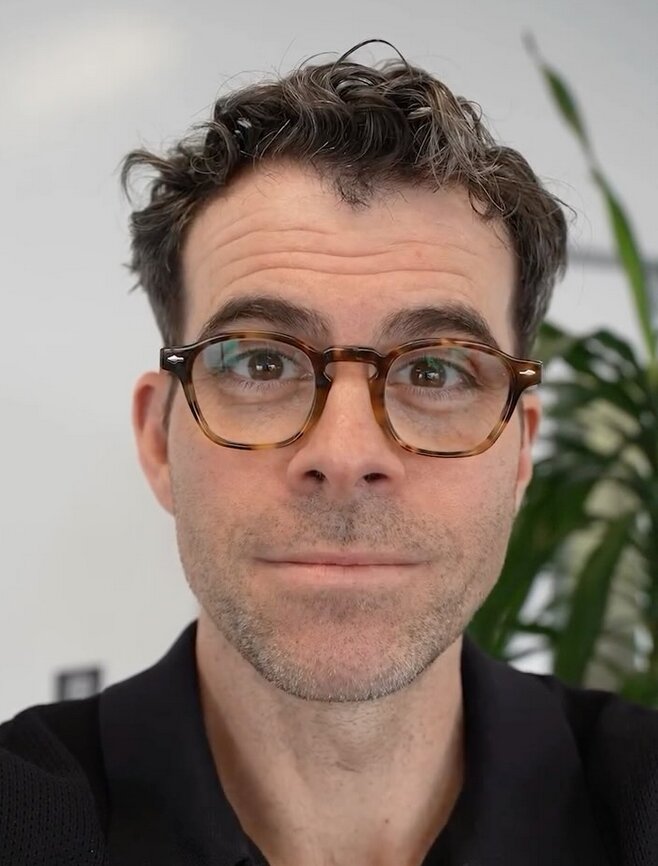
Adam Mosseri, head of Instagram, looks ahead to 2026 in his post on Threads. According to him, authenticity is becoming something that can be copied endlessly. Everything that made content creators important—the ability to be genuine, build connections, and have a voice that cannot be imitated—is now available to anyone with the right tools. Deepfakes are getting better. Artificial intelligence (AI) is creating photos and videos that cannot be distinguished from reality. Feeds are filling up with synthetic content. And according to Mosseri, something interesting is happening in that world.
Creators will become more important
Power has been shifting from institutions to individuals for years because the internet allows anyone with a good idea to find an audience. The cost of distributing information is practically zero, as Ben Thomson pointed out back in 2014. People can therefore bypass traditional channels, such as newspapers or television programs, and go directly to their audience. We see this with athletes who are more famous than their teams or journalists who are more trusted than their newsrooms.
The creator economy means that individuals—not publishers, media companies, or brands—have created a market for content made by people. Trust in institutions—governments, the media, corporations—has been declining for decades. In a world full of professionally produced content from institutions, we turn to content filmed by people we admire—that is, creators.
We have yet to fully experience synthetic content. We are now seeing an abundance of AI-generated content, and soon there will be more AI content than traditionally filmed content. We talk about “AI slop,” but there is plenty of amazing AI content without strange flaws such as twisted limbs or missing physics. Even high-quality AI content looks artificial: too polished, with people’s skin too smooth. That will change; more realistic AI content is coming.
Authenticity is becoming a scarce resource, which will increase demand for content from creators, not reduce it. Successful creators will be those who maintain their authenticity, whether they embrace new technologies or not. That is harder now because anyone can imitate authenticity. Instead of asking, “Can you create?” the question will become, “Can you create something that only you can create?” That will be the new frontier.
Raw aesthetics
AI makes perfection cheap, just as phone cameras make professional-looking images commonplace—both make aesthetics less valuable.
If you are over 25 and use Instagram, you probably picture it as a feed of square photos. The aesthetic is polished: lots of makeup, smoothed skin, high contrast, beautiful landscapes.
That feed is dead. People stopped sharing personal moments to the feed years ago. Stories are thriving because they allow people to share with followers without pressure, but photos and videos are mainly shared through direct messages (DMs). That content is unpolished: blurry photos, shaky videos of everyday life. Think photos of shoes or unflattering snapshots.
This raw aesthetic has seeped into public content and art. For example, @jordan_the_stallion8 records videos in front of his bathroom mirror.
Camera manufacturers are betting on the wrong aesthetic. They are competing to make everyone look like a professional photographer from the past. Every year, they boast about more megapixels and image processing. We romanticize the past. Portrait mode artificially blurs the background to imitate the soft effect of a prime lens. It looks good, and we want to look good.
But flattering images are cheap to produce and boring to consume. People want content that feels real. In the coming years, the raw aesthetic will accelerate. Smart creators will focus on deliberately unproduced and unflattering images of themselves. In a world where everything can be perfected, imperfection will become a signal. Rawness is not just a matter of taste—it is evidence. A defense. A way of saying: this is real because it is imperfect.
Skepticism as the default
Soon, AI content creation tools will improve and expand the range of aesthetics. We will move from Midjourney’s realistic style (an AI tool) or imitations of Wes Anderson and Studio Ghibli films to AI creating any aesthetic, including an imperfect one that looks authentic. Then we will focus more on who is saying something than on what is being said.
For most of my life, I could assume that most of the photos or videos I saw were accurate records of real moments. That is no longer true, and it will take people years to adjust.
Gradually, we will move from assuming that what we see is real to default skepticism when viewing media, and we will pay more attention to who is sharing it and why. That will be uncomfortable because we are genetically wired to believe our eyes. In the book Talking to Strangers, Malcolm Gladwell explains that as a species, we default to believing the truth because the evolutionary and social benefits of rapid communication and cooperation outweigh the occasional deception.
Social networks will be under pressure to label AI content. Large platforms will do this well, but it will become more difficult as AI gets better at imitating reality. Many people, including me, believe it will be more practical to fingerprint real media than fake media. Camera manufacturers could cryptographically sign images when they are captured, creating a chain of custody.
Labeling content as authentic or AI-generated is only part of the solution. The industry must provide more context about both media and accounts: where is the account located? When was it created? What else has it shared? This will help people decide what to believe.
So what comes next?
In a world of infinite abundance and infinite doubt, creators who maintain trust and signal authenticity—by being genuine, transparent, and consistent—will stand out.
For Instagram, this means changing quickly. We need to build the best creative tools, both AI and traditional, so creators can compete with AI content. Clearly label AI content and work with manufacturers to verify authenticity at the point of capture—fingerprint real media rather than chasing fake media. Make trust signals about who is sharing more visible so people can decide whom to trust. And improve how originality is assessed, but algorithmic transparency and control belong in another article.


