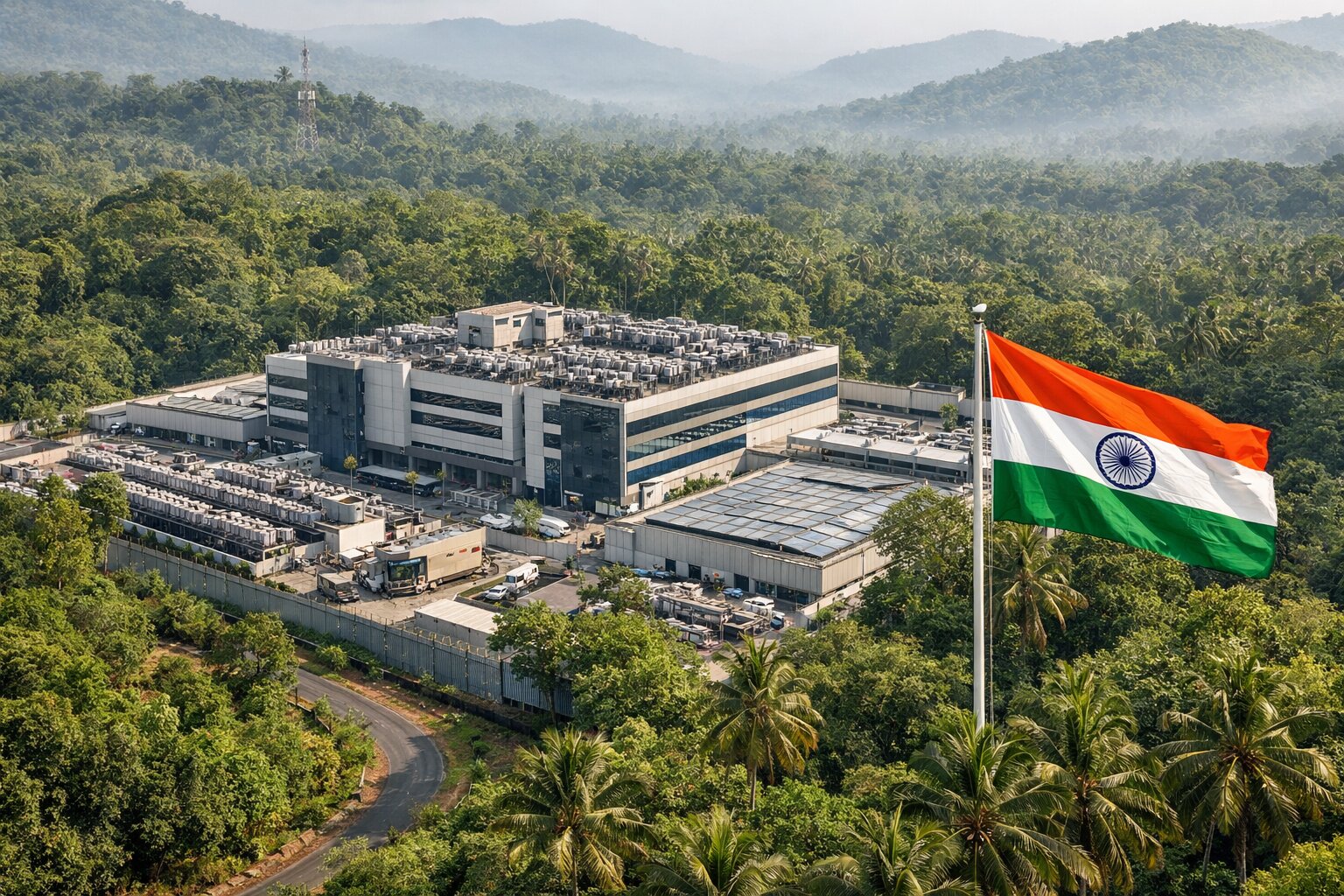
India has announced zero taxation on cloud service income until 2047 for foreign providers that run their AI workloads from Indian data centers. The offer was unveiled by Finance Minister Nirmala Sitharaman during the presentation of the country's annual budget. The condition is that the services must be sold to customers outside India, while sales to Indian customers must be conducted through locally registered resellers and will be taxed according to local rules.
The budget also proposes a 15% safe harbor margin for Indian data center operators providing services to related foreign entities. The measure comes as U.S. technology companies such as Amazon, Google, and Microsoft race to expand data center capacity worldwide due to growing demand for AI infrastructure.
Major investments in AI
India is becoming an increasingly attractive destination for new investment in computing infrastructure. The country offers a large pool of engineering talent and growing demand for cloud services, positioning it as a key alternative to the U.S., Europe, and parts of Asia.
In October, Google announced an investment of $15 billion (approximately CZK 360 billion) to build an AI hub and expand data center infrastructure in India. This is the company's largest commitment in the country, following an earlier $10 billion commitment (about CZK 240 billion) made in 2020. In December, Microsoft added plans to invest $17.5 billion (around CZK 420 billion) by 2029 to expand its AI and cloud presence, funding new data centers, infrastructure, and training programs.
Amazon has also accelerated its spending, announcing in December that it would invest an additional $35 billion (approximately CZK 840 billion) in India by 2030, bringing its total planned commitment to about $75 billion (CZK 1.8 trillion) as it expands its retail and cloud operations.
Domestic data center sector is also growing
India's domestic data center sector is also preparing to meet global demand. In November, Digital Connexion, a joint venture backed by Reliance Industries, Brookfield Asset Management, and Digital Realty Trust, announced an investment of $11 billion (about CZK 264 billion) by 2030 to develop a 1-gigawatt AI data center in the southern state of Andhra Pradesh. The project, covering approximately 162 hectares in Visakhapatnam, is among the largest announced in India.
Separately, Adani Group said in December that it plans to invest up to $5 billion (around CZK 120 billion) jointly with Google in an AI data center project in the country.
Expanding capacity
Despite the ambitious plans, expanding data center capacity in India may prove difficult. Unreliable power availability, high electricity costs, and water shortages are key constraints for energy-intensive AI workloads. These obstacles could slow construction and increase operating costs for cloud service providers.
Rohit Kumar, founding partner at New Delhi-based Quantum Hub, a public policy and technology consulting firm, said: "The data center announcements signal that they are regarded as a strategic business sector, not merely as supporting infrastructure." He added that this push is likely to attract more private investment and strengthen India's position as a regional data and computing hub, although obstacles remain in power availability, access to land, and state-level permitting.
Sagar Vishnoi, co-founder and director of Noida-based think tank Future Shift Labs, said that India's data center power capacity is expected to exceed 2 gigawatts by 2026, up from just over 1 gigawatt today, and could expand more than fivefold to over 8 gigawatts by 2030, driven by capital investment exceeding $30 billion (about CZK 720 billion).
However, Vishnoi noted that allowing foreign cloud companies to earn tax-free profits until 2047 reflects a "strategic bet on global Big Tech companies," even though India could produce its own technology champions over the next two decades. He added that routing services to Indian users through reseller entities could leave smaller domestic players competing for thin margins rather than receiving comparable incentives.
Measures in electronics and semiconductors
The federal budget also strengthened incentives to deepen India's role in electronics and semiconductor manufacturing. The federal government will launch the second phase of the India Semiconductor Mission, focused on manufacturing equipment and materials, developing domestic chip intellectual property, and strengthening supply chains, the finance minister said. In addition, the Indian government increased the budget for the Electronics Component Manufacturing Scheme to 400 billion rupees (approximately CZK 105 billion) from 229.19 billion rupees (about CZK 60 billion), after the program launched in April 2025 attracted twice as much investment as its original target.
The budget also proposed a five-year tax exemption beginning in April for foreign companies supplying equipment and tools to contract electronics manufacturers operating in customs zones. The change is likely to benefit companies including Apple, which relies heavily on contract manufacturing in India.
Source: techrepublic.com