Canada’s Ideogram released its new 4.6 model on November 19, just seven weeks after version 4.5. It once again focuses on precise edits that change only what the user wants while leaving everything else unchanged. However, it now works directly in 4K resolution, preserves colors and materials more faithfully, and, according to the company, eliminates the artificial look that often gives away AI-generated content.
The new version is a powerful tool for both creation and editing, with an emphasis on precise control. The user makes one edit, reviews the result, and then continues working on the same image.
What’s new in version 4.6
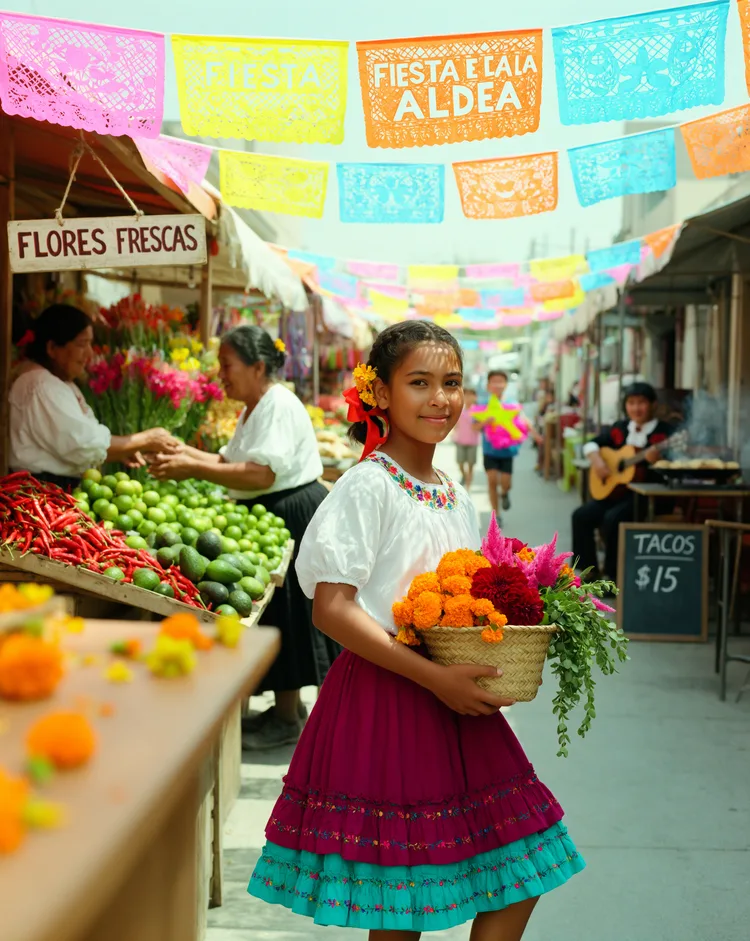
The most visible new feature is the resolution. The model creates images directly in 4K, up to 4096 by 4096 pixels, without using any additional upscaling. Every detail, from skin to fabric texture, is therefore created at full size from the outset. The developers say they worked hard to eliminate smooth, seemingly retouched skin. Portraits are intended to feature visible pores, fine wrinkles, and natural texture.
The second area is editing precision. Ideogram promises significantly less pixel shifting outside the edited area and much more accurate colors. The company compared the new model with version 4.5 across five types of tasks and tracked how often the system delivered a usable result. The biggest improvement came when recoloring an object according to a brand’s exact color code, where the success rate rose from 46 to 83 percent. Preserving a person’s likeness in a new scene improved from 69 to 85 percent, fixing a minor flaw in a product photo from 61 to 86 percent, and editing product images from 66 to 88 percent. Changes restricted solely to a masked area improved from 82 to 90 percent.
According to the company, the tool also excels at turning sketches into finished visuals and attempts to remain as faithful to the drawing as possible. Ideogram is targeting it primarily at e-commerce and product photography, but it is also useful for trying different materials and product finishes, changing a character’s clothing, altering the setting, or replacing text in finished graphics.
In the Rapidata leaderboard, which compares generators across a series of consecutive edits, Ideogram 4.6 took first place with 1,892 points. Version 4.5 finished just behind it, followed by Seedream 5.5 and FLUX 3 Image.
How to use the model and how much it costs
In the Ideogram app, simply upload a photo, select Ideogram 4.6 instead of automatic mode, describe a single change, and check the price in credits on the generation button before starting. The finished result can then serve as the starting point for the next step. The new version is being rolled out to accounts gradually, so not everyone may see it yet.
Developers have two options in the API. Precise editing changes only part of an existing image, preserves its dimensions, and can optionally accept a mask defining the area to be edited. The second option is used to create new visuals or make edits using up to five reference images. Four quality levels are available, ranging from very low to high.
The price depends on the quality, resolution, and whether the image is being created or edited. The cheapest option costs less than one cent but only works up to 2K. A new high-quality visual costs 10 cents in 2K and 20 cents in 4K. High-quality editing costs 22 cents in 2K and 60 cents in 4K. Credits in the app are calculated separately and are not converted to API pricing.
In addition to the app and API, the new model is also available through partner platforms, including Leonardo, Runway, fal, and ComfyUI. Under Ideogram’s terms, the results may be used commercially, but the user is responsible for holding the rights to the source materials. The company recommends saving the original, the prompt, and selected outputs so that the changes made to the work can be traced later.

Where the new model falls short
Even the new version is not without flaws, and Ideogram acknowledges this. According to the company, results depend on both the source image and the prompt, so it advises checking text, faces, colors, and product details after every edit, especially during longer sequences of changes.
An independent analysis also gives reason for caution. Its lead over version 4.5 in the Rapidata leaderboard is only 26 points, while the margins of error for both results overlap. The chart therefore does not show that the new model is clearly better than its predecessor. Moreover, the leaderboard measures only one type of task for which Ideogram specifically designed the system, and the chart was published by the company itself. The percentage comparison with version 4.5 comes from its own tests, and independent verification of the claimed reduction in pixel shifting is still lacking. By comparison, the previous generation ranked only 23rd in Artificial Analysis’s image-editing evaluation.
A problem also appeared with text, an area in which Ideogram takes pride. In one of the examples used by the creators to introduce the model, the inscription had broken down into nonsensical words. Questions also remain about other details. It is unclear how 4K performs at different aspect ratios, and the company did not mention a watermark or any other labeling for works created with artificial intelligence.
Although Ideogram announced that it would release an open version of the 4.6 series, it did not provide a date, license, or model size. Meanwhile, it will skip the previously promised open version of 4.5.
Ideogram’s history
Ideogram was founded in 2023 by researchers from Google Brain and the University of Toronto. The company is led by co-founder Mohammad Norouzi, and its goal is to help people become more creative. It is headquartered in Toronto and also has an office in San Francisco.
The company first emerged on August 22, 2023, and one week later made its first generator, version 0.1, available to everyone free of charge. It became known for producing legible text in images, something other tools had long struggled with. Version 3.0, released in March 2025, could generate both a photorealistic image and legible text in a single step, and to this day it remains the only one to offer preset styles, style references, and color palettes. Ideogram 4.0 arrived in June 2026 as the company’s first model with openly available weights, although they cannot be used commercially. It supports dense text in various languages, the placement of objects and text using bounding boxes, and 2K output. Version 4.5, focused on precise editing, arrived at the end of September, followed in October by Ideogram Vector, which creates editable vector graphics in SVG format.
Source: ideogram.ai and explainx.ai