

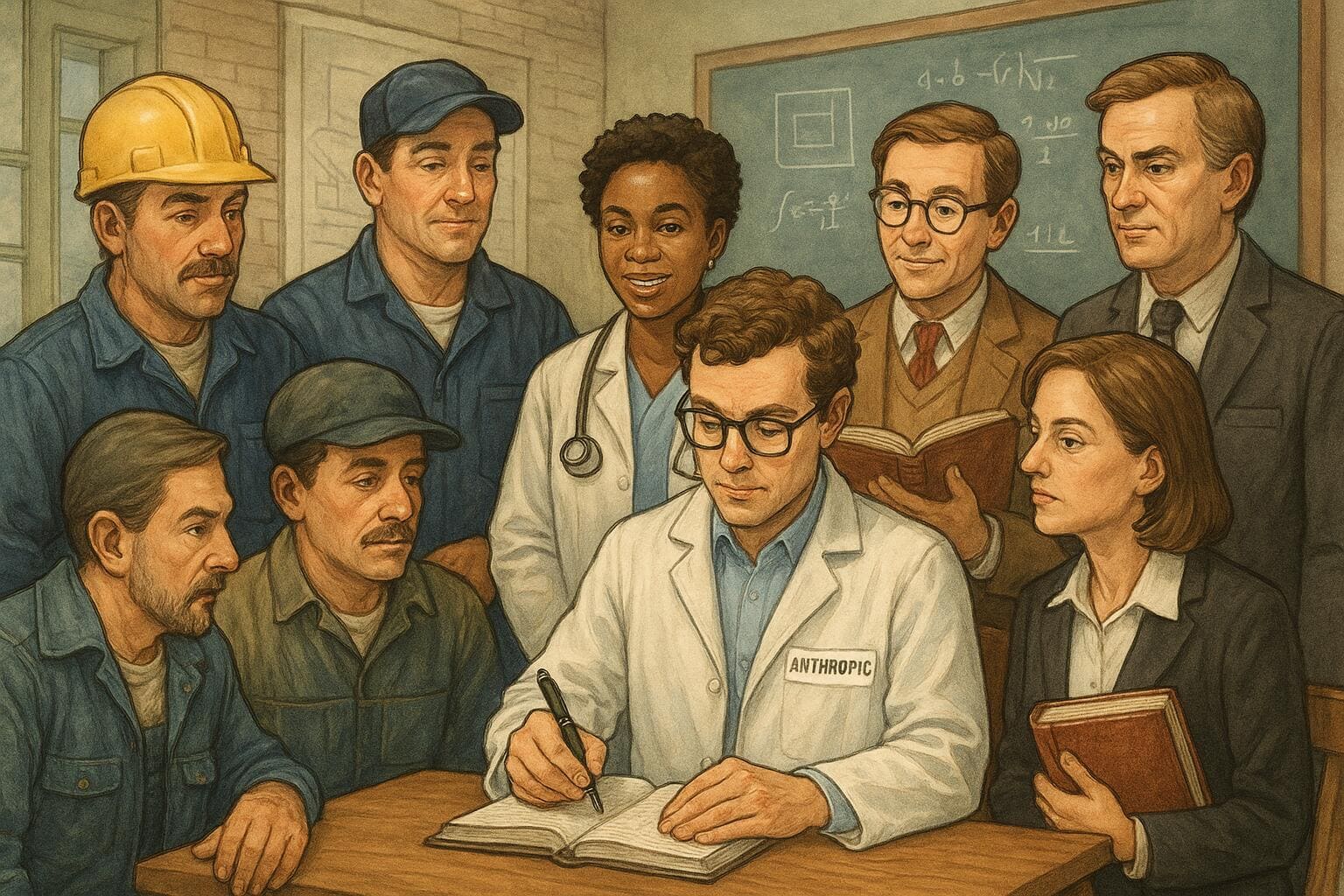
Anthropic has introduced a new tool called Anthropic Interviewer. This artificial intelligence (AI)-powered system conducted 1,250 in-depth interviews with professionals from various fields. The goal was to find out how people use AI at work, what benefits it brings, and what concerns it raises. The interviews took place via the Claude.ai platform and lasted 10 to 15 minutes. Participants were divided into three groups: 1,000 general workers, 125 creatives, and 125 scientists. The interview data was analyzed by both AI and human researchers, and Anthropic published it for further study.
Productivity and Social Stigma in Everyday Work
Among general workers, most of whom worked in education, computer science, and the arts, 86% reported saving time thanks to AI. 65% of respondents said that AI improves the quality of their work. People described AI as a tool that helps with routine tasks such as writing emails or analyzing data. One fact-checker said: "A colleague recently said that he hates AI, and I said nothing. I don't tell anyone about my workflow because I know how people view AI."
Nevertheless, 69% mentioned social stigma—the fear of being judged by colleagues. Regarding the future, 41% feel secure because of their human skills, but 55% are concerned about AI's impact on employment. A quarter of them set boundaries, such as teachers writing their own lesson plans. Another quarter are shifting their roles toward overseeing AI. Emotions expressed in the interviews showed high satisfaction, but also frustration, particularly in fields such as education or sales.
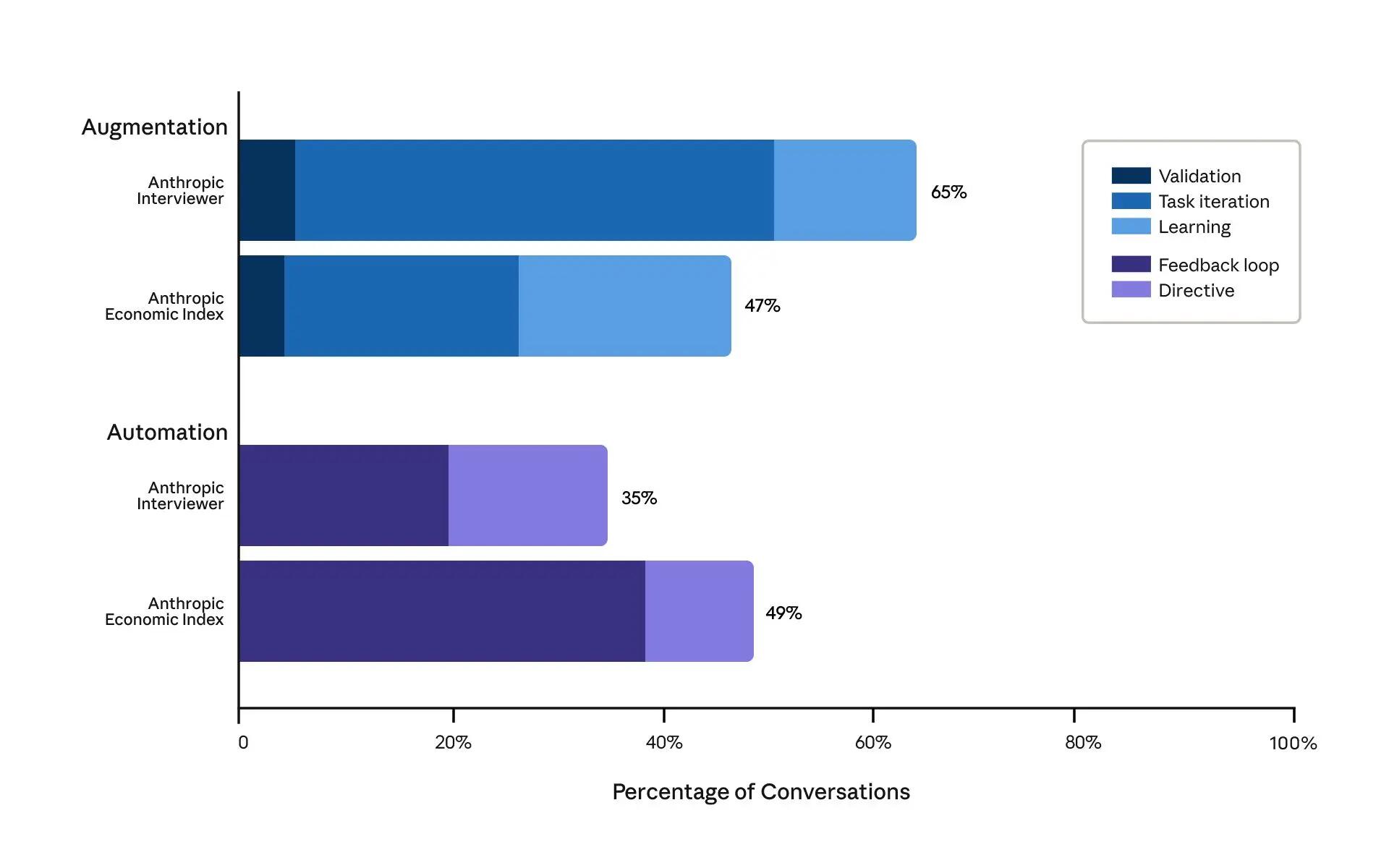
The interviews revealed a gap between what people say and how they actually use AI. 65% described AI as augmentation (enhancement) that helps them think or write, while 35% saw it as task automation. According to data from Claude, however, the balance appears more even: 47% augmentation and 49% automation. Many people, 48%, plan to move into roles where they will oversee AI instead of performing the work directly. A pastor said: "AI saves me time on administrative work so I can focus on people," but emphasized the need for boundaries to avoid becoming dependent on it.
Creatives: Speed Versus Economic Risk
Among creatives, mainly writers (48%) and visual artists (21%), 97% reported saving time and 68% reported better work quality. A novelist said: "I can write faster because research isn't as demanding." A web content writer increased output from 2,000 to more than 5,000 words per day. A photographer shortened the delivery time from 12 to 3 weeks thanks to AI editing.
But 70% try to hide their use of AI because of the stigma. A cartographer said: "I don't want my brand to be associated with AI and its stigma." Economic concerns are strong—a voice actor mentioned that some voice-acting sectors have "virtually disappeared because of AI." A composer fears that platforms will generate music endlessly and cheaply. A creative director admitted: "My advantage is another creator's loss. The photographer I used to pay CZK 46,000 per day will no longer get the job."
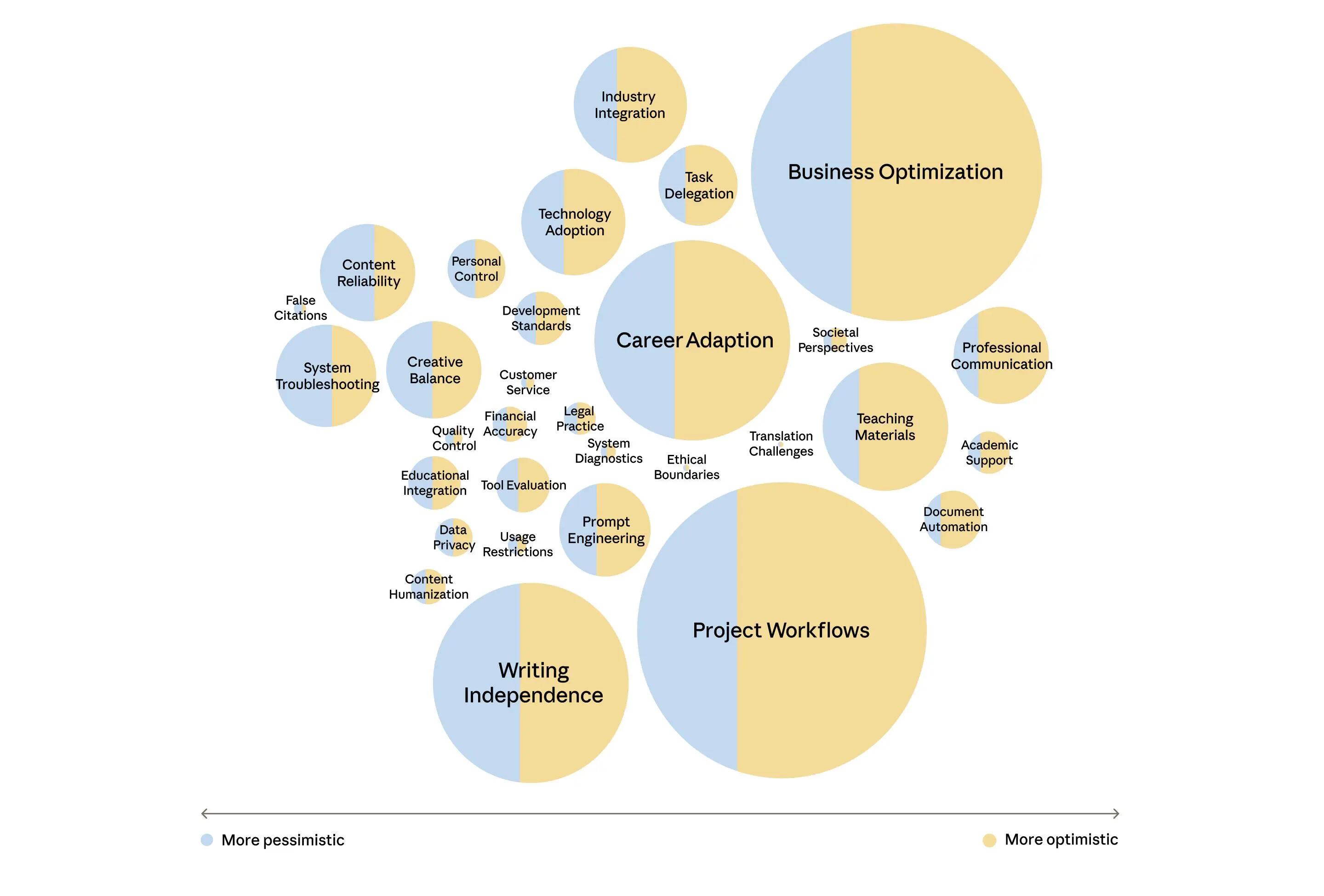
Everyone wants control, but the boundaries are becoming blurred. An artist said: "AI drives 60% of the concepts; I only provide guidance." Emotions show high satisfaction among game developers, but frustration among designers, with low trust across fields.
Scientists: A Desire for Partnership, but Distrust
Scientists in physics, chemistry, and other fields (more than 50 disciplines) use AI for literature reviews, coding, and writing, but not for hypotheses or experiments. 79% mentioned distrust due to errors, and 27% cited technical limitations. A security researcher said: "If I have to check everything, it defeats the purpose." A mathematician added that verification takes just as much time.
Unlike creatives, scientists are not afraid of losing their jobs—they emphasize tacit knowledge, such as color changes in bacteria, that is not documented. A microbiologist said: "A person has to see the differences in color; they aren't written down anywhere." Safety rules prevent its use in sensitive areas.
Nevertheless, 91% want more assistance, especially with data and ideas. A medical scientist said: "I would like AI that generates hypotheses or finds hidden relationships." Emotions show satisfaction, but also frustration among physicists and data scientists, along with low trust.
Anthropic plans further studies with institutions, teachers, and others. The tool will track changes over time.


