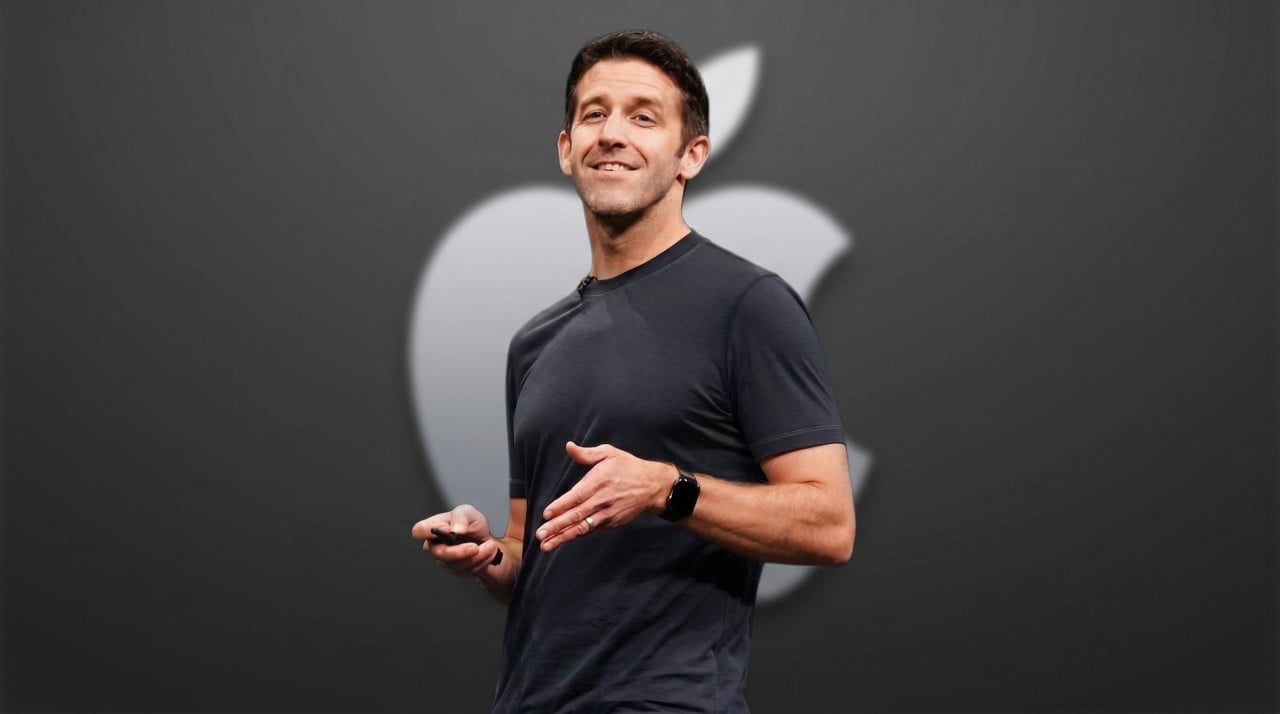
Tim Cook, one of the most successful corporate executives of recent decades, announced that he will hand over the reins on September 1. He will be succeeded by John Ternus, a 51-year-old engineer and head of hardware engineering who has spent 25 years at Apple. Cook will move into the role of executive chairman of the board. He will not disappear entirely, but the era in which he took the company from a valuation of roughly $300 billion to $4 trillion is coming to an end.
Ternus is not a household name. Unlike Cook or Steve Jobs, he has not appeared on stage at every opportunity. Nevertheless, he is behind the products that have defined Apple over the past decade. He oversaw the transition of Macs from Intel processors to Apple's own Apple Silicon chips, the creation of AirPods, and the development of the iPhone Air and the affordable MacBook Neo. Cook described him as someone with "the mind of an engineer, the soul of an innovator, and the heart of a leader."
A Man Obsessed with Perfection
To understand who Ternus is, one need only hear an anecdote he shared with University of Pennsylvania graduates in 2024. Early in his career, he spent a late night arguing with a supplier over the grooves on a screw installed on the back of a monitor. Customers would practically never see it. But Ternus noticed that the screw had 35 grooves instead of the specified 25. "If you spend that much time on something, you should give it your best," he told the students.
This obsession with detail has followed him throughout his career. During one interview, Reuters captured him holding a voice recorder, turning it over and examining every button. Analysts say he is beloved at Apple. "All the executives I know speak of him with great respect," confirmed Ben Bajarin of Creative Strategies.
AI: The Biggest Weakness and the Biggest Opportunity
And now to what awaits Ternus. Apple is a company with a market capitalization of $4 trillion, more than 1.5 billion active iPhones, and a services division that generates over $110 billion annually. Yet it has found itself in a position that would have been unthinkable just five years ago: it is lagging behind its rivals in the artificial intelligence race.
Siri, the voice assistant Apple introduced as a breakthrough, is now used primarily to set alarms or check the weather. The planned upgraded version is running into internal problems, as Bloomberg reported. Instead of relying on its own models, Apple has opted to partner with Google and its Gemini, as well as OpenAI and ChatGPT. But Apple cannot watch the AI era from the sidelines; Ternus must finally get its AI strategy right.
The question is what that actually means. While Microsoft, Google, and Meta are pouring hundreds of billions of dollars into AI each year, Apple has so far remained cautious. Ternus himself clearly articulated his position in an interview with Tom's Guide: "We never think about how to introduce a technology. We always think about how to use technology to introduce a great product."
This philosophical grounding could be either an accelerator or a brake. It depends on how quickly the world around Apple is moving.
Hardware Is the Gateway to the AI World
Analysts at CNN and Reuters see a hidden message in Ternus's appointment: Apple is betting that hardware, not software, will be the backbone of the AI experience. Ternus's deep involvement in chip and device development makes him the ideal architect of this approach. "Artificial intelligence models will run on their cutting-edge hardware, which has no equal on the market," Gil Luria of D.A. Davidson told CNBC.
Meanwhile, Bloomberg reported that Apple is working on Siri-enabled glasses, an AI pendant, and AirPods with cameras. Who better to lead these projects than someone who has spent a quarter of a century figuring out how to package technology in physical form? Moreover, the first foldable iPhone is expected in September, likely the first major product launch directly under Ternus's leadership.
Geopolitics, the iPhone, and More
But Ternus is not taking on only a technological challenge. Apple is a company deeply entangled in global politics. China is its third-largest market and also the place where most iPhones are made. Donald Trump has repeatedly called for manufacturing to return to the United States. The European Union is putting pressure on App Store policies. In April, Iran's Revolutionary Guard published a list of targets that included the data centers of technology giants.
Cook managed these relationships with diplomatic ease, albeit with compromises that drew criticism. Ternus will take office at a time when maintaining this balance will be more difficult than ever. Analyst Thomas Husson says Apple must also stop being so dependent on the iPhone, which accounts for more than 50 percent of last year's $416 billion in revenue. The saturated smartphone market offers no room for endless growth.
Ternus is taking over a company that is healthy, strong, and globally established. But he is taking it over at a time when the technology world is being reshaped at a pace to which Apple has not previously been accustomed to responding.