

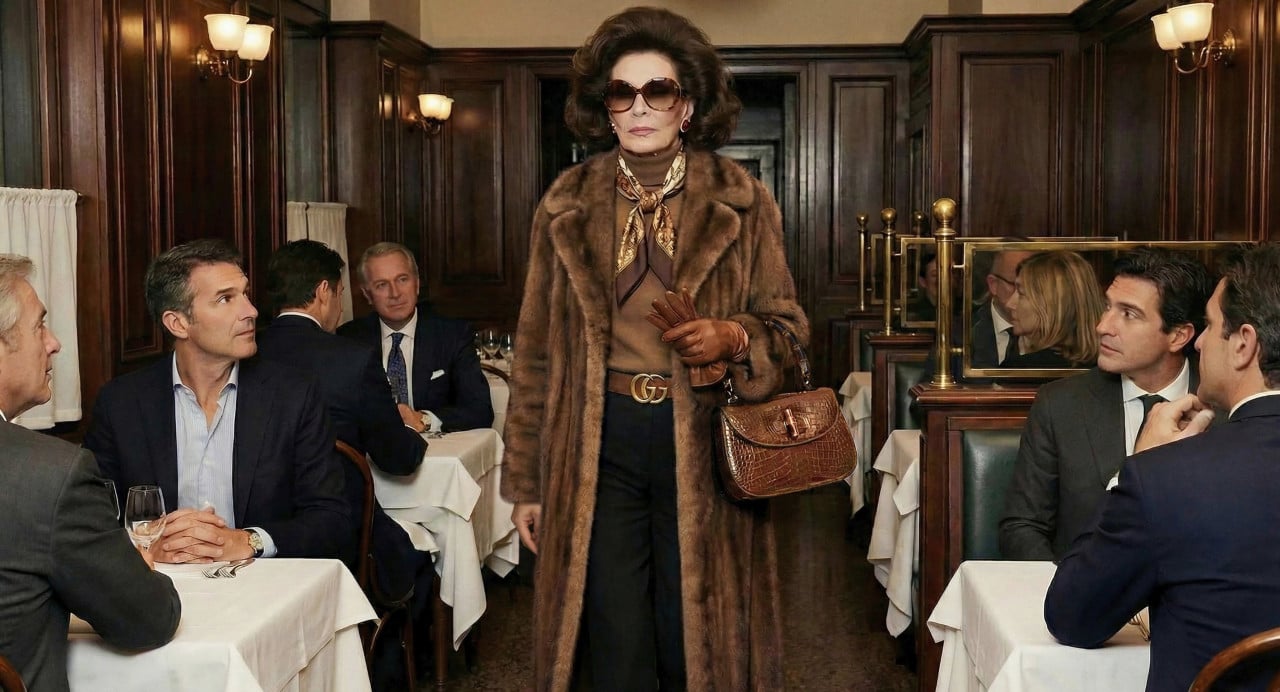
Gucci posted a series of promotional images for its Primavera collection on social media. The campaign was intended to attract attention ahead of new creative director Demna Gvasalia's first show in Milan. But instead of enthusiasm, a storm erupted. The images bore a clear label: "Created with artificial intelligence." And the internet immediately split into two camps.
The images showed a woman in a fur coat walking through a restaurant, a pair of models beneath the night sky, a sports car, and legs emerging from a vehicle. Visually, there was nothing shocking. Nevertheless, the comments began piling up at a speed Gucci probably did not expect.
Devastating criticism
Reactions on Instagram and X (formerly Twitter) were blunt and, at times, quite harsh. "Craftsmanship reduced to a marketing story," one user wrote. Another declared that AI makes Gucci look cheaper than the American discount chain TJ Maxx. Some compared the visuals to graphics from the upcoming video game GTA 6. One comment that quickly spread read: "Sad times when Gucci can't find a real Milanese grandmother to wear an outfit from 1976."
However, critics were not attacking only the aesthetics. They were attacking the symbolism. Gucci has long presented itself as a celebration of Italian craftsmanship and human creativity. Many therefore saw the use of an AI image generator as a direct contradiction of what the brand claims to represent. The derogatory term "AI slop" (roughly meaning "AI trash") became the most common phrase in the discussions.
And then there is one more argument that fans repeatedly mentioned: Gucci handbags cost between $850 and $10,000. Cutting costs on an advertising campaign by using AI at those prices? It simply does not look good.
PRIMAVERA
— gucci (@gucci) February 25, 2026
February 27
2 p.m. CET#GucciPrimavera
Created with AI pic.twitter.com/VKUBxkUm2w
Deliberate provocation or cost-cutting?
Branding experts, however, disagree that this was merely a mistake. Blanca Zugaza Escribano, a luxury fashion strategy consultant at Metyis, says Gucci's decision was probably driven by creative intent, not an effort to save money. According to her, it is about "positioning Gucci at the intersection of fashion, art, and technology."
Photographer Tati Bruening, who has more than 2.4 million followers on TikTok, offered an interesting perspective. He is not a fan of AI in fashion himself, but acknowledged that the campaign may not have been intended as a display of luxury at all. "I think this campaign wasn't necessarily created to reflect luxury, but to make a statement about what luxury actually is," he told the BBC.
It could be deliberate. Under Demna Gvasalia's leadership, Gucci is entering a new era. And what better way to introduce a new creative director than with a controversy that shakes up the entire fashion industry?

Designer brands and AI
Gucci has been experimenting with artificial intelligence for some time. It previously collaborated with digital artists on visuals that were later sold as NFTs through Christie's auction house. Last December, it released an AI video in which a model walks down the runway while photographers behind her literally fall over one another. And in early February 2026, it launched an interactive AI lens in collaboration with Snapchat that allowed users to become one of the fictional characters from the "La Famiglia" collection.
Gucci is far from the only one. Valentino faced similar criticism in December after launching an AI campaign for its DeVain handbag. H&M is testing digital clones of models. The fashion industry as a whole is searching for where the boundaries lie.
Matthew Drinkwater of the Fashion Innovation Agency at the London College of Fashion puts it clearly: luxury has traditionally been built on craftsmanship, heritage, and human stories. If AI replaces those very things, it undermines the foundation on which luxury brands build their appeal. Elaine Parr of IBM adds that the luxury market is going through a difficult period. In 2025, Gucci recorded a 22% decline in sales within the Kering group. The pressure to remain visible and relevant is enormous. But that is precisely why every move is under scrutiny.
Can Gucci convince the world that AI is part of its artistic vision and not merely a cheap shortcut? The Primavera show in Milan on February 27 may have provided the answer.


