

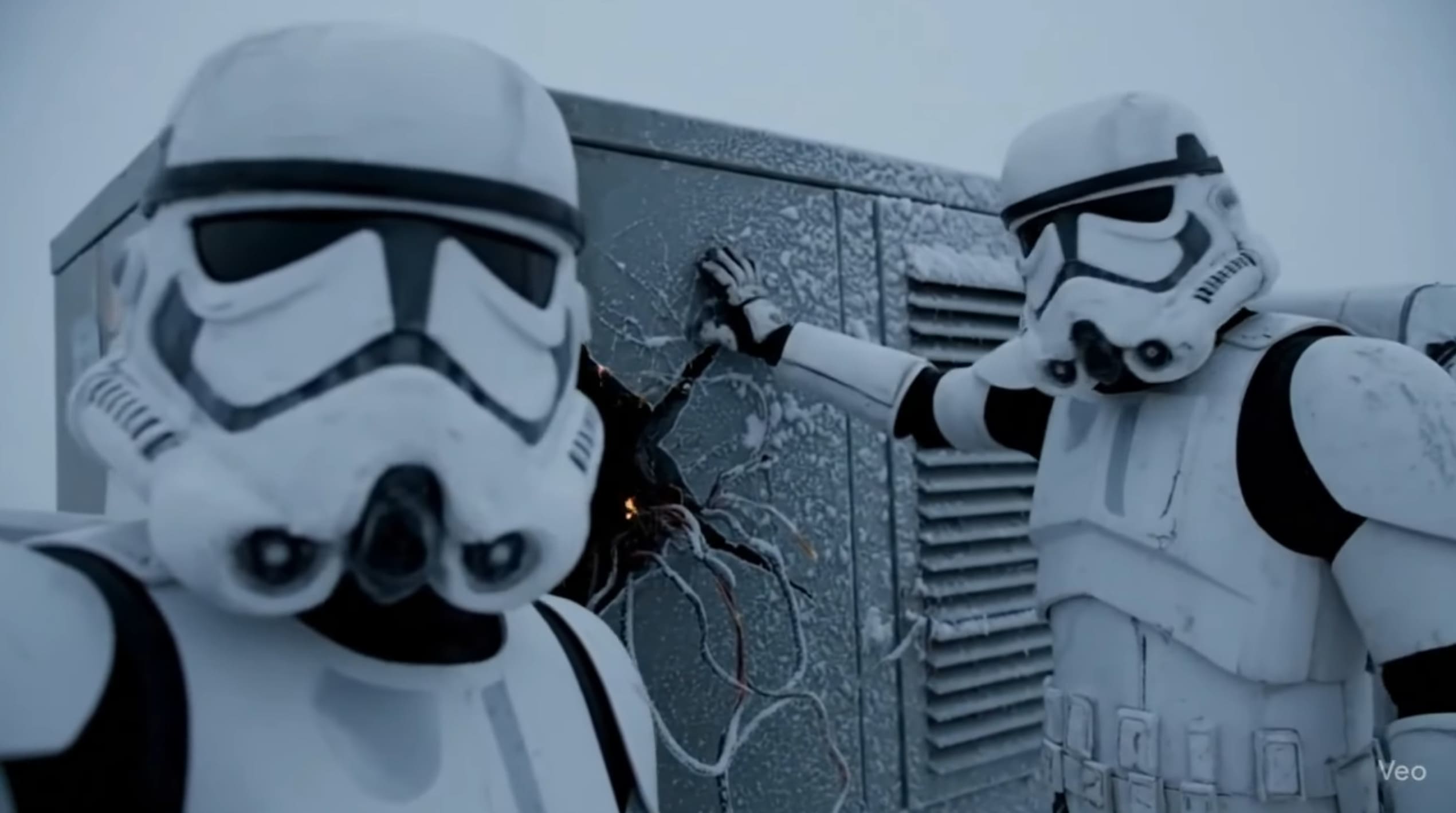
Thanks to advanced AI video generators such as OpenAI's Sora 2, Google's Veo 3.1, or Runway's Gen-4.5, it is possible to create even the most complex characters you can imagine, including those from Disney films. And that is exactly what is happening in today's world of artificial intelligence. Google has now had to remove dozens of AI-generated videos depicting characters owned by Disney. This came after Disney sent Google a cease-and-desist letter demanding that these materials be immediately taken down. The letter was sent on Wednesday, and by Thursday the videos were gone. In their place appeared a message stating that the content was unavailable due to a copyright claim from Disney.
The videos, which were uploaded to YouTube by users, featured characters such as Mickey Mouse, Deadpool, Moana, and characters from Star Wars and The Simpsons. Many of them were created using Google's tool called Veo, which generates videos using artificial intelligence. In its letter, Disney specifically included a list of characters it wanted to protect. The goal was to prevent these characters from being used without permission in AI-generated content.
Why did Disney take such decisive action?
Disney is not just any company—it is a century-old entertainment giant that carefully guards its intellectual property. In the same letter, Disney not only demanded the removal of existing videos but also requested that Google implement measures to prevent similar content featuring its characters from being generated in the future. It also wanted Google to stop using Disney materials to train its artificial intelligence models. This means that Disney views the unauthorized use of its characters as copyright infringement on a "massive scale," as it described in the letter.
This move came shortly before Disney announced a major deal with Google's competitor, OpenAI. The deal is worth $1 billion and will last for three years. Under the agreement, Disney will give OpenAI access to two hundred characters for use in Sora, a tool that allows users to create short AI clips. A source close to Disney said that the deal proves the world of artificial intelligence does not have to be lawless—technology and the creative industries can work together if they respect the value of creators and their work.
Google's response
Google did not respond aggressively; instead, it emphasized its long-standing and mutually beneficial relationship with Disney. In an official statement, a Google representative said: "We have a long-standing and mutually beneficial relationship with Disney and will continue to engage with them." The representative added that Google uses publicly available data from the open web to build its artificial intelligence and has introduced innovative copyright protection tools such as Google-extended and Content ID for YouTube. These tools give content owners control over how their material is used. Google has begun gradually removing these videos.
For users who love Disney characters or experiment with artificial intelligence, this means that your favorite videos have already disappeared or will soon disappear. If you want to create videos featuring Mickey Mouse, Deadpool, or similar characters, you must have permission; otherwise, you risk having your content removed.
Sources: deadline.com and variety.com


