

Google Takes on NVIDIA: The New Ironwood AI Chip Pushes the Boundaries of Performance and Efficiency
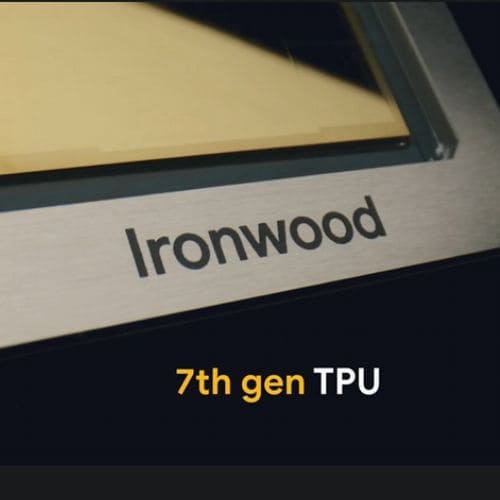
Google recently unveiled its latest AI accelerator - the seventh-generation TPU (Tensor Processing Unit) codenamed Ironwood. And believe me, this is not just some minor update, but a real game-changer in the field of AI hardware.
Ironwood: 3,600× More Powerful Than the First TPU
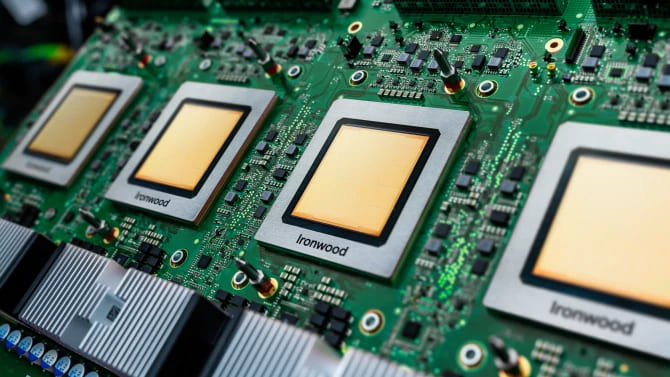
The numbers for Ironwood are truly astonishing. Compared to the first-generation TPU that Google put into public operation in 2017, Ironwood offers an astounding 3,600-fold performance improvement! And that's not all - energy efficiency has improved 29-fold. At a time when we are all dealing with an energy crisis and environmental concerns, this is an exceptionally important step in the right direction. Google is also building entire systems using more than 9,000 of these chips, with total power consumption of around 10 MW. To put that into perspective - such consumption is roughly equivalent to that of a small town. But given the computing power such a system offers, it is a remarkably efficient solution.
The Era of Inference Instead of Training
What is particularly interesting about the new TPU v7 is its focus. While most discussions about AI hardware revolve around training large models (which is the phase when AI "learns"), Ironwood is optimized primarily for so-called "inference" - that is, the phase when an already trained model operates and derives results. Why is this so important? Just look at the numbers. When you calculate all the work that AI models perform, training accounts for only a fraction - less than 20%. The rest is inference. Put simply, a model is trained once but used millions of times. Personally, I think this is an absolutely crucial insight. NVIDIA dominates model training with its GPUs, but Google has bet on optimizing what accounts for the majority of the actual operation of AI systems in terms of computing time. A smart move!
How Google Is Trying to Break NVIDIA's Monopoly
If you follow AI developments even a little, you know that NVIDIA has practically taken over the market for artificial intelligence chips. Its stock is soaring, and the company has become one of the most valuable in the world. Google, however, clearly does not want to depend on a single supplier. In addition to developing its own TPUs, Google also openly supports other alternatives to NVIDIA - AMD, Intel, as well as lesser-known companies such as Anthropic, Cerberas and others. What fascinates me about Google's entire strategy is its long-term approach. Ironwood is the result of seven generations of development - this is not something you create overnight. Google has been investing in this direction since 2015, when it began developing the first generation of TPU.
Technical Specifications That Take Your Breath Away
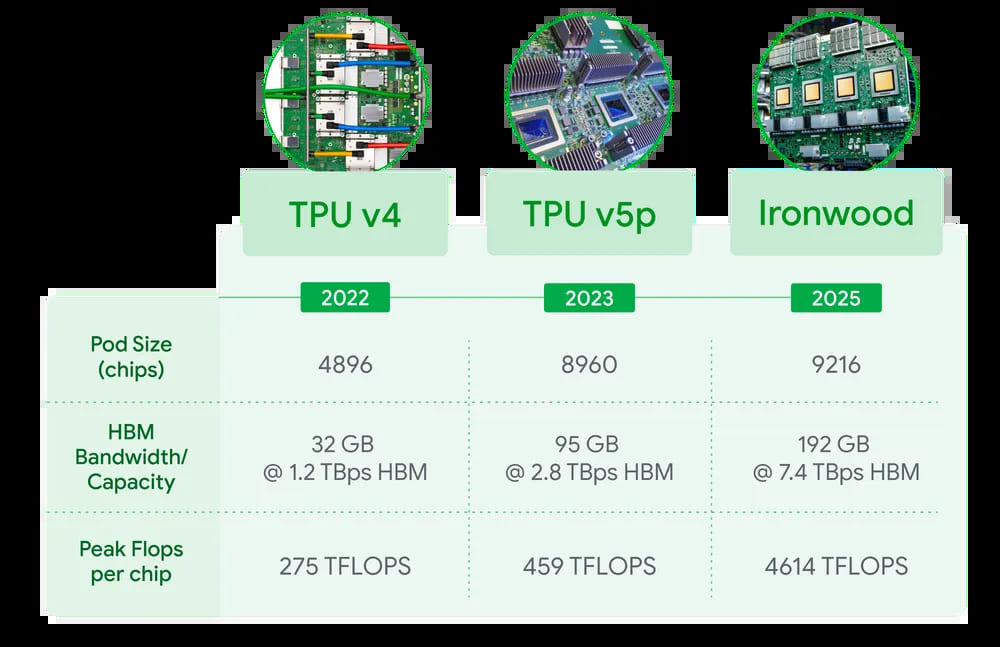
For technology enthusiasts, Ironwood brings several interesting architectural changes. Compared to the previous TPU v4 generation, it offers a 2.5-fold increase in inference performance and a 1.9-fold improvement in energy efficiency. Google also stated that Ironwood has up to 10× higher memory bandwidth thanks to its improved architecture and use of HBM3 (High Bandwidth Memory) technology. This enables more efficient work with large language models (LLMs) and generative AI. According to information from The Next Platform, Google has also significantly improved the TPU instruction set, which now includes specialized instructions for quantization and sparse computing, further improving efficiency when running AI models.
What Does This Mean for Ordinary Users?
As an ordinary user, you may be asking yourself: "What does this mean for me?" The answer is simple - even if you do not buy Ironwood for your computer, you will benefit from its advantages indirectly. Services such as Google Search, Gmail, Gemini, Google Maps and others already use TPUs to power their AI features. With the new Ironwood, these services should become faster, smarter and more energy-efficient. For companies using Google Cloud, this means better performance at a lower cost. Google plans to offer Ironwood through its cloud platform for inference tasks.
More Than Just a Clash of Giants
What fascinates me most about this technological battle is not just the Google vs. NVIDIA rivalry itself. It is the fact that this competition is pushing the entire industry toward greater efficiency and innovation. Think back to where we were in the field of AI just five years ago. Now imagine where we will be in another five years with chips that are 3,600× more powerful than those from seven years ago. The pace of innovation is breathtaking. What is at stake is not only which company will make more money, but also the direction in which the future of AI will develop. Chips like Ironwood enable more efficient use of AI in everyday life, which could have far-reaching consequences for us all.


