At the beginning of April, Broadcom signed agreements with Google and Anthropic. Chips, gigawatts, data centers. But behind this technical jargon lies a story about how one of the world's fastest-growing technology companies is literally trying to buy its future.
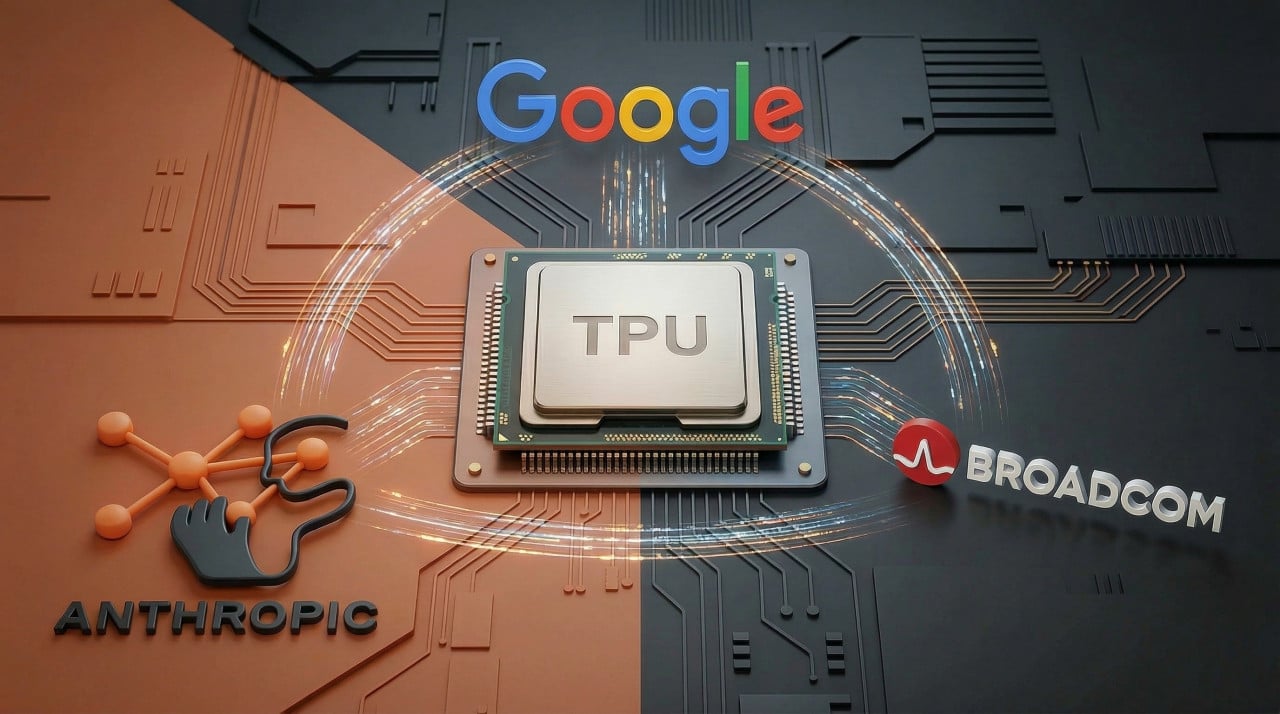
Broadcom announced an expansion of its collaboration with two partners at once. It signed a long-term agreement with Google to develop and supply custom AI chips through 2031, specifically TPU chips (Tensor Processing Units), networking components, and other hardware for next-generation data centers.
At the same time, it entered into an agreement with Anthropic, the creator of the Claude AI assistant. Through Broadcom and Google, Anthropic secured access to approximately 3.5 gigawatts of computing capacity built on Google-designed TPU chips. The capacity is expected to become available starting in 2027.
The financial terms of both agreements were not disclosed. But analysts estimate that Broadcom could earn around $21 billion in 2026 from the Anthropic deal alone, rising to as much as $42 billion in 2027.
Why Google chips?
Anthropic has come under enormous pressure in recent months. Pressure from demand. Its run-rate revenue—that is, annualized revenue calculated from the current monthly pace—has surpassed the $30 billion mark. Yet at the end of 2025, it was still approximately $9 billion. Such a leap in a single quarter? That simply does not happen to everyone.
And customers are being added literally day and night. In February 2026, when announcing a $30 billion Series G funding round at a $380 billion valuation, Anthropic reported more than 500 enterprise customers spending over $1 million annually. Today, that figure exceeds 1,000 customers. A doubling in less than two months.
How can the infrastructure possibly handle this? Simple: you need gigawatts.
Anthropic is not relying on a single supplier. Claude runs on AWS Trainium chips, Google TPUs, and Nvidia GPUs. This diversity is intentional, as the company itself says, because different types of workloads are suited to different hardware. Nevertheless, Amazon remains its primary cloud partner, and they are collaborating on Project Rainier.
Google wants to compete with Nvidia
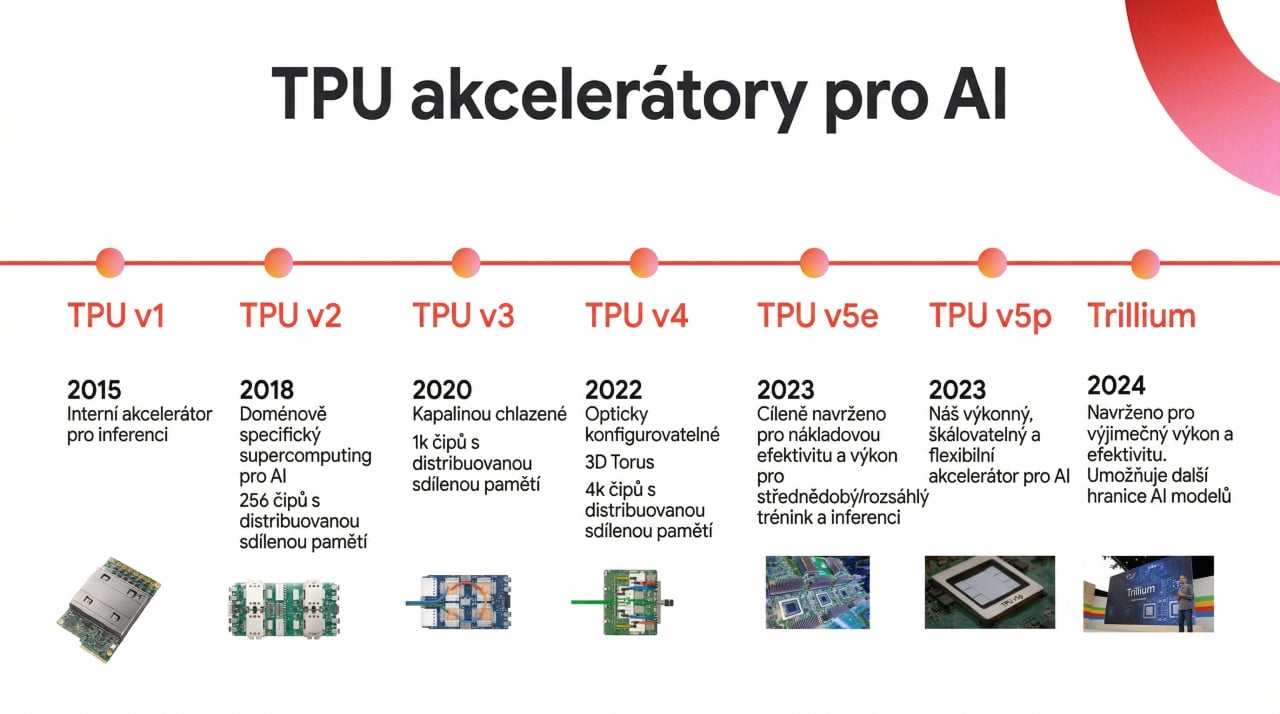
This entire deal is not just about Anthropic. Google has long been developing TPUs as an alternative to Nvidia's expensive graphics chips. Even before the agreements were signed, the Wall Street Journal reported that Google was actively looking for ways to expand the market for its own chips. The Anthropic deal is exactly that kind of move.
Broadcom plays the role of manufacturing partner in this process. Google designs the chips, while Broadcom helps manufacture and supply them. Broadcom CEO Hock Tan revealed during the company's March earnings call that the company is providing Anthropic with 1 gigawatt of computing capacity from Google-designed TPUs in 2026. For 2027, he expects demand to exceed 3 gigawatts. The new agreement confirms and solidifies this figure.
Broadcom shares responded immediately after the announcement, rising by approximately 3% in after-hours trading.
A large portion of the new infrastructure is expected to be built on U.S. soil. Anthropic itself emphasizes this as a continuation of its commitment to invest $50 billion in U.S. computing infrastructure, announced in November 2025. According to the company, the new agreement with Google and Broadcom is the largest infrastructure commitment in its history. "We are building the capacity necessary to serve the exponential growth of our customer base while enabling Claude to define the frontiers of AI development." said Anthropic CFO Krishna Rao.
However, one thing must be taken into account: the availability of the new capacity is contingent on Anthropic's continued commercial success. Broadcom explicitly mentioned this in a filing with the U.S. Securities and Exchange Commission. In other words, not everything is guaranteed unconditionally. But at this rate of growth, it would be more surprising if the momentum stopped or reversed.
Tensions at Anthropic and a new model
While Anthropic is signing billion-dollar deals, things behind the scenes at the company are not free of turbulence. The company is embroiled in a legal dispute with the Trump administration after the Pentagon designated it a supply-chain security risk. In addition, Anthropic accidentally published thousands of source-code files in March.
And then there is Mythos. TechCrunch reported that Anthropic has just launched a limited preview of its new Mythos model, which is expected to be significantly more powerful than the existing Opus models. For now, it is focused exclusively on cybersecurity as part of the Project Glasswing initiative, with 12 partner companies collaborating on it, including Amazon, Apple, Microsoft, and Broadcom.
The commitment of 3.5 gigawatts of computing capacity therefore makes sense not only as a response to today's demand. It is also preparation of the infrastructure for models that are yet to come.
Additional sources: cnbc.com and reuters.com