

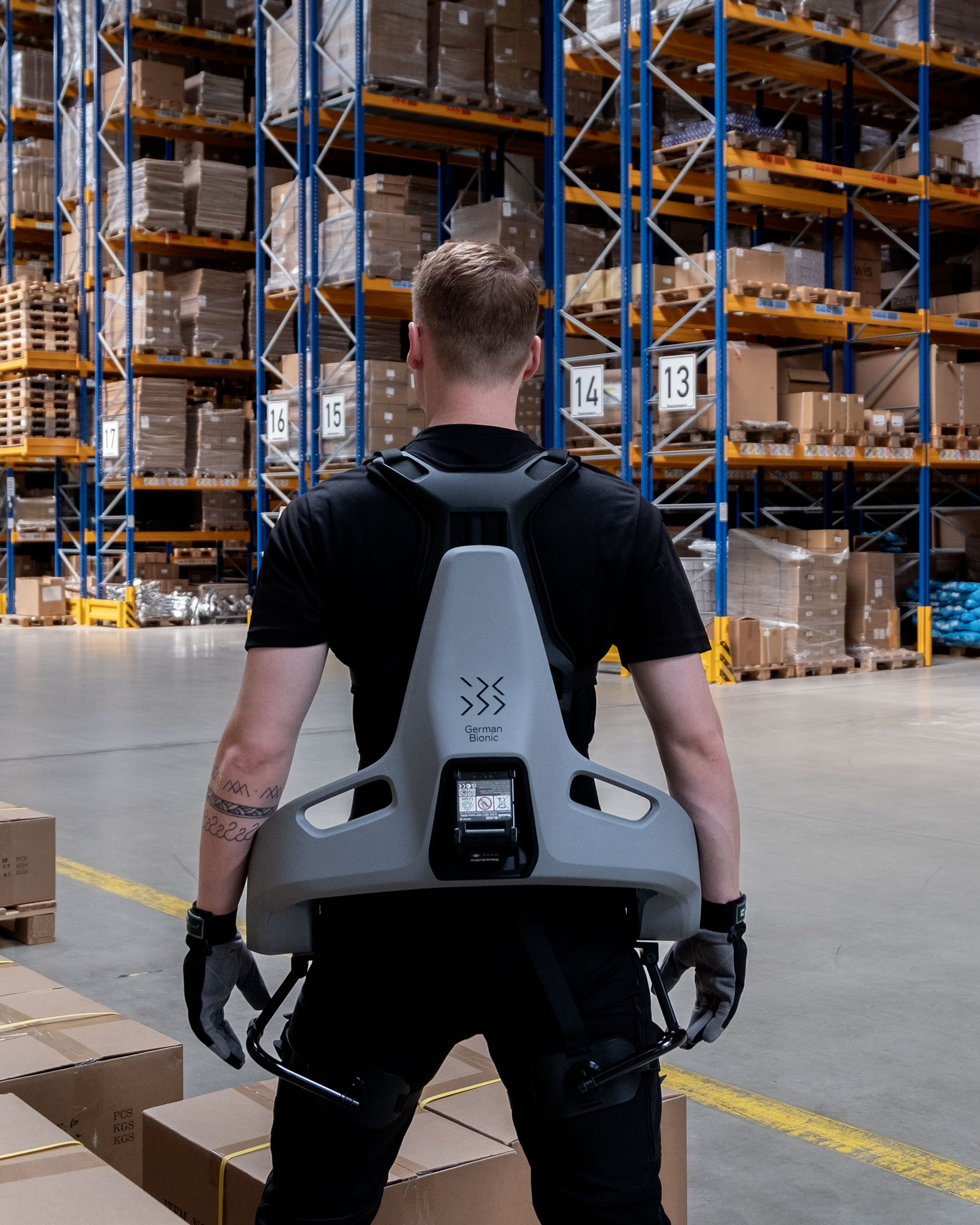
German Bionic Unveils Revolutionary Exoskeleton with Exia AI
German company German Bionic recently unveiled its latest innovation—the Exia exoskeleton, the first true industrial exoskeleton fully powered by artificial intelligence. This wearable system was introduced on May 27, 2025, and promises to transform physical labor support in industry.
Technological Breakthrough in Augmented AI
Exia represents an advance in human augmentation technology, as it is the first-ever exoskeleton powered end-to-end by true augmented artificial intelligence. The system uses billions of real-world data points collected over several years across various industries. This extensive database enables the AI to anticipate the user's needs and optimize support in real time. Exia's artificial intelligence continuously learns from the user's movements and working environment. It can interpret movement patterns, understand situational context, and provide effective support exactly where it is needed. This adaptive intelligence is constantly evolving to meet the requirements of both the individual user and specific work tasks.
The Most Powerful Exoskeleton on the Market
One of Exia's most significant technical specifications is its ability to provide up to 38 kilograms of dynamic lifting support. This makes Exia the most powerful exoskeleton available on the market. The system supports a wide range of physical activities, including lifting, walking, carrying loads, and working in bent-over positions. The exoskeleton has been completely redesigned with next-generation hardware architecture and optimized control software. Despite its power, the system is not only stronger than previous models but also lighter and more intelligent, making it more practical for everyday industrial use across various sectors.
Advanced Features and Applications
Exia includes a range of advanced features that set it apart from the competition. The system is equipped with an adaptive lifting motor that adjusts to the specific needs of each user. A significant innovation is the use of real-time "digital twins" that identify high-risk movements and promote safe working practices. The exoskeleton is also equipped with an advanced cloud-based analytics platform that provides ergonomic insights, activity monitoring, and device fleet management. Users have access to the German Bionic Connect App, which allows them to adjust settings, access usage analytics, and receive gamified coaching.
Exia is designed as a "universal" solution capable of meeting the requirements of virtually any industry. The system can be used in logistics operations, manufacturing facilities, construction sites, baggage handling, and healthcare environments, including nursing, elderly care, and hospitals. The exoskeleton is specifically designed for flexibility across industries. It understands and adapts to how workers lift, carry, bend, and move in real-world work contexts, providing unmatched responsiveness and support from the very first use.
The Exia system addresses several key challenges facing modern industry. In the area of health and safety, it reduces workers' physical strain, protects their health through ergonomic support, and creates safer and more inclusive workplaces. Musculoskeletal disorders cost U.S. employers an average of more than $67,000 per case, making injury prevention an economic priority. Exia also helps address labor shortages by supporting workers in physically demanding occupations. With a projected shortage of 1.9 million manufacturing workers in the U.S. by 2033, the system makes physically demanding jobs safer and more attractive, helping companies retain and attract skilled workers. It reduces the number of sick days and extends working careers.
Company Development and History
German Bionic was founded in 2017 by a team that includes Armin G. Schmidt, who serves as the company's CEO and co-founder. The company specializes in developing active exoskeletons specifically designed to enhance workers' physical capabilities, with an emphasis on improving workplace safety, productivity, and well-being. The company is headquartered in Berlin, with additional offices in Augsburg, Germany, Burlington, Massachusetts, Paris, and Tokyo. German Bionic operates manufacturing facilities worldwide and is represented in North America by its exclusive distribution partner, KULR Technology Group Inc. According to Armin G. Schmidt: "Ten years ago, exoskeletons were bulky and expensive. The market was not ready, but now there are numerous use cases." This statement reflects the industry's evolution and how German Bionic has positioned itself at the forefront of exoskeleton technology development.
Deployment and Future
Although Exia has been officially unveiled and is being promoted for broad industrial use, specific details about large-scale real-world deployments are not yet publicly available. The system is marketed as ready for deployment across various industries and is described as a "universal" solution. The Exia exoskeleton with augmented AI represents a significant step forward in wearable technology for industry. Its ability to learn, adapt, and provide personalized support makes it a promising solution to the challenges modern industry faces in occupational safety, productivity, and skilled labor shortages.


