

Chinese company Zhipu AI, officially known as Knowledge Atlas Technology, became the world's first company specializing in large language models to go public on January 8, 2026. Its debut on the Hong Kong Stock Exchange attracted enormous investor attention and closed with shares up 13.2% at HK$131.50. During morning trading, the shares even jumped by as much as 15%. The company sold 37.4 million shares at HK$116.20 each, raising a total of US$558 million, equivalent to approximately CZK 12.8 billion.
The company was founded in 2019 by professors from Tsinghua University in Beijing. It focuses on developing large language models, such as the GLM-4 series, which directly compete with systems such as ChatGPT and Claude. Zhipu AI offers its technologies in two forms: on-premise solutions, where customers run the models on their own infrastructure, and cloud services for easy access via the internet. These tools are used in smart devices, finance, manufacturing, retail, and healthcare, primarily in the Chinese market. And like most LLMs, they understand Czech.
The Financial Reality Behind the Success
Despite strong investor interest, Zhipu AI faces significant financial challenges. In the first half of 2025, the company reported revenue of 191 million yuan, equivalent to about US$27 million or approximately CZK 621 million. At the same time, however, it recorded a net loss of 2.36 billion yuan, or roughly US$330 million or about CZK 7.6 billion. This loss stems mainly from high research and development costs. According to the prospectus, the company plans to allocate 70% of the proceeds from the listing to the further development of its general-purpose large AI models.
Retail investors showed enormous interest—the offering was oversubscribed 1,159 times. This enthusiasm persisted despite concerns about high valuations in the AI sector. Chairman and co-founder Liu Debing became a billionaire through the IPO (initial public offering), with an estimated net worth of US$2.1 billion, or approximately CZK 48.3 billion, based on his stake in the company.
Zhipu AI faces geopolitical pressures that affect its growth. In January 2025, it was added to the U.S. Department of Commerce's entity list, restricting its access to American semiconductor technology. Last June, OpenAI described it as a rapidly growing rival on the "front line" of China's AI race. Despite this, the company is focusing on expansion beyond China, particularly in Southeast Asia and the Middle East, where it is building partnerships in sovereign AI. It has operations in Indonesia, Vietnam, Malaysia, Singapore, and the United Kingdom.
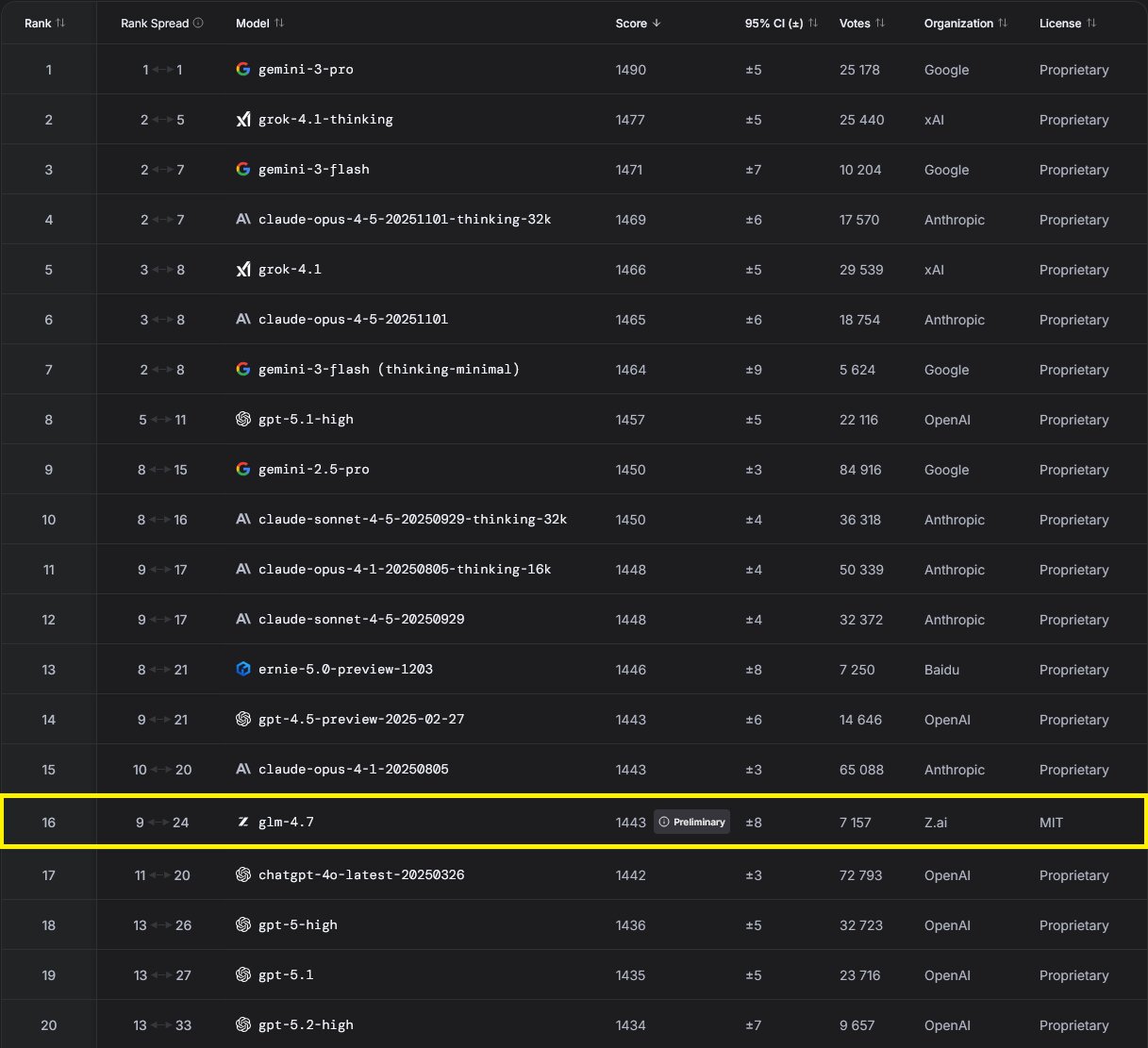
Zhipu AI's models include GLM-4.7, which ranked among the world's top 20 AI models according to LMArena and is considered the best open-source model by Artificial Analysis, ahead of DeepSeek, OpenAI, and Moonshot AI's Kimi K2. CEO Zheng Peng sees international expansion as a natural evolution for the company. The successful stock market debut provides capital for further growth, while rival MiniMax is preparing for its debut on the same exchange on January 9, aiming to raise up to US$538 million, or approximately CZK 12.4 billion.
Sources: cnbc.com and perplexity.ai


