Social network X announced that it had found two hundred profiles in a suspected Chinese bot farm comprising around 200,000 accounts that were intended to influence the American debate on artificial intelligence and energy. The fake accounts promoted the claim that AI data centers are overloading the power grid and making electricity more expensive for ordinary households.
What was found on X
In addition to text posts about rising electricity prices, the profiles also shared cartoon images created using generative AI, depicting data center developers enriching themselves at the public’s expense. One of them shows horrified citizens confronting developers carrying bags of money, with a caption claiming that data centers receive subsidies while ordinary people foot the bill. Another image claimed that companies reap the profits from artificial intelligence, while ordinary citizens bear the costs.
The platform added that it takes attempts to undermine the authenticity of discussions seriously and removes accounts that violate its rules. However, it is not yet clear whether it actually blocked the hundreds of profiles it uncovered. X, which is owned by Elon Musk, itself uses enormous data centers for its technology projects and did not respond to journalists’ questions.
This was not the first such discovery. In June, OpenAI reported that it had dismantled two covert networks with links to China that used ChatGPT to produce fake content for American debates about energy consumption and technology tariffs. These consisted of short comments and visuals with very similar messaging, namely that data centers are driving up both electricity demand and consumers’ bills. Although these campaigns did not have a wide reach, they showed that foreign powers are trying to exploit American economic concerns.
Why China would do this
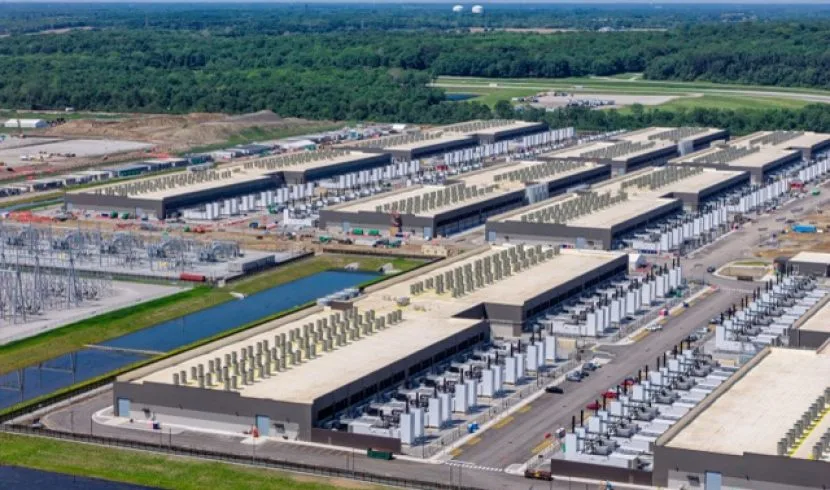
The United States and China are competing to build the most powerful artificial intelligence systems, and Chinese propaganda appears to have infiltrated domestic debates with the aim of slowing America down. Data centers underpin the entire development of AI. Without them, there is insufficient computing power, and companies have nowhere to train additional models. When construction approvals are delayed, months of time and billions of dollars are lost.
Washington is already addressing the issue. In June, the House Committee on Energy and Commerce sent a letter asking the FBI and White House advisers to explain to lawmakers how China, Russia, and Iran are hindering American progress in AI and data center construction. Some Democrats have made similar statements. Senator John Fetterman warned that China benefits from America’s overreaction to catastrophic scenarios and wrote that dominance in this technology and in energy is crucial to national security. Industry executive and former whistleblower Brittany Kaiser added that foreign campaigns could slow development, divert sensitive data abroad, and weaken America in this competition.
Local opposition is strong even without China
Americans are turning against data centers on their own, and their opposition is growing rapidly. According to an August survey by the University of Pennsylvania, 61 percent of Americans oppose the construction of new data centers in their area, twelve percentage points more than in a survey conducted in February and March. A YouGov survey produced similar results, with only 24 percent of people considering the construction of new data centers beneficial to the country, while 47 percent viewed it negatively. Opponents most often argue that the facilities harm the environment, drive up electricity prices, and reduce nearby property values. Supporters, by contrast, claim that the country cannot do without them for security reasons and that they bring jobs and revenue to local governments.
The White House sees the situation as a reputational problem. Donald Trump said that the artificial intelligence industry needs to improve its relationship with the public, citing a May Gallup survey according to which most Americans do not want data centers in their communities. He then told municipalities and states that the wages and tax revenues are enormous and that anyone rejecting an offer will be left behind because there are plenty of other interested communities.
The political dividing lines do not correspond to party affiliation. Both Democratic and Republican local politicians support halting construction and oppose enormous projects in order to protect their own communities.
Skepticism about the claim that China is behind it
Not everyone believes that Beijing is behind the wave of discontent. Jim Prosser, a Silicon Valley communications consultant and former head of communications at Twitter, described talk of a Chinese psychological operation as troubling and frustrating. In his view, it is a self-serving claim intended by major technology companies to redirect the debate about data centers. When Texas Governor Greg Abbott and New York Governor Kathy Hochul agree in their opposition, it is unlikely to be a Chinese operation or a mass delusion. Prosser compared the situation to a venture capitalist from the wealthy California towns of Atherton or Menlo Park telling people in Ohio how they should feel without ever having been there. A brief look through social media is enough to find footage of real people attending local council meetings to fight data centers.
Discontent in local communities has moved from municipal politics directly into financial reports. Opposition to data centers has become a genuine threat to the development of artificial intelligence, and several major Wall Street banks recently identified this political resistance as a risk to the entire sector. Among other things, the House committee’s letter cited an estimate that campaigns against construction had delayed or blocked data center projects worth nearly $46 billion in Virginia alone.
Sources: axios.com and foxnews.com