

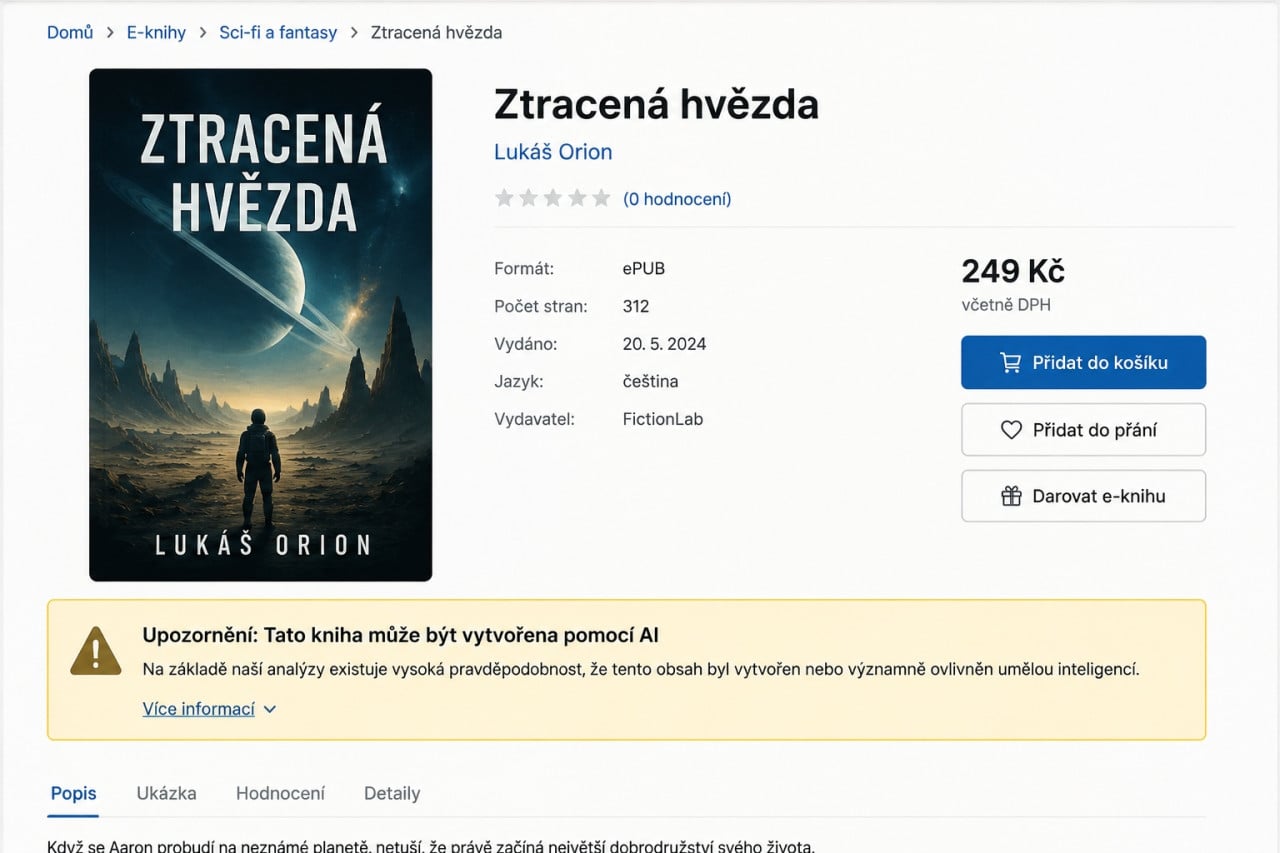
Today, you can buy a biography of almost anyone from the world's largest bookstore. The problem is that many of them were not written by humans, and the facts in them are often wrong. Online retailers such as Amazon have been flooded with books produced by artificial intelligence. They pose as biographies, workbooks, or summaries and deliberately bear titles similar to real books in order to confuse buyers. The authors whose names and faces appear on the covers usually have no idea.
Imitations Circumvent the Law
The creators of these books operate in a gray area of copyright law. The law protects a specific creative expression from the moment an author writes it down. At the same time, however, it permits what is known as fair use for the purposes of commentary or education. This includes study guides, explanatory workbooks, or analyses of themes in a famous work.
And that is exactly what the producers of these imitations exploit. They label a book as a "biography" or "summary," reuse the main part of the original title, and hope that readers will buy the substitute under the impression that they are getting the real thing. A closer look at the description reveals that it is someone else's product. But who reads descriptions in detail?
Authors Find Books They Did Not Write
Journalist Talia Lavin bought printed copies of the imitations of her book to find out what people were actually getting under her name. The result alternately amused and horrified her. Some volumes were short and seemed as though someone had assembled them from her Wikipedia page. Others contained complete nonsense, such as claims that she works as a teacher. One text looked as though someone had translated it into a foreign language and then back into English.
Lavin worked on the book for three years, speaking with a hundred people about the worst abuse they had experienced as children. She described the imitations in harsh terms. She called them a quiet form of violence. "You are stealing my work, you are stealing my face. You are stealing my life and writing lies about it," she said.
Author and consultant Jane Friedman had a similar experience. An attentive reader bought a fake title attributed to her and alerted her to it. The books had titles similar to subjects she commonly writes about, and the text imitated her style. Friedman had blogged for years and had plenty of freely available content online, so imitating her did not take much effort.
The best-known case involves influential technology journalist Kara Swisher. When her memoir Burn Book was published in 2024, fake biographies of her began appearing on Amazon with covers strikingly similar to the original. Swisher did not mince words in her correspondence and wrote directly to Amazon CEO Andy Jassy, telling him that he was responsible and that the books were costing her money. The books disappeared. Most authors, however, do not exchange emails with Amazon's CEO.
AI Can Generate an Enormous Amount
The scale of the problem is best illustrated by the number of e-books published. Before the arrival of chatbots, the figure was around one hundred thousand per year. Before the start of 2026, it had risen to more than three hundred thousand. A single AI-powered publisher can churn out around fifty titles a month, scatter them across related categories, buy a few reviews, and create enough noise to push legitimate books lower in search results.
Even if each such title sells only a few copies, together they push real authors to the bottom. People who built their livelihoods on Amazon and similar platforms are now competing with a production line rather than a book market.
These are not always hidden fraudsters. A romance author who calls herself Coral Hart produced more than two hundred novels last year across genres ranging from dark stories to romance for teenagers. None was a blockbuster, but together they sold around fifty thousand copies and earned her a six-figure sum.
Rules and the Fight Against Circumventing Them
Amazon previously introduced a rule requiring authors using its Kindle self-publishing service to disclose in advance whether their work contains AI-generated text. However, it does not require a public notice on the cover or inside the book. AI detectors can also be circumvented, and according to industry insiders, it will eventually become impossible to tell the difference.
In response to questions, an Amazon spokesperson says that the company has content guidelines determining which books are allowed on the platform and that it removes titles that violate the guidelines or copyright. Authors, however, argue that removals happen too slowly and that the company should invest more in software and oversight that would catch imitations before they harm readers and writers alike.
The writers' organization Authors Guild has long warned about the danger. Its CEO, Mary Rasenberger, warns that artificial intelligence is being used to replace authors. It takes their work without permission, absorbs it into its models, and then offers those models to the public and businesses so they can replace writers with them.
The authors themselves know that there is little they can do against the pace of machines. Many of them already view fake books as an occupational hazard that anyone who wants to share their writing with the world will have to reckon with. Talia Lavin does not see herself as an avenger fighting a great injustice. But when all these imitations are added together, they affect the largest bookstore on the planet. And it can be distorted this easily.
Sources: rollingstone.com and nytimes.com


