Anthropic released its new Claude Fable 5.2 model only on Monday, and the internet is already being flooded with games built almost entirely by artificial intelligence. These are not simple platformers or puzzles. Social media is buzzing with 3D shooters, open-world action adventures, and battles fought on the backs of dragons, all playable directly in a browser. Some were created in three and a half hours, others in eight, and the most-watched one cost roughly $550 based on the model’s usage rates.
A shooter from a single sentence
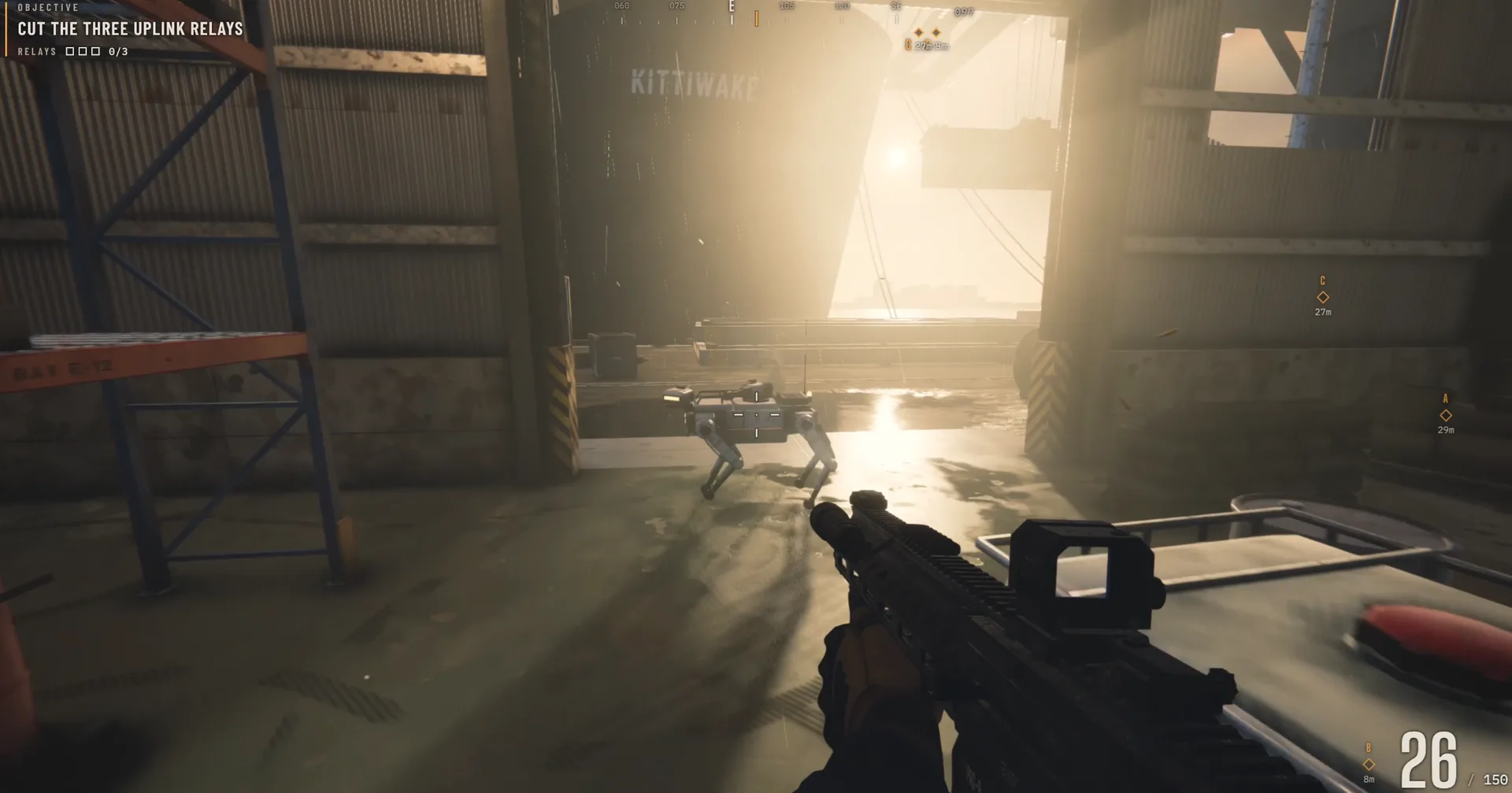
The entire wave was kicked off by Felix Rieseberg, who develops products at Anthropic. Anthropic released Fable 5.2 on November 9, and Rieseberg shared the game Saltline that same day. He wanted to see what the model could do without any human intervention. The prompt was surprisingly short. He asked Fable 5.2 for a small first-person shooter with just one compact level, but with graphics on par with major games from expensive studios.
The model then got to work. Fable 5.2 created the game, including its models, sounds, and textures, in roughly eight hours. It consumed more than 440 million input tokens and just under three million output tokens, which would cost around $550 through the API. When asked about the environment configuration, Rieseberg replied that his claude.md file was empty. The model therefore received no prewritten instructions.
Anyone can try the result. Saltline is a compact, single-level game in which you must disable three communications relays while defending yourself against two types of enemies, which the game calls Gulls and Hounds. It takes place in a rainy harbor, and after completing the objective, the main character runs to a boat, ending the mission. The game runs as a Claude artifact directly in the browser, so there is nothing to install.
I wanted to test Fable 5.2's quality with one-shot prompts without human feedback. Everything in this game is from scratch: models, sounds, textures. ~$550 at API pricing, ~2.7M output and 445M input tokens, heavily cached. Took 8 hours! Play it here: https://t.co/fazOCcyNIH https://t.co/GoCitQ9EVe
— Felix Rieseberg (@felixrieseberg) November 9, 2026
At first glance, the enormous disparity between the amount of data the model read and the amount it wrote is striking. CellCog explains that an agent working for hours resends all the context accumulated so far at every step, including completed code, tool outputs, and the plan. Writing the game itself accounted for a smaller share of the work; most of it involved repeated reading.
Caching therefore brought the price down. Without it, the same tokens would have cost roughly $3,700, nearly seven times more than Rieseberg reported. Even so, a single prompt meant eight hours of unsupervised work, equivalent to about $69 for every hour the model was running.
Another shooter in three and a half hours
Higgsfield, a company specializing in AI-generated images and video, immediately joined the testing as well. It connected its tool to Claude and released an entire series of games within the first two days. One of them is a shooter that, according to the company, Fable 5.2 completed in just three and a half hours. Higgsfield also provides a guide explaining how to build a similar title using Claude, Higgsfield, Blender, and Unreal Engine.
Another title is called Sunwarden. It is an open-world browser action adventure featuring temple puzzles and a boss battle. Unlike Saltline, the model did not work entirely on its own here. Higgsfield supplied it with visual assets from its generators, which Fable 5.2 then transformed into a playable 3D world.
Dragons, missiles, and voices made entirely from code
Skyfire, a game about flying on a dragon, is attracting the most attention among Higgsfield’s creations. A single image defined its visual style, while testing notes gave rise to aerial combat, an upgradable fire breath, and a titan towering above the clouds. The entire game contains roughly 50,000 lines of code. The world is rendered by the Three.js library, while the model built and animated the dragons, riders, and titan in Blender. The music is particularly interesting. The soundtrack is written in code and features distinct arrangements for exploration, combat, and the encounter with the titan.
Saltfire, a combat boat racing game, offers a completely different genre. Higgsfield asked Fable 5.2 for a racing game without roads and with minimal rules, in which players race across five-meter waves with guided missiles and five AI-controlled opponents. According to the company, the model also added machine guns, mines, and four game modes, including a championship and a last-boat-afloat battle.
The dark fantasy RPG VOWLORN, meanwhile, demonstrates how much the model can accomplish without external assets. The game uses no downloaded models, textures, or sounds. Characters are animated using custom skeletons, a music engine plays the score, and character voices are synthesized. The whole project consists of about 8 MB of code, and the textures are generated directly on your device when the game is launched for the first time. Fable divided the work among 16 agents, each responsible for one game system. The game runs in a browser on computers, phones, and tablets.
They have already been playing games at Anthropic for some time
Marketing departments are not the only ones building games. Anthropic’s Sholto Douglas released an arena shooter with portals and wrote that Fable 5.2 is the first model to meet his standard for genuinely fun and beautiful titles. Unlike Rieseberg, however, he gave the model a detailed prompt. He described the game mechanics, weapons, and level layout in depth and said that he and his colleagues tested the game over several evenings at the office.
Developer Kevin Ngo also showcased a game demo in which the player sails a boat through eight dreamlike worlds. However, he admitted that in addition to Fable, he also used the Tripo 3D tool and had the music generated in Suno v6.
Playable AI-generated games had appeared before, but they were usually simple 2D projects or the result of dozens of rounds of corrections in which a person continuously guided the model. Fable 5.2 can work unsupervised for hours and create its own 3D models, textures, sounds, and music in addition to code. Higgsfield praises the new model for not giving up halfway through complex games and 3D scenes, continuing to improve the result, and responding up to 30 percent faster.
Doubts and comparisons with Battlefield
Not everyone shares the enthusiasm, however. CellCog points out that the figures come from an Anthropic employee on the first day after release, are rounded, and are not supported by any published run logs. Rieseberg also did not reveal which tool the model worked in for eight hours. It is also worth noting that this was a single small level, not a full-fledged game.
Players are divided over how good Saltline really is. Some worry that people who try the model only once will receive a weaker product and unfairly blame the model for it. Others, by contrast, see the demos as a clear signal. One commenter even declared that Grand Theft Auto 6, the biggest game of this month, will be the last major title from a traditional studio.
The biggest debate, however, was sparked by the appearance of Saltline’s harbor. Some players noticed that the map, lighting, and textures bear a striking resemblance to the popular Noshahr Canals multiplayer map from Battlefield 3, raising the question of how extensively neural networks draw on the work of other developers during training.
Sources: techpowerup.com and higgsfield.ai