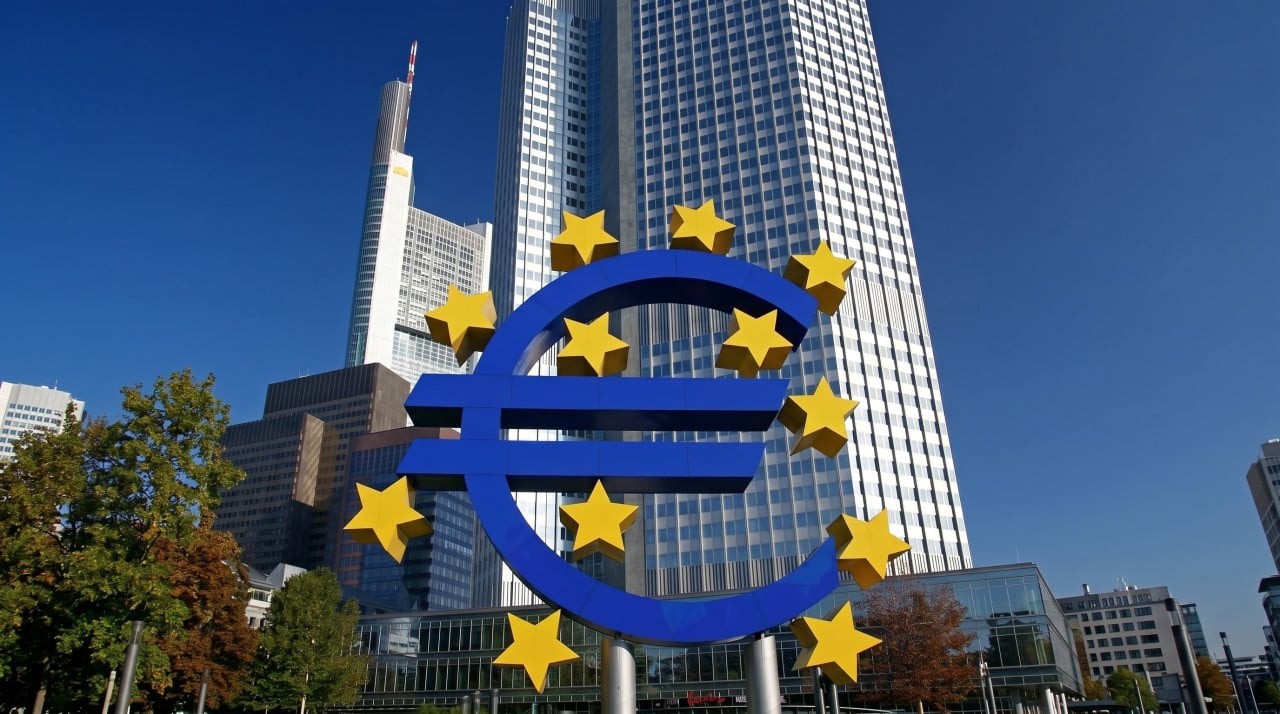
The European Central Bank is facing a challenge with few parallels in the modern history of monetary policy. The world is more unstable, shocks arrive faster, and traditional economic models struggle to cope with them. Artificial intelligence is therefore entering the picture on several fronts at once. Three recent contributions directly from the European Central Bank (ECB) show how deeply AI is permeating the thinking of European central bankers. This is a response to a real problem: how to conduct monetary policy at a time when conditions are changing faster than traditional tools can capture.
Why conventional models are not enough
Standard economic models have one weakness that has become particularly evident in recent years: they work with only a small number of variables and assume relatively stable relationships between them. But the post-pandemic reality has shattered this logic.
Inflation came from several directions at once. Disrupted supply chains, the energy shock, wars, changes in corporate behavior, and shifting inflation expectations. "Managing inflation today is not about fine-tuning unemployment along a stable Phillips curve, but about a credible commitment to the price stability target," Isabel Schnabel said in a March speech.
In his speech on AI and the euro area, Philip Lane highlighted another dimension of the problem. Estimates of the macroeconomic impact of artificial intelligence vary enormously - from a marginal effect to a transformative overhaul of the entire economy. This in itself creates an analytical problem: how should monetary policy be set when the fundamental parameters of the outlook differ depending on the model?
Quantile regression forests
One of the ECB's responses is a model known as a quantile regression forest (QRF). An ECB team described it in a blog post, and it is one of the most concrete examples of how AI works in central banking practice.
The model does not produce a single number, but an entire probability distribution. It indicates not only where inflation is most likely to be, but also how likely it is to surprise to the upside or downside. It works with 60 variables at once and can identify complex relationships/situations in which the link between cause and effect is not linear, but abrupt.
The results from 2025 show that the model works. In the second and fourth quarters of 2025, it identified upside risks to core inflation that actually materialized. Inflation ultimately exceeded the ECB's forecasts by 20 basis points. Where the model did not indicate a significant risk, actual inflation ended up closer to the forecasts.
AI development in the EU vs. the US
The share of employees in the euro area who use AI at work rose from 26 percent in 2024 to 40 percent in 2025. The speed of adoption is unparalleled in the history of previous technologies.
However, rapid adoption at the individual level does not automatically translate into rapid gains in overall productivity. Only 7 percent of euro area companies use AI to its full potential. And it is the depth of adoption, not the mere presence of the technology, that determines the macroeconomic effect. With rapid adoption, total factor productivity could grow by 0.3 to 0.4 percentage points per year for a decade. With slow adoption, it could grow by roughly 0.2 percentage points. The difference may seem small, but over ten years it adds up to a significant gap in living standards.
Digital investment in the euro area increased by more than 60 percent between 2014 and 2025. But its US equivalent more than doubled over the same period. Digital investment accounts for roughly 12 percent of total investment in the euro area. In the United States, it exceeds 24 percent.
Schnabel placed this structural problem in a broader context. Demographic aging, slowing immigration, growing skills mismatches, etc. are constraints that cannot be resolved through accommodative monetary policy. If AI could genuinely expand workforce capacity, it could ease some of the pressures driving wage growth and inflation in labor-intensive sectors.
Implications for monetary policy
Schnabel highlighted a mechanism that could trigger itself. Higher productivity increases the marginal return on capital, which pushes up the equilibrium real interest rate, thereby effectively and automatically easing monetary policy without the ECB changing rates.
Lane, however, warned against excessive optimism. If AI were to increase inequality and the productivity gains flowed predominantly to capital owners, it could instead raise the savings rate and push the equilibrium rate down. Schnabel added a key caveat: unlike in the 1990s, when the Fed (the US central bank) could observe actual data showing rising productivity, today the ECB does not yet have any such macroeconomic signal. Basing policy on hypothetical gains would be risky.
Internally, the ECB is undergoing its own transformation. The QRF model is one example. Another is the automated processing of corporate interviews, which has reduced the time required for each output from approximately one hour to 20 to 30 minutes without compromising quality. The ECB is building three pillars: an analytical hub for working with data, a research lab, and an assistant studio for deploying AI in specific processes. The goal is to integrate AI into most of the institution's key processes by the end of 2027.
All AI outputs are reviewed by human experts. The technology is intended to augment expert judgment, not replace it. This is also consistent with what corporate data show about the impact of AI on the euro area labor market in general: so far, the technology is empowering workers rather than displacing them.