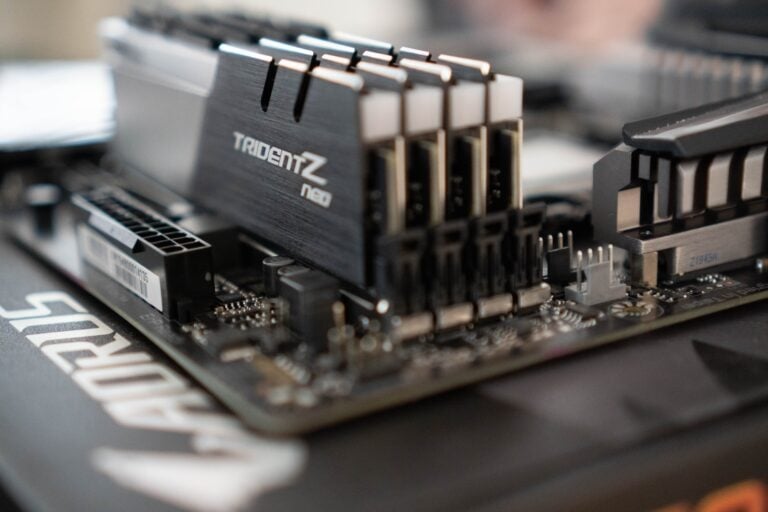
The three companies that control almost the entire global memory market have found themselves in court. Samsung, SK hynix, and Micron are facing a lawsuit in California. Seventeen plaintiffs accuse them of secretly agreeing to restrict DRAM supplies and drive up prices. According to the lawsuit, prices rose by roughly 700% over four years.
Allegations in the Lawsuit
The plaintiffs are relying on Section 1 of the Sherman Act, the U.S. law targeting agreements that stifle competition. And they are taking aim at companies that together control around 90% of the global DRAM market.
All three manufacturers shifted production capacity toward so-called high-bandwidth memory (HBM), stacked chips that power artificial intelligence accelerators. The parties agree on that. However, the plaintiffs claim that this shift merely served as a cover. In reality, they allege that the companies deliberately scaled back production of older DDR3 and DDR4 modules, artificially constraining the supply of conventional memory and allowing prices to soar.
Why couldn't anyone come in and undercut them with lower prices? Building a new memory factory costs tens of billions of dollars and takes years. According to the plaintiffs, the three established manufacturers could therefore comfortably restrict production without fear of anyone thwarting them.
The plaintiffs include fourteen individuals and three smaller computer companies. As evidence of the impact on consumers' wallets, they cite Apple's recent price increases for iPads and Mac computers. The cheapest MacBook Pro rose in price by $400 to $1,999, with the company citing memory and storage costs as the reason. The plaintiffs are therefore seeking class-action status, an injunction against further conduct of this kind, and treble damages.
History of Similar Lawsuits
This is not the first time memory manufacturers have faced similar accusations. In the early 2000s, the U.S. Department of Justice brought criminal proceedings over DRAM price manipulation between 1999 and 2002. At the time, both Samsung and the then Hynix, the predecessor of SK hynix, pleaded guilty. Samsung paid $300 million, while Hynix paid another $185 million in April 2005. Total fines across the industry exceeded $700 million, and several executives ended up behind bars. And an intriguing detail: Micron, which is now among the defendants, cooperated with investigators at the time and avoided a fine.
That old case had one crucial advantage. There were emails and a documented agreement. In short, there was direct evidence. A more recent attempt fared worse. In 2018, the law firm Hagens Berman filed a similar lawsuit with the same court. The court dismissed it in 2020, and an appeals court upheld the dismissal in 2022. It ruled that the conduct of the three companies could be explained more plausibly by the normal operation of the free market than by an illegal agreement.
The plaintiffs must now present evidence of an actual agreement, not merely show that all three companies reduced production and prices rose. Parallel but independent decisions to pursue the most profitable product do not constitute a cartel. Proving otherwise is usually the most difficult part of such cases. The plaintiffs' new weapon is precisely the shift toward HBM, an argument the earlier lawsuit did not have.
What the Manufacturers Say
The companies have long maintained that they make decisions independently and are shifting capacity toward HBM simply because of the enormous demand driven by artificial intelligence. Margins on these chips are much higher than on conventional memory for computers and phones. Senior executives have also warned that the shortage could last for years.
Customers are unlikely to see relief anytime soon. Investment bank Jefferies expects DRAM prices to jump by another 40 to 50 percent in the third quarter and by a further 30 to 40 percent in the fourth. It does not expect a significant improvement before 2028.
The allegations have not yet been proven, and the defendant companies have not yet responded to them in court.
Sources: timesofindia.indiatimes.com, tomshardware.com and finance.yahoo.com