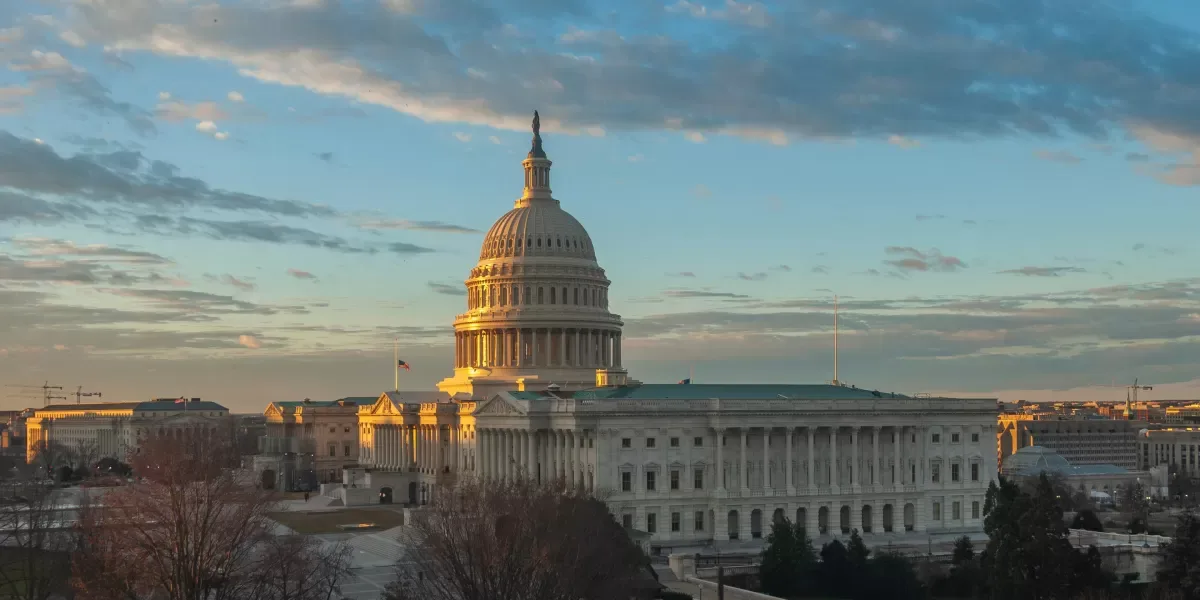
American Democrats are preparing to flood Congress with new artificial intelligence legislation. Once they take control of both chambers in January, they plan to introduce a series of bills concerning both AI systems and the construction of data centers. This has been confirmed by lawmakers, their advisers, and representatives of organizations working on the issue.
It will mark a significant change in direction. Until now, the Republican-controlled Congress has focused primarily on supporting AI development and has refused to pass laws that would restrict the technology in any way. This remained true even as voters began to oppose the rapid construction of data centers consuming enormous amounts of electricity.
What Democrats Want to Achieve
Democrats' plans target three main areas. The first concerns the finances of ordinary citizens. The party wants to protect households from rising electricity bills linked to the expansion of data centers. The second area focuses on safety, with advanced AI systems required to undergo independent testing. The third point is intended to clearly determine when companies are liable for damage caused by their products.
Senator Chuck Schumer of New York, who is expected to become Senate majority leader, said at an event in Washington on Thursday that protecting consumers from higher energy costs would be among his priorities next year.
Massachusetts Representative Lori Trahan, one of the most prominent Democratic figures in the AI debate, wants to pass legislation under which leading artificial intelligence models would be assessed by independent experts against safety standards. According to her deputy chief of staff, Francis Grubar, she will also focus on ensuring that companies are held accountable if their systems cause harm.
California Democrat Zoe Lofgren, who is seeking the chairmanship of the House Science Committee, says the party wants to create responsible rules for AI without hindering innovation. Abdul El-Sayed of Michigan, who won a Senate seat on Tuesday, has called for the creation of an independent agency that would oversee artificial intelligence and have the authority to inspect technology companies.
Trump Stands in Their Way
The legislation itself, however, will face an uphill battle. President Donald Trump has repeatedly rejected calls for mandatory AI rules, and as long as he remains in the White House, the chances of their approval are slim.
Nevertheless, Democrats and their allies see control of congressional committees as a major opportunity. The committees will give them room to advance their own proposals, subpoena technology company executives, and build support for a time when AI systems cause actual harm. Texas Representative Greg Casar, who leads the Democrats' progressive caucus, said this week that AI company executives should testify under oath.
Concerns about artificial intelligence are widespread among Americans. According to an October poll by Reuters, most voters believe that neither the Trump administration nor Congress takes the risks of AI seriously enough, and they want the government to establish new rules for the technology.
Ed Mills, who leads political analysis at financial services firm Raymond James, notes that the president's opposition could be overcome by a potential crisis that generates sufficient support for new legislation. In his view, the likelihood of legislation being passed is much higher than people expect. Congress can override a presidential veto if two-thirds of lawmakers in both chambers vote to do so. According to Mills, Democrats could also try to insert AI rules into routine legislation that Congress must pass every year.
AI Companies Under Scrutiny
Democrats also want to use their new power to more closely scrutinize the industry's most influential companies, including OpenAI and Anthropic. In October, Lofgren and other Democratic House committee chairs asked OpenAI, Anthropic, Meta, Alphabet's Google, and SpaceX to provide detailed descriptions of how they ensure safety. The companies were also asked to report cases in which their AI tools did something their creators had not anticipated.
Stricter government oversight could reduce technology companies' profits. It would be enough if it slowed the release of new models or forced companies to modify how their tools operate due to concerns that their products are harming people.
Markets reacted immediately to the prospect of the new Congress. Technology stocks fell sharply on Thursday as investors began to fear that Democrats would slow AI development. Prices came under further pressure from concerns that companies would not earn sufficient returns on their massive investments in building artificial intelligence infrastructure.