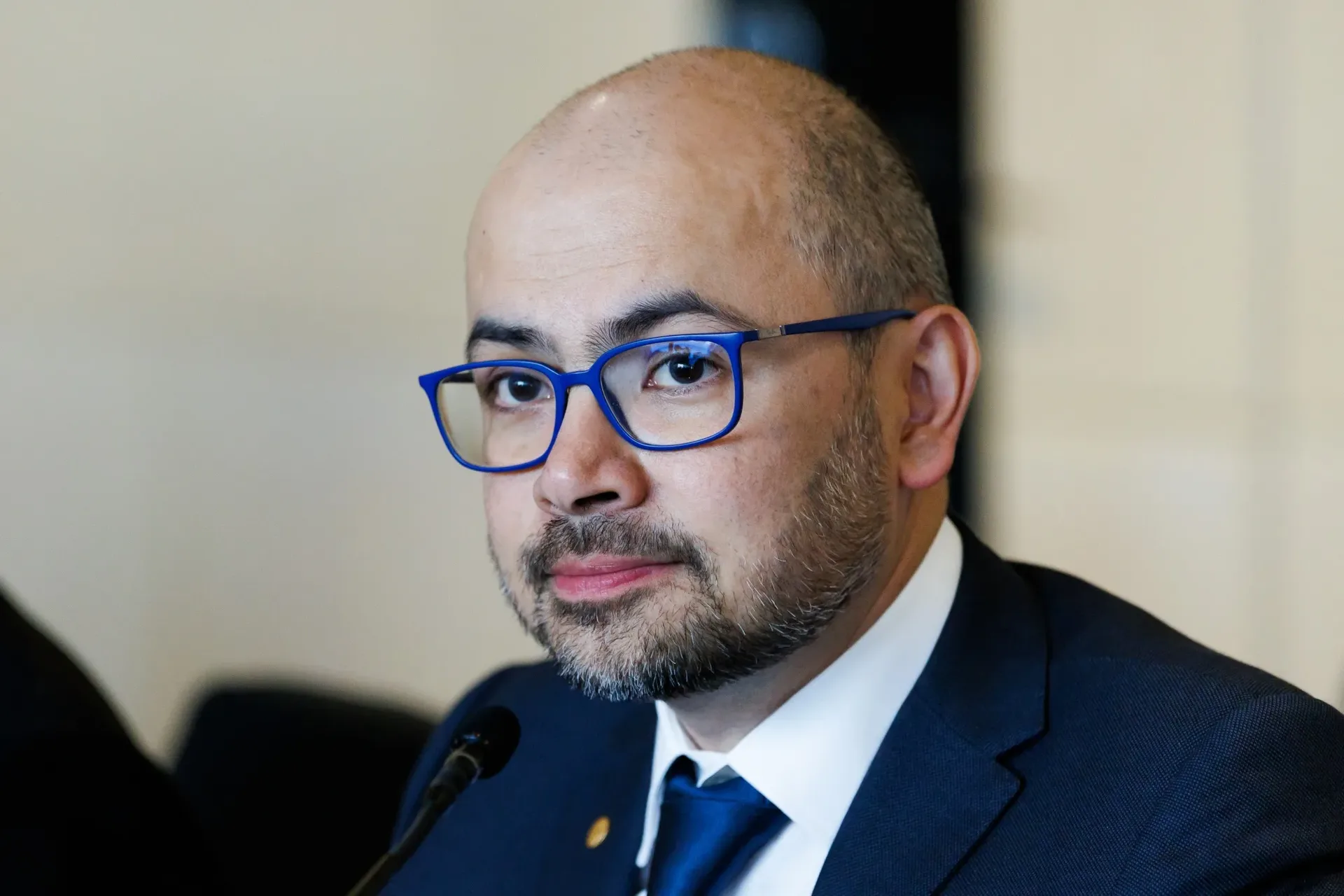
Google has announced the biggest shake-up of its research division in years. Demis Hassabis, co-founder and longtime head of DeepMind, is stepping down as CEO. He will remain with the company as chairman of DeepMind while also taking on the newly created role of chief scientist at Alphabet, Google’s parent company. Current chief technology officer Koray Kavukcuoglu will take over the laboratory’s day-to-day operations.
The announcement came at a time that can hardly be described as calm. Google is trying to catch up with AI models from OpenAI and Anthropic, but its flagship model is falling behind schedule and top researchers are leaving the company. On the same day, Google chief scientist Jeff Dean also announced his departure after twenty-seven years at the company.
The scientist who no longer felt at home in the executive chair
Hassabis explained his decision in a letter to employees. He wrote that he has been working toward artificial general intelligence (AGI) throughout his entire career and now feels it is “within reach.” That is precisely why he decided to hand over operational responsibility so he could devote himself fully to AI and help shape the future. He stressed that the arrival of AGI must turn out well for humanity.
According to news outlets, employees said the news had caught them by surprise but made sense. In recent months, Hassabis had been devoting less and less time to the Gemini model and focusing more on safety issues and the impact the arrival of AGI would have on society. According to one employee, he regularly attended meetings on AI safety and governance, worked closely with governments, and also attended the recent G7 summit. By contrast, he only occasionally attended routine meetings about Gemini’s development, when the most important matters were at stake.
Sources say Hassabis had been shifting responsibility for Gemini and Google’s consumer strategy to Kavukcuoglu for at least a year. No one pressured him to step down, but according to people close to him, a role focused more on business than science had ceased to bring him satisfaction.
Hassabis’s other plans also confirm that this is a return to his original focus. He will remain CEO of Isomorphic Labs, the DeepMind spin-off focused on drug development, and wants to devote more time to it. He has described it as the best use of artificial intelligence for human health. After all, he won the 2024 Nobel Prize in Chemistry for AlphaFold, a model that predicts protein structures.
In recent years, the fifty-year-old London native has emerged as one of the industry’s most cautious voices. Last month, he called on the United States to establish an international oversight body that would monitor the world’s most powerful models. He wrote on Substack that what humanity does now will determine the shape of the next phase of civilization.
Kavukcuoglu takes charge
DeepMind’s new head has not been given the title of CEO. Koray Kavukcuoglu will lead the laboratory as vice president and report directly to Sundar Pichai. In addition to serving as DeepMind’s chief technology officer, he is also Alphabet’s chief AI architect and will now oversee the development of cutting-edge models, including the entire Gemini family.
For people inside the company, it is not such a major leap. Kavukcuoglu had been leading meetings about Gemini long before Google announced anything. Commenting on his appointment, a Google spokesperson said that Kavukcuoglu sees pushing the boundaries of artificial intelligence and building it responsibly as one and the same, and that the safety of cutting-edge models has always resided directly within the Gemini team under his leadership.
Changes within the company
The change at the top is only the visible part of a broader restructuring. Lila Ibrahim, who was responsible for AI readiness at DeepMind, will now report to James Manyika, one of Google’s senior executives. Some of the teams that previously reported to her, including certain safety teams, are set to move under Kent Walker, Google’s president of global affairs. However, two sources told TIME that no final decision has yet been made on this move.
DeepMind’s communications, legal, and marketing teams are also expected to move to Google. Shane Legg, the laboratory’s co-founder and chief AGI scientist, and his team will continue to report to Hassabis.
One DeepMind employee told TIME that they were concerned that teams focused on safety, responsibility, and ethics would lose influence after moving to Google. A company spokesperson rejected this, saying that the transition changes absolutely nothing when it comes to the safety of cutting-edge models.
Gemini falls behind schedule as people leave
The restructuring comes as Gemini repeatedly falls behind schedule and trails cutting-edge rivals from OpenAI and Anthropic. Gemini 3.5 Pro, which was meant to be the next flagship model, is several months behind its original June schedule. Nevertheless, Hassabis highlighted progress with new technologies in his letter and specifically mentioned the still-unreleased Gemini 4.
The exodus of researchers poses another problem. Gemini co-lead Noam Shazeer left for OpenAI, while Nobel laureate John Jumper joined Anthropic. Both competitors have meanwhile made significant progress in developing coding agents.
On the same day as Hassabis, Jeff Dean, the man behind many of Google’s most important technical breakthroughs, also announced his departure. He is founding Discovery Loop, a company intended to accelerate discoveries in machine learning, science, and engineering. It is a public benefit corporation, and former colleagues Sanjay Ghemawat, Oriol Vinyals, and Quoc Le have joined him. Dean said that operating outside a publicly traded company gives the team room to make decisions that do not necessarily have to be purely financially advantageous.
Pichai wrote in an internal company message that after twenty-seven years, Dean wanted to try something new and that Google would support him. At the same time, he insisted that the company has enough people, computing power, and reach to succeed in the competition.
What Google hopes to gain from it
The restructuring separates two agendas that Hassabis had long kept together. Operations, pressure to meet deadlines, and the competition for users are being handed to the executive who already leads model development. Issues surrounding AGI, safety, negotiations with governments, and scientific applications of artificial intelligence are being taken on by the founder himself, whose name carries considerable weight in the industry and who had already been devoting more and more attention to them.
Google expects this to speed up decision-making in the crucial area of developing and delivering Gemini models. Merging DeepMind’s communications, legal, and marketing teams with parent company Google points in the same direction—specifically, toward creating a single company instead of two parallel structures. Meanwhile, Hassabis gains greater freedom for his public role, in which he calls for international oversight of the most powerful models.
Sources: reuters.com and theguardian.com