

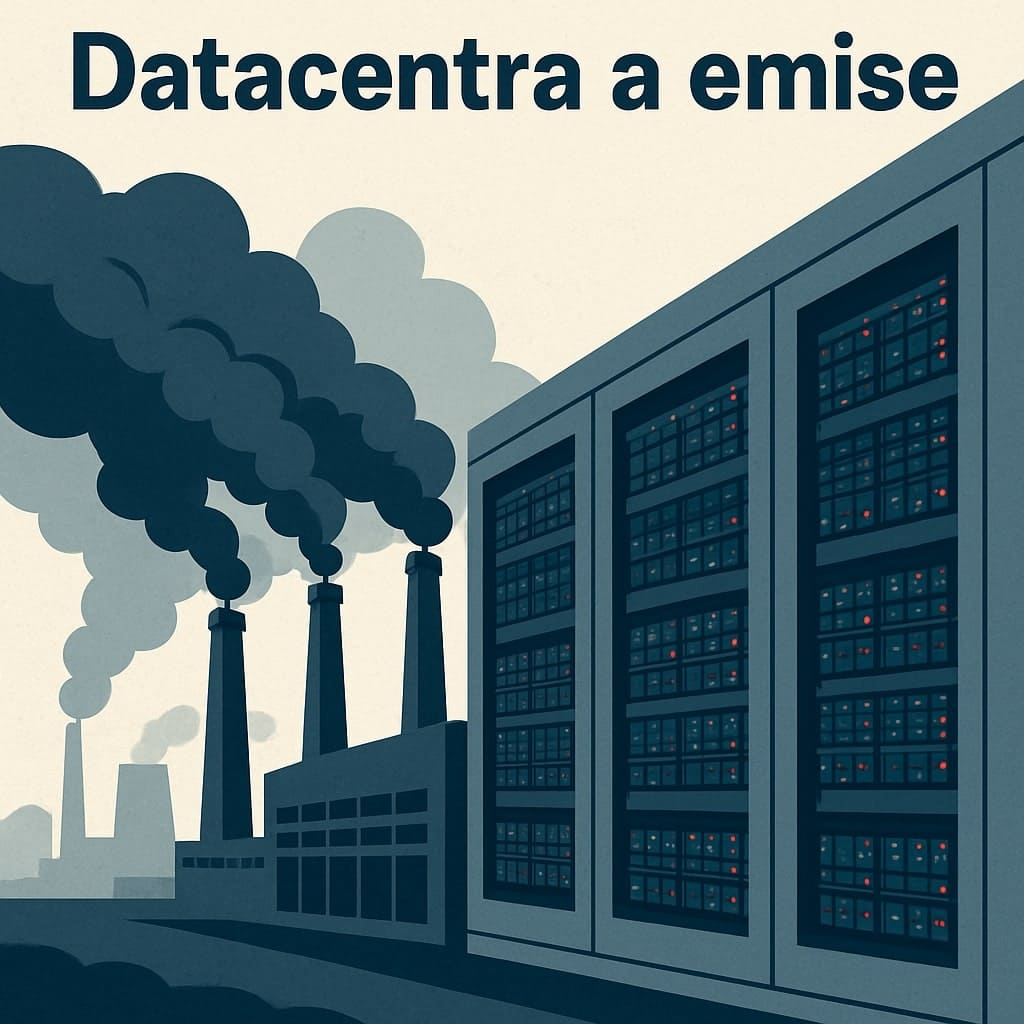
Data Centers and Their Impact on Greenhouse Gas Emissions
The rapid growth of artificial intelligence and cloud computing is causing a dramatic increase in electricity consumption in data centers around the world. This trend has significant consequences for greenhouse gas emissions and is motivating the industry to seek innovative technological solutions.
Growing Energy Consumption in Data Centers
Data centers and transmission networks are currently responsible for approximately 1% of global energy-related greenhouse gas emissions. However, this figure is rising rapidly. According to available forecasts, electricity consumption in data centers is expected to double by 2026, primarily due to the intensive computational operations associated with artificial intelligence. In the United States, the situation is even more pronounced—data center energy demand is expected to grow at a rate of 12% annually through 2030. This could lead to a doubling of the technology sector's carbon emissions, as a significant portion of this new demand is being met with electricity generated from natural gas rather than renewable sources. "The problem is that renewable energy infrastructure cannot keep pace with the exponential growth in computing needs," explains an expert in data center energy sustainability.
Natural Gas as a Transitional Solution
Natural gas continues to serve as a "transitional" fuel for data centers. Compared with coal or oil, it offers lower carbon intensity, but still contributes significantly to emissions. Its main advantage is the reliability of supply in a situation where the development of renewable energy infrastructure is lagging behind growing demand. However, if reliance on natural gas is not supplemented by other emissions-reduction strategies, it could slow efforts toward complete decarbonization and prolong dependence on fossil fuels. The industry is therefore actively seeking additional technological solutions.
Carbon capture and storage technology (Carbon Capture and Storage - CCS) represents a promising avenue for development. This technology can capture more than 90% of CO₂ emissions from natural gas power plants that supply data centers. At the turn of 2024 and 2025, significant projects were announced focusing on the construction of specialized natural gas power plants with integrated CCS, designed specifically for large data centers. This approach enables operators such as ExxonMobil, Chevron, and Eni to meet reliable power requirements while significantly reducing direct greenhouse gas emissions.
In addition to CCS, data centers use a range of other technologies to reduce their carbon footprint:
- Nuclear Energy
Nuclear power plants provide low-emission capacity and can effectively complement renewable energy sources. Interest in this option is growing among hyperscale data center operators. - Renewable Energy Sources
Leading technology companies continue to aggressively purchase wind and solar power through power purchase agreements (PPAs). However, power grid constraints limit the speed at which these sources can be expanded in proportion to rapidly growing demand. - Energy Efficiency and Cooling Innovations
Reducing the power usage effectiveness (PUE) metric through hardware modernization lowers both operating costs and indirect emissions. The adoption of liquid cooling systems improves efficiency but increases water consumption—this trade-off is addressed through hybrid cooling approaches that optimize both water and electricity consumption depending on climatic conditions. - Cleaner Backup Fuels
Switching backup generators from diesel or traditional fuels to cleaner alternatives, such as hydrotreated vegetable oil, further reduces episodic greenhouse gas emissions during power outages. - Waste Heat Reuse
Capturing waste heat from IT equipment for district heating or internal reuse helps offset fossil fuel-based heating elsewhere—this trend is gaining importance given the long life cycle of modern equipment.
Artificial intelligence itself presents both challenges in the form of increased energy consumption and opportunities: advanced optimization algorithms improve forecasting, resource allocation, cooling management, workload scheduling, and overall facility efficiency. For example, Google stated that its sixth-generation Tensor Processing Unit is more than 67% more energy-efficient than its predecessor, demonstrating progress in hardware energy efficiency. Google aims to achieve net-zero emissions across its entire value chain by 2030.
Future Outlook
While the short-term growth in fossil fuel-generated electricity will likely increase absolute sectoral greenhouse gas emissions—potentially by an additional approximately 2-4% compared with current emissions from the U.S. energy sector—the industry faces increasing regulatory scrutiny and investor pressure to make progress on sustainability. Long-term solutions depend on accelerating the pace of renewable energy deployment alongside expanding nuclear capacity or deploying CCS at scale.
Data center operators are increasingly turning to transitional fuels such as natural gas—with growing integration of carbon capture—as well as nuclear energy where feasible. At the same time, they are investing significantly in renewable energy purchase agreements and optimizing efficiency at every level—from chips to cooling systems—to manage their environmental footprint amid explosive digital growth. Although data centers are essential to the functioning of the modern digital economy, their growing energy demands pose a challenge to global efforts to reduce greenhouse gas emissions. Technological innovations in this area will play a crucial role in finding a balance between digital progress and environmental sustainability.


