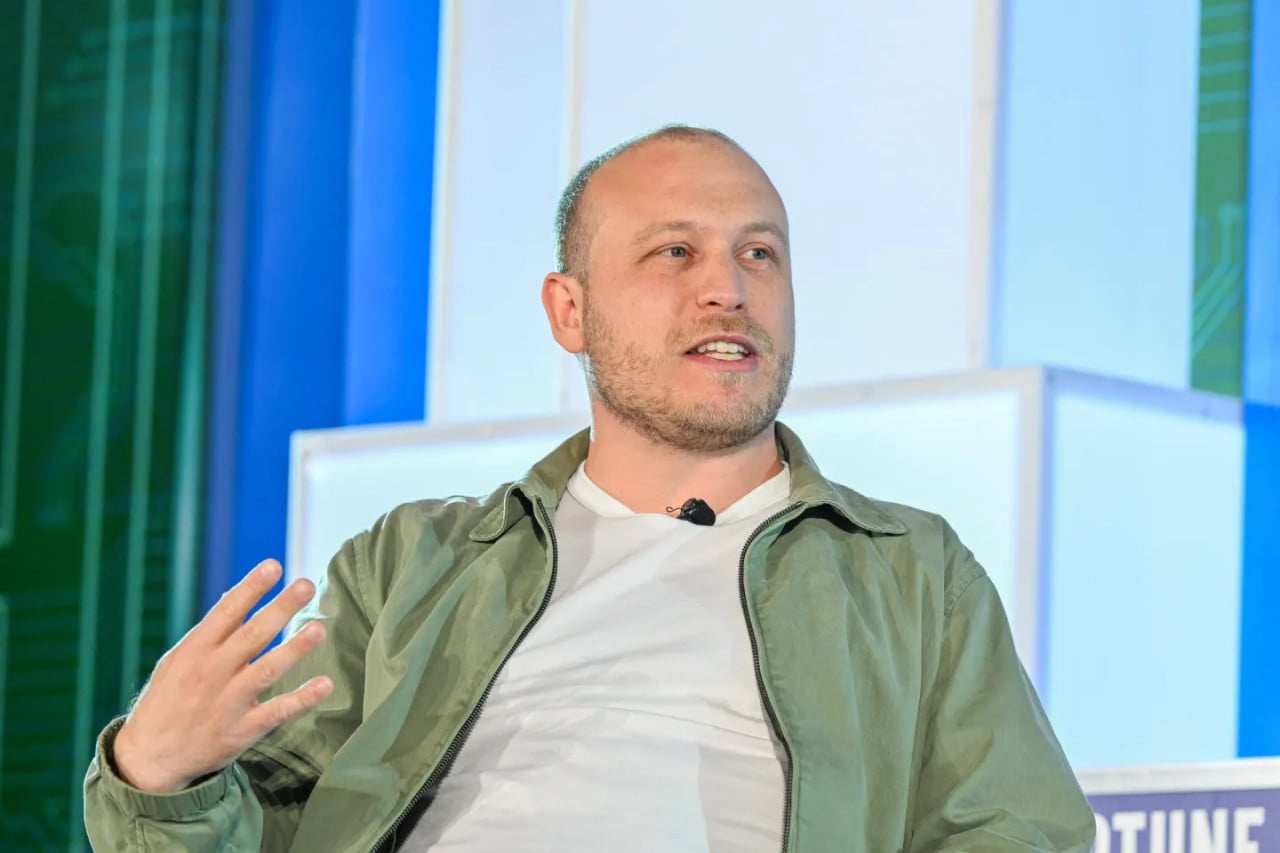
Boris Cherny, head of Claude Code at Anthropic, stood before a packed room of engineers at Meta's @Scale conference, and the very first question from the audience stopped him in his tracks. "Are loops the next hype cycle, or are they real?" someone in the audience asked. Cherny answered without hesitation: "Yes, they are real."
Cherny does not speak about loops as an outside observer. He is the engineer who led the team that built Claude Code, now one of the most widely used agentic coding tools. When he speaks, the developer world pays attention.
The Loop Era
Cherny offered the conference a simple interpretation of the past two years. First, we wrote source code by hand. Then we switched to agents that write code for us. Now we are entering the third phase: agents prompt other agents, which then generate the code. "The leap from agents to loops is as big as the leap from source code to agents," he said.
What exactly is a loop in the AI world? It is a long-running, recursive structure in which subagents monitor a repository, open pull requests, and work in the background until they receive a signal to stop. But that signal is not determined by a fixed condition in the code, as it is in traditional programming. Another agent decides.
During the talk, Cherny described what he is currently running himself. One agent continuously looks for ways to improve the code architecture. Another searches for duplicate abstractions that could be consolidated. Both submit pull requests like any other developer on the team. And because the code is constantly changing, they never stop.
Ralph Loop and the Compute-Time Test
Loops themselves are nothing new in computer science. Recursive functions that call themselves and stop once a condition is met are taught in the first semester of every technical discipline. What is different is that the stopping logic is now nondeterministic. It is determined not by a rule, but by a subagent.
One of the most widely used techniques is the so-called Ralph Loop, named after Ralph Wiggum from The Simpsons. It works by summarizing all the work the model has done so far and asking whether it has achieved its goal. If not, it continues. It is a way to prevent the model from getting lost during long-running operations. It sends the model back and forth until the task is complete.
OpenAI researcher Noam Brown noted earlier this month that today's models can solve almost any problem if given enough computing power. Loops are a direct consequence of this observation. If you do not know when an agent will finish, simply let it run until it succeeds.
Enormous Trust and Enormous Costs
This is a powerful idea, but it comes at a price. Literally. Agentic loops burn through tokens significantly faster than traditional question-and-answer chatbots. And because the point is for them to run continuously, there is no spending cap. For Anthropic, which makes money by selling tokens, this is great news. For everyone else, it could be a very expensive way to work.
The original approach to agentic coding was different. A developer launched the agent, watched its first steps, intervened when it strayed, and stopped the work when the task was complete. Loops change this model. Agents do not wait for the next prompt. They wait for a signal that the work is complete. And another agent, not a human, decides when that signal arrives.
Source: techcrunch.com