A team from Shenzhen University has built an artificial intelligence model that uses brain scans of 19-year-olds to estimate who will develop depressive symptoms over the following four years. It works with a single type of stimulus: the human face. The research was led by Lu Han of the School of Artificial Intelligence, and the results were published this month in the journal Science Advances.
Depressive disorder is among the most widespread mental illnesses in the world. According to the World Health Organization, roughly 330 million people live with it, and treatment does not work as well as it should for about a third of them. In China alone, the number of people affected is estimated at 95 million, according to a nationwide mental health survey reported by National Business Daily.
Data from Europe
The Chinese researchers used the European IMAGEN dataset, a long-term study of adolescents involving hospitals and universities in several European countries. Participants underwent repeated examinations at the ages of 16, 19 and 23. Each time, they had magnetic resonance brain scans and blood samples taken and completed questionnaires designed to show whether they were developing depression.
The researchers deliberately selected adolescents. The transition between puberty and early adulthood is a period when depressive symptoms can emerge rapidly. The earlier the risk is identified, the greater the chance of doing something about it, Lu Han explained to the Global Times.
Distinguishing Facial Expressions
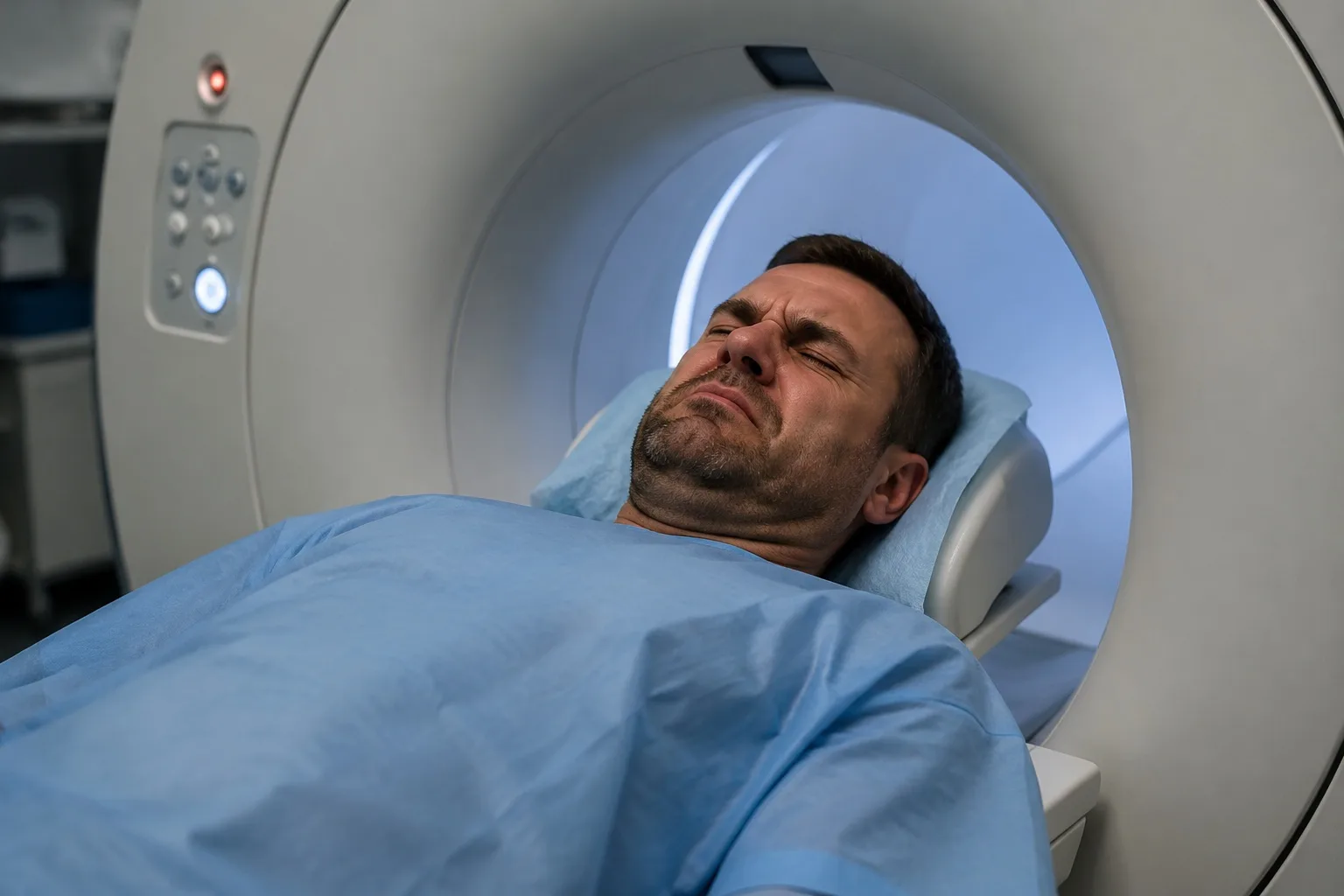
At the age of 19, participants completed a task involving emotional facial expressions while inside a brain activity scanner. They also filled out questionnaires about their emotional state, while the laboratory processed genetic data obtained from their blood. Four years later, the entire process was repeated.
According to Lu Han, people without depression easily recognize changes in facial expressions and respond to them appropriately. They respond warmly to a smile. Those with the disorder cannot do this and are much more likely to think that the other person is angry with them. Psychologists call this phenomenon a negative information-processing bias. A person at risk of depression is more likely to notice an unpleasant signal, interpret it more negatively and remember it for longer.
The team therefore focused specifically on anger. An angry expression conveys a clear message of threat and rejection—precisely the issues that cause people with depression the greatest difficulty in relationships. On this basis, the researchers built a neural network aligned with the way the human brain processes images. The goal was to describe how the brain converts a specific face into the abstract concept of anger.
The result revealed a relatively clear dividing line. Nineteen-year-old participants whose brains were less able to distinguish individual emotions and tended to perceive anger in the faces of those around them were significantly more likely to experience depression and anxiety at the age of 23. Those whose responses to facial expressions leaned toward negative emotions and memories fared the worst. The team then used these data to derive an indicator capable of detecting warning signs in a specific individual. The team subsequently validated its predictions using a separate dataset of patients diagnosed with depression.
Some Genetic Influence
A surprise emerged when the results were compared with genetic data. The calculated indicator was associated with the rs11123030 variant, which previous studies had linked to depression, as well as with the overall genetic risk of the disorder. It therefore appears that innate predispositions also influence the way a person reads the emotions of others.
The model also provided new information beyond what could be estimated from family stress and social background. It does not replace these factors but complements them. According to the authors, depression therefore arises neither purely from genes nor purely from the psyche, but from an interplay of innate predispositions, brain development, emotional processing and life experiences.
Significance for AI
Lu Han also sees benefits beyond medicine. Artificial intelligence that is aligned with actual brain activity and tested through minor adjustments to its parameters can not only predict but also explain how a given bias arises. This leads to a recommendation for the development of systems designed to work with emotions. According to the authors, they should not settle for sorting expressions into a few fixed categories. They should pay attention to subtle details and ensure that their own expectations do not influence what they are currently seeing. This is precisely where the kinds of errors we also know from humans originate.
The authors caution that the results currently apply exclusively to European young people. Before the model can become a practical tool, it must be validated in middle-aged and older people and in other ethnic groups.
Source: scmp.com