

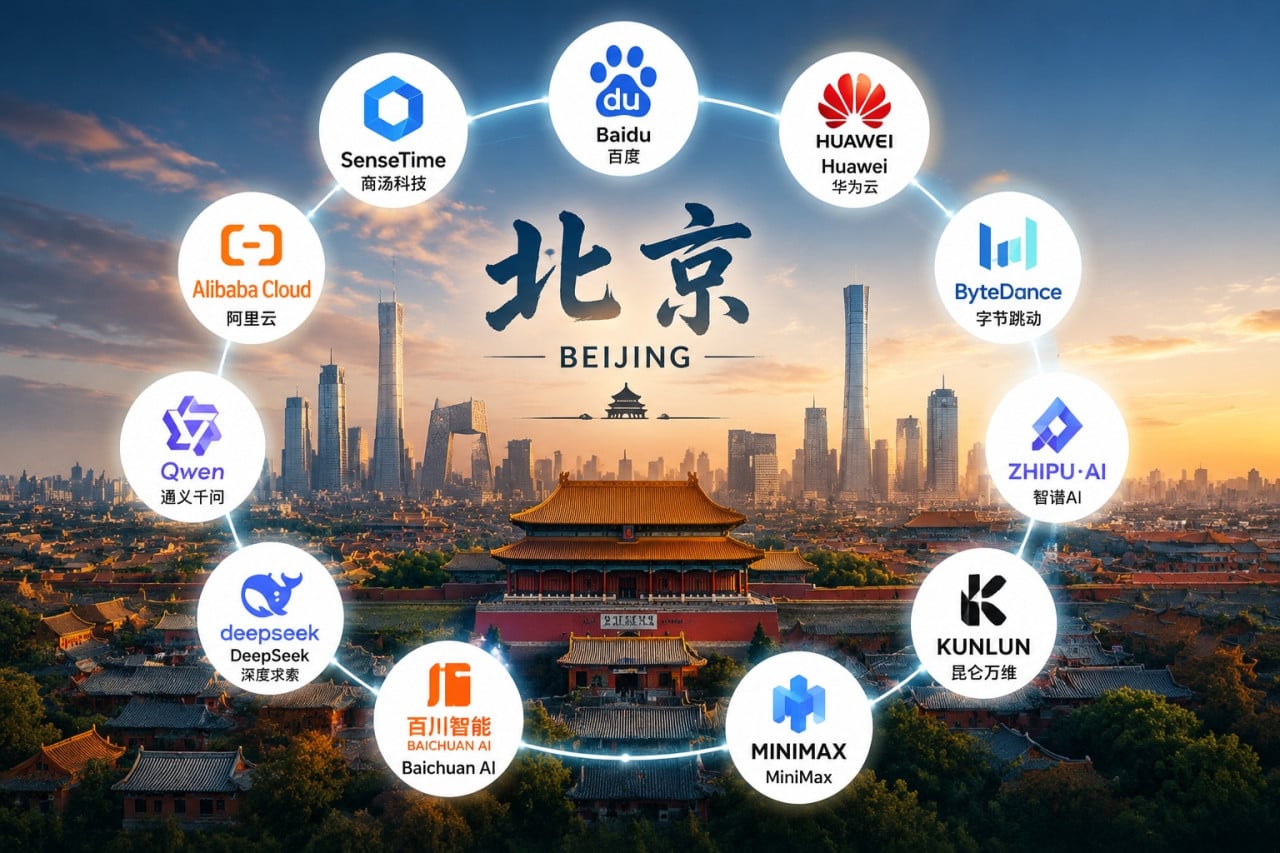
Over the past month, Chinese authorities have been meeting with the country's largest technology companies to discuss whether to restrict foreign users' access to China's most advanced artificial intelligence models. According to Reuters, citing three sources familiar with the talks, the measures could also affect models that have not yet been released. This marks a significant reversal. Just a year ago, China was readily sharing its models with the world.
Representatives of technology giants Alibaba and ByteDance attended the talks, along with startup Z.ai. These three companies are behind models now used by half the world. Alibaba develops the Qwen series, while ByteDance develops the Doubao model. Both rank among the most widely used in China. Z.ai recently made waves in Silicon Valley with its GLM-5.2 model. Its capabilities approach those of leading American systems, but at a fraction of the cost.
What was discussed
The proposed measures go beyond a simple export ban. They are also intended to apply to so-called open-weight models. These are systems that anyone can download, run locally, and customize. They are precisely what made Chinese AI popular abroad. The restrictions would also affect closed models.
Two other proposals were raised during the talks. The first would make leaking or stealing a company's AI model a national security crime. The second would restrict who is allowed to finance Chinese artificial intelligence companies. However, the sources cautioned against high expectations. The authorities have not yet made a decision. Any restrictions might also apply only to future models, and there is no timetable.
Reuters was unable to determine exactly what the new rules would look like. However, some indication comes from a May meeting of Chinese legal experts that focused on rules for open-source AI. A summary of their discussion was published in the journal of China's Supreme People's Court.
The legal experts proposed a tiered model. Basic open-source tools would merely need to be registered. More advanced technologies would undergo a security review. And the most sensitive ones—cutting-edge models at the frontier of current capabilities—would either be barred from public release altogether or restricted to domestic use.
Why it shook the market
If Beijing actually tightened access, it would reverse its previous course. China earned goodwill around the world precisely by offering its models for free. Since DeepSeek released its R1 model last year, Chinese systems have spread globally mainly thanks to their low cost and growing capabilities. Developers in Europe quickly became accustomed to inexpensive open models. They viewed them as an affordable alternative to costly American systems. If access to these models were cut off, costs would likely rise sharply for many companies building on Chinese models.
China's shift also resembles what Washington is doing. The United States is trying to prevent China from copying its advanced models. In June, the U.S. administration ordered that foreign nationals must not be given access to the most advanced models from Anthropic, Fable, and Mythos. The company therefore disabled the models for all users worldwide because nationality could not be verified in real time. Beijing is now addressing the same issue from the opposite direction. OpenAI's latest version of ChatGPT recently met a similar fate.
China has already been restricting travel by its researchers for some time and monitoring who is allowed to invest in domestic startups. Designating AI models as state property would merely add another brick to the wall.
Sources: nst.com and thenextweb.com


