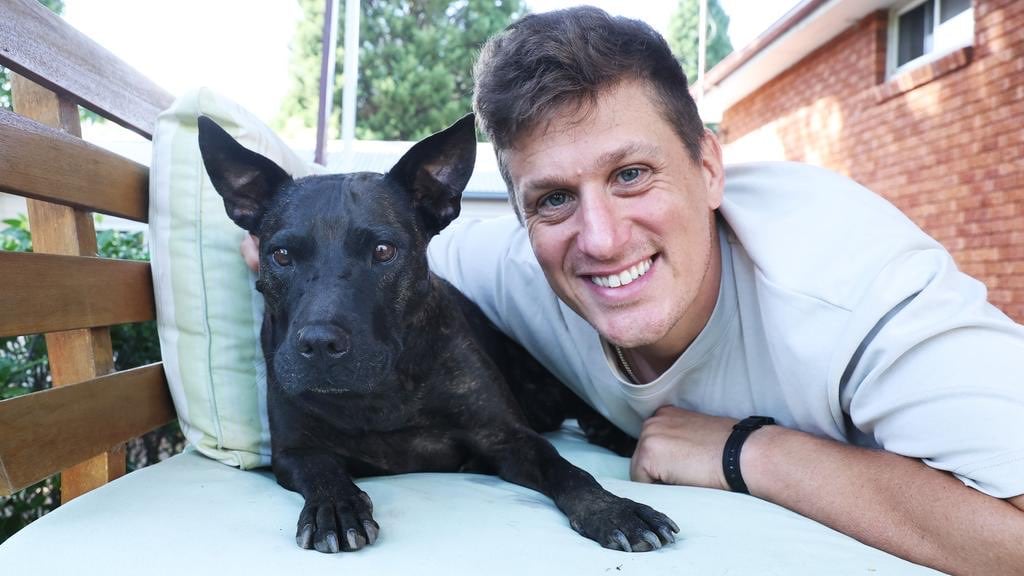
Paul Conyngham is not a doctor. He is not a veterinarian or an oncologist. He is an Australian technology entrepreneur with 17 years of experience in machine learning and data analysis. And it was precisely these skills that helped him do something that would have been impossible just a few years ago: create a personalized mRNA cancer vaccine for his dog.
It all began in 2024, when Conyngham’s eight-year-old dog Rosie, a Staffordshire Bull Terrier and Shar-Pei cross, was diagnosed with mast cell cancer. Large tumors had grown on one of her hind legs. The veterinarians were frank: Rosie had only a few months left. But Conyngham is not the kind of person to simply accept that.
Chemotherapy Was Not Enough. It Was Time for a Different Plan
First, he tried the conventional route. Chemotherapy, surgery, thousands of dollars spent on standard treatment. But the tumors persisted. Rosie grew weaker. The situation worsened. That was when Conyngham turned to ChatGPT. He gave the chatbot everything he knew about Rosie’s diagnosis and began searching for alternatives. ChatGPT recommended immunotherapy and directed him to the Ramaciotti Centre for Genomics at the University of New South Wales (UNSW). “I went on ChatGPT and put together a plan for how to do it,” Conyngham told the Australian newspaper The Australian.
He paid $3,000 to sequence Rosie’s DNA. Then he got to work. He ran the tumor’s genetic data through various data-processing pipelines to identify mutated proteins. He also used AlphaFold, an artificial intelligence tool from Google DeepMind that analyzes protein structures and helps identify potential treatment targets.
The Pharmaceutical Company Said No. UNSW Scientists Said Yes
Conyngham soon identified an immunotherapy drug that could help Rosie. But the pharmaceutical company that manufactured it refused to provide the drug. A dead end. That was when Pall Thordarson, director of the UNSW RNA Institute and a pioneer in nanomedicine, entered the picture. He took Conyngham’s data and code and, in less than two months, developed a completely unique mRNA vaccine tailored specifically to Rosie’s tumors.
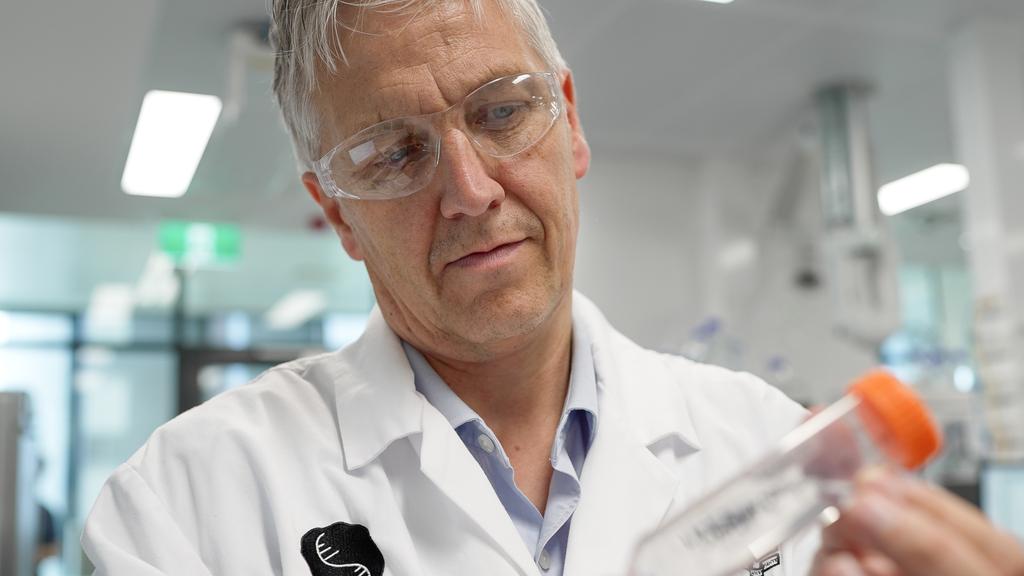
“This is the first time a personalized cancer vaccine has been designed for a dog,” Thordarson said. “We are at the very frontier of cancer immunotherapy. And ultimately, we will use it to help people. What Rosie is teaching us is that personalized medicine can be highly effective and feasible within a time-sensitive framework using mRNA technology.”
But that was not the end of the obstacles.
One Hundred Pages of Paperwork
Before Rosie could receive her first injection, Conyngham had to obtain ethical approval for a clinical trial on an animal. And that proved to be a tougher challenge than creating the vaccine itself. “The bureaucracy was actually harder than creating the vaccine. I was trying to obtain Australian ethical approval for a drug trial on Rosie,” Conyngham admitted. “It took me three months; every evening I set aside two hours just to write this one-hundred-page document.”
In the end, Rachel Allavena, a professor of canine immunotherapy at the University of Queensland’s School of Veterinary Science who specializes in experimental immunotherapies, helped. Thanks to her, they managed to complete the process. The vaccine was then sent to her laboratory in Gatton. And Conyngham and Rosie made the ten-hour drive to get there.
Course of Treatment
Rosie received her first injection in December 2024. A booster followed in February 2025. The results shocked even the scientists themselves. The tumor on Rosie’s leg, which had originally been the size of a tennis ball, shrunk by half. Her coat began to shine. Her energy and zest for life returned. “In December, she had very little energy because the tumors were taking a heavy toll on her,” Conyngham recalls. “Six weeks after the treatment, I was at the dog park when she spotted a rabbit and jumped over the fence to chase it. I’m under no illusion that this is a cure, but I believe this treatment has significantly extended Rosie’s life and improved its quality.”
Thordarson noted on the social network X that Rosie’s story shows how technology can make the cancer vaccine design process accessible to a broader range of people. At the same time, however, he cautioned that not all the tumors responded to treatment. Conyngham is therefore working on a second vaccine that would target the more resistant lesion.
How AI empowered Paul Conyngham to create a custom mRNA vaccine to cure his dog’s cancer when she had only months to live. The first personalized cancer vaccine designed for a dog: https://t.co/Outsl0VVMW pic.twitter.com/2uQn9bNA9t
— Greg Brockman (@gdb) March 14, 2026
If It Works in a Dog, Why Not in Humans?
UNSW Associate Professor Martin Smith, who initially considered Conyngham’s request for DNA sequencing somewhat unusual, now sees things differently. “We get various strange inquiries, and this one came from a private individual who wanted to sequence his dog,” Smith said. “DNA sequencing is a way to profile a tumor and identify mutations that could be causing the disease.”
Then he added the question hanging in the air: “If we can do this for a dog, why don’t we extend it to everyone with cancer? It gives hope to many people, and it is something we are actively trying to develop here.” Matt Shumer, co-founder and CEO of OthersideAI, aptly commented on X: “This is exactly what I mean when I say the world is going to become a very strange place very soon. Expect more stories like this, each sounding increasingly more insane.”
And you know what? He may be right. Rosie is living proof that the boundary between what is and is not possible is shifting faster right now than most of us can imagine. AI-powered personalized medicine is no longer a thing of the future. For one dog from Sydney, it is already the present.
This is what I mean when I say the world is going to get very weird, very soon.
— Matt Shumer (@mattshumer_) March 15, 2026
Expect more stories like this, each sounding increasingly more insane. https://t.co/NS3cA68OOs