

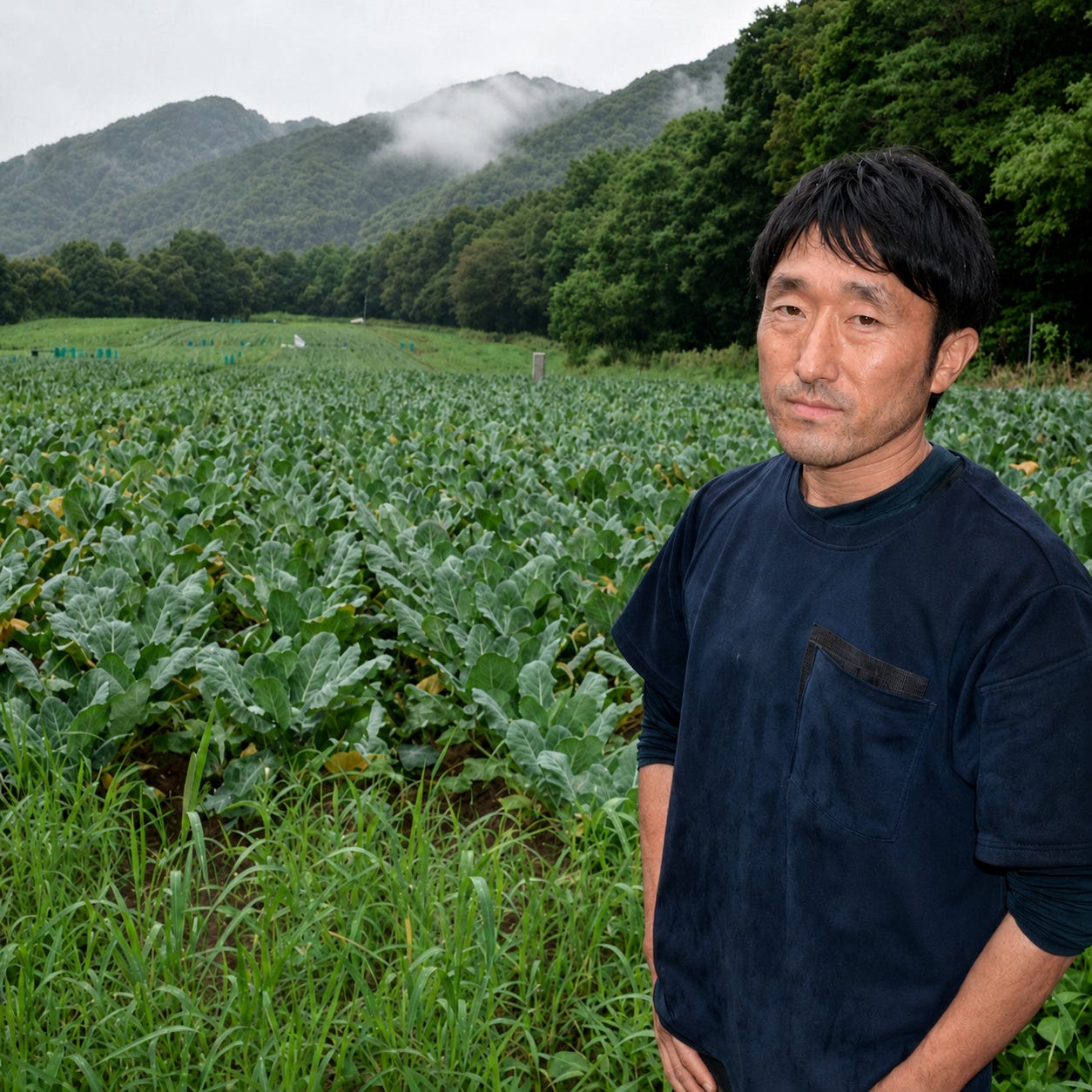
Hiroki Tomiyasu did not inherit land, did not study agriculture, and knew almost nothing about machinery. Yet today, he farms roughly 100 hectares of fields in northern Japan, growing broccoli, pumpkins, spring onions, and soybeans. And he has an unexpected assistant helping him. Artificial intelligence. Using ChatGPT and the Codex tool, he builds systems himself that would otherwise cost him millions.
From an Office Desk to a Tractor
Tomiyasu grew up near Tokyo and began his career as a civil servant. He was introduced to agriculture by friends who had ties to Japan’s rice-growing tradition and took him along to the countryside. Curiosity gradually turned into conviction. “Suddenly, I was a farmer,” he says.
Ten years ago, he joined a small group restoring abandoned rice terraces in Okayama Prefecture. It was part of a broad effort to save aging farmland that was disappearing across rural Japan. It was hard work, but the group stuck together. And they had ambitions. “We thought, why not establish our own collective and run a full-fledged farm?”
That idea eventually led them to Hokkaido, Japan’s agricultural heartland. There, Tomiyasu learned to farm simply by farming. Season after season, he mastered driving tractors, caring for crops, and managing large areas of land.
An Engineer Who Is Always on Hand
Modern farming on this scale is unforgiving, physically demanding, operationally complex, and finding workers is difficult. Tomiyasu therefore began looking for ways to automate some of the work himself. But traditional agricultural automation usually means expensive machinery from manufacturers and specialized engineers. In other words, resources accessible only to much larger businesses.
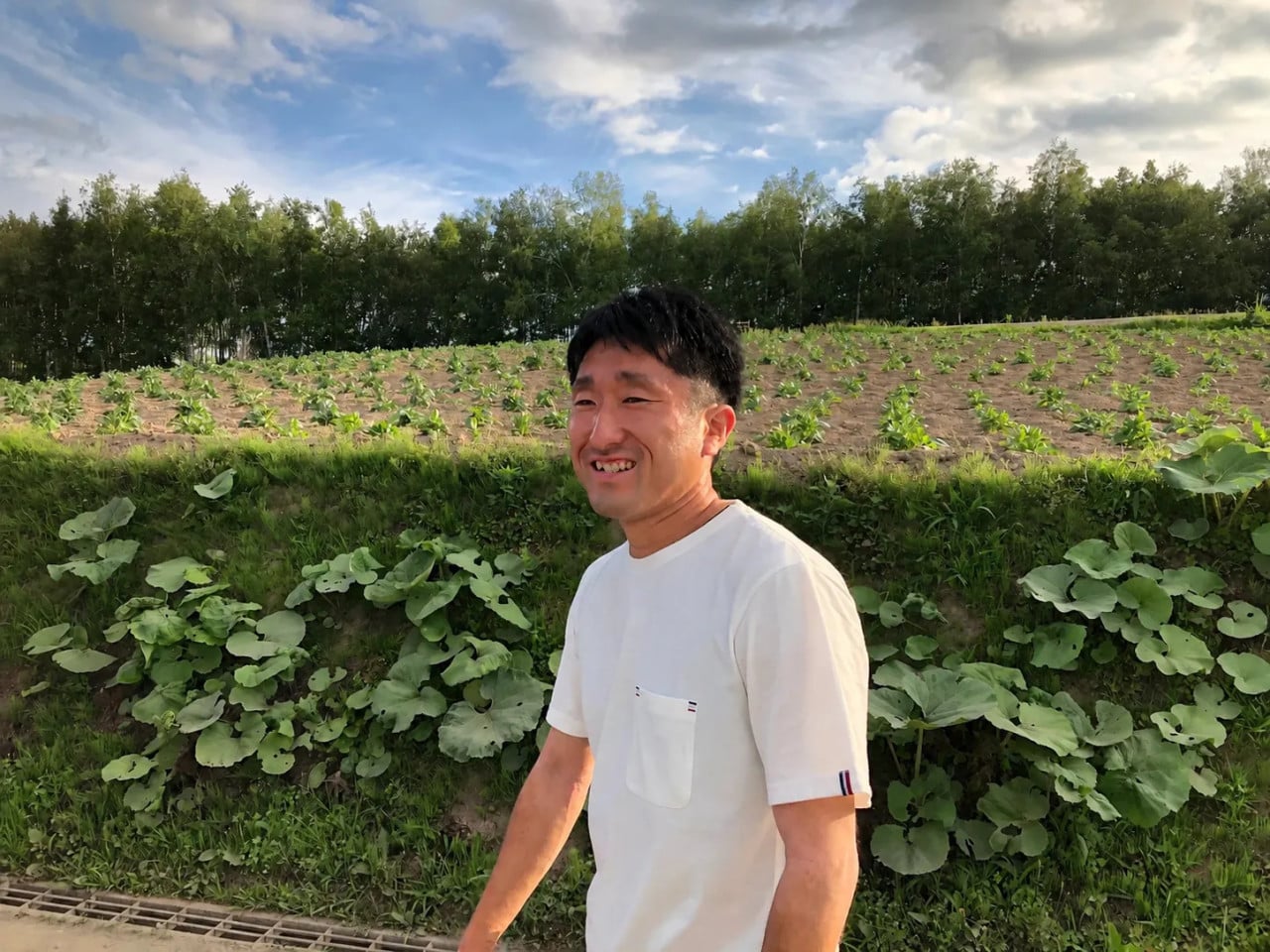
AI tools became the solution, he says. “It’s like having a top-notch engineer by your side who is always available,” he explains. He now spends his free evenings experimenting with software and connected sensors to solve practical problems on the farm. And he publicly documents the entire process as a series of experiments by a farmer learning step by step to build his own technology.
I hired an engineer to work in the fields. His name is Codex.
— Tomiyasu | Large-Scale Farmer in Hokkaido 🇯🇵 (@tomiyasu16) March 31, 2026
He built a system that lets me remotely control ventilation in the greenhouses through LINE. He helped not only with the code but also with designing the wiring. There must be all sorts of interesting ways for farmers to use AI. pic.twitter.com/ziZJY61u98
Satellites Monitor the Fields, a Chatbot Answers the Team
Perhaps the most impressive thing he has built is a remote ventilation control system for polytunnels. With the help of Codex, he assembled a system consisting of an ESP32 microcomputer, a motor controller, and a 24-volt motor that adjusts the ventilation blinds. When he sends the message “open,” “close,” or “stop” through the Japanese messaging app LINE, the command is stored on a server and the greenhouse responds. “Now I can manage the greenhouse remotely, which makes the work significantly easier,” he says.
He did not stop with greenhouses. Tomiyasu had ChatGPT explain how satellite field monitoring works, then built a system that regularly downloads NDVI vegetation index data. He overlays satellite imagery directly onto a map of his own land, giving him more information on which to base decisions about each field.
He also added his own bot to the group chat his team uses every day. It can check the temperature in individual polytunnels, control ventilation, or display the work schedule. It deliberately has only a few buttons and clear Japanese labels so that no one in the field makes a mistake when using it. And because work records are stored in the chat, the AI can later calculate, for example, how many broccoli seedling trays the team sowed on each day.
It also helps directly in the field. When Tomiyasu discovers black spots on harvested broccoli, he photographs them and discusses with ChatGPT whether they indicate a disease and what action to take. “I get advice ranging from minor symptoms that do not need to be addressed by a specialist to diseases requiring immediate intervention,” he explains.
His Own Solution at a Fraction of the Cost of an Expensive System
His path to automated tractor steering is also interesting. Before investing in an expensive proprietary system, he wanted to understand how technology using precise GPS navigation actually works. ChatGPT explained the principle of real-time corrections, the necessary components, and the existence of open-source projects. He discovered that he could build a similar system himself for several hundred thousand yen, a fraction of the usual price.
He ultimately connected all the data into a single system. With the help of AI, he designed a database that links fields, crops, planned and completed work, workers, materials, fertilizers, and sensor data. Through a chat interface, anyone on the team can then find out what tasks await them that day or what the current temperature is in the greenhouse. “We spend less time searching through separate records and can access operational information more easily,” he summarizes.
ChatGPT even generated an image from a photo of the inside of an electrical cabinet, labeling the individual components and effectively creating a complete wiring diagram. “The Japanese came out perfectly accurate. Honestly, it surprised me,” admits the farmer who, just a few years ago, was sitting in an office and knew absolutely nothing about electrical wiring.
Source: chatgptpro.substack.com


