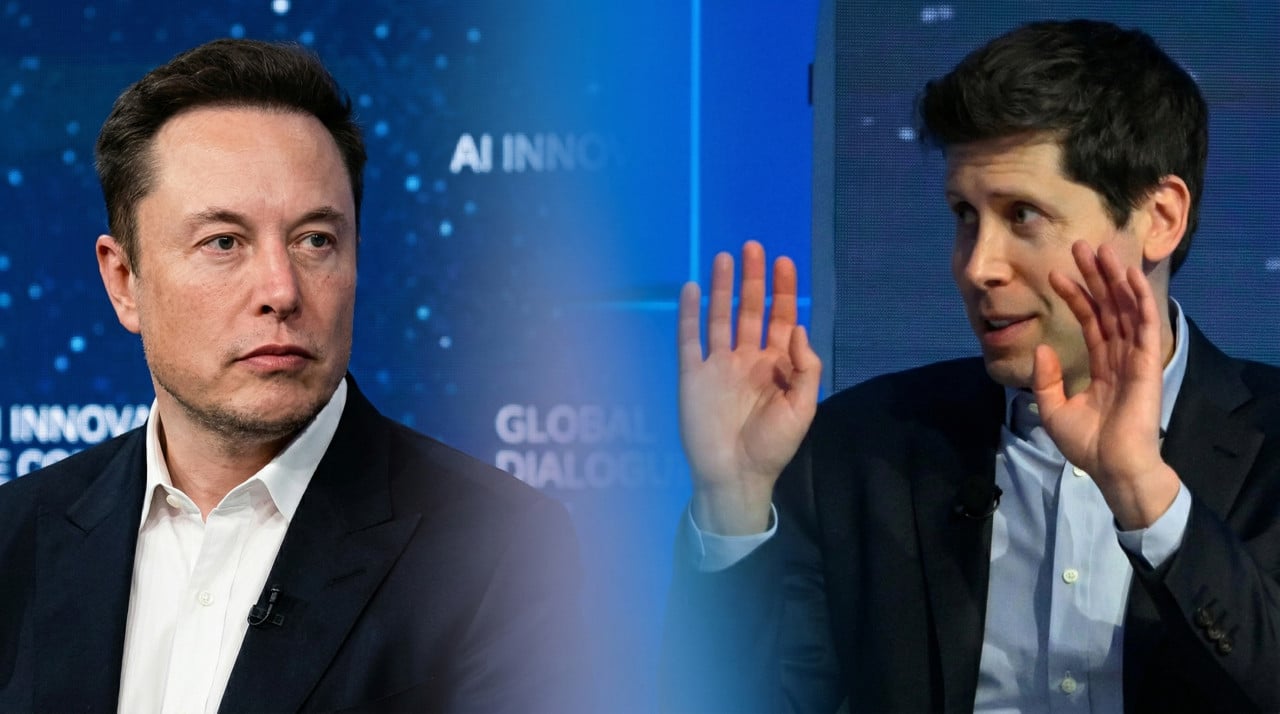
In 2015, Elon Musk sat at a table next to Sam Altman as they founded OpenAI together, a nonprofit organization intended to develop artificial intelligence for the benefit of all humanity. At the time, neither of them may have expected that ten years later they would stand on opposite sides of a courtroom, with one demanding more than $134 billion from the other.
Musk left OpenAI in 2018, reportedly after an unsuccessful attempt to persuade its leadership to merge with Tesla. Five years later, he founded his own company, xAI, with its Grok chatbot. Then came the lawsuit against OpenAI.
OpenAI Goes on the Counterattack
April 2026 brought a new twist. OpenAI sent a letter to the attorneys general of California and Delaware, asking them to investigate what it describes as Elon Musk's “improper and anticompetitive conduct".
Jason Kwon, OpenAI's chief strategy officer, writes in the letter that Musk repeatedly attempted to gain control of the nonprofit organization for his own benefit. This is not merely a dispute over money. It is about who will control the future of artificial general intelligence, or AI that is expected to reach or surpass human-level intelligence.
“These attacks are intended to wrest control over the future of AGI from those who are legally obligated to pursue a mission benefiting all humanity and hand it to competitors with no ethical obligations whatsoever," Kwon wrote. The letter also caught the attention of CNBC, which was the first to publish it.
Musk filed the lawsuit in 2024. He claims that OpenAI deliberately manipulated and deceived him when the company began transforming into a for-profit entity and accepting billions from Microsoft. According to him, it thereby betrayed its original nonprofit mission. The damages he is seeking? Up to $134 billion. Part from Microsoft, part from OpenAI. Jury selection for the trial will begin on April 27 in the Northern District of California.
Meanwhile, OpenAI completed its restructuring in October 2025. The nonprofit retained control over the for-profit entity, while Microsoft received a 27% stake. California and Delaware Attorneys General Rob Bonta and Kathy Jennings approved the transformation after reviewing it and raised no objections. OpenAI is now writing to tell them that this may have been a mistake because Musk's lawsuit could undermine the entire deal.
Musk and Zuckerberg
Kwon's letter contained another surprise. In it, OpenAI claims that Musk collaborated with Meta's Mark Zuckerberg in his efforts. The Facebook chief ultimately did not join Musk's consortium in its attempt to take over OpenAI, but the two were reportedly in contact. And that is not all. In the letter, OpenAI cites a report by The New Yorker alleging that Musk and his representatives conducted extensive surveillance of Sam Altman. They tracked his flights and movements and spread false allegations of sexual harassment by the OpenAI chief.
Chris Lehane, OpenAI's chief global affairs officer, commented with evident indignation: He openly asks why two of the world's four richest people are devoting so much energy to preventing a nonprofit organization from developing.
OpenAI included one more intriguing detail in the letter. Shortly beforehand, SpaceX had confidentially filed to go public, in what could be one of the largest IPOs in history. OpenAI points out that if Musk succeeds in his legal campaign, it will benefit Grok, his chatbot from xAI.
Yet Grok itself is under fire. Grok is being investigated globally for generating sexually explicit deepfake images of women and children without their knowledge, allegedly to boost engagement ahead of the planned IPO.
Over the years, Musk has moved the headquarters of both Tesla and SpaceX from California to Texas and transferred the companies' registrations from Delaware to Nevada and Texas. His xAI has also filed a lawsuit against Attorney General Bonta over California's new AI transparency law, which it claims violates freedom of speech.
Additional sources: theinformation.com, latimes.com and reuters.com