California Robotics Startup: π0.5 AI from Physical Intelligence
The company Physical Intelligence is bringing change to the world of robotics through its latest AI model called π0.5 (pi 0.5). This startup focuses on developing so-called "foundation models" for robotics – universal "brains" that could power various types of robots in unstructured environments such as homes or offices.
What Is π0.5?
π0.5 is an advanced generalist policy model that builds on the previous version, π0. It represents a significant step toward robots capable of operating effectively in diverse, disorderly environments. Unlike most commercial robots, which require strictly controlled environments (e.g., factories), π0.5 is trained to handle "messy" real-world environments where objects and layouts vary dramatically.
Key Technology Features
- Open-world generalization: Robots powered by π0.5 can operate in environments they have never "seen" during training.
- VLA architecture (Vision-Language-Action): It integrates visual perception, language understanding, and action generation into a single model.
- Co-training on heterogeneous data: The model learns from diverse data sources, including images, text instructions, and robotic actions.
The model uses a hierarchical approach: First, it generates a high-level action in natural language. It then translates it into low-level motor commands – a sequence of joint movements performed over approximately one second. This "chain of thought" process enables the same neural network to reason at both an abstract (semantic) level and a concrete (motor control) level.
In practical tests, robots with π0.5:
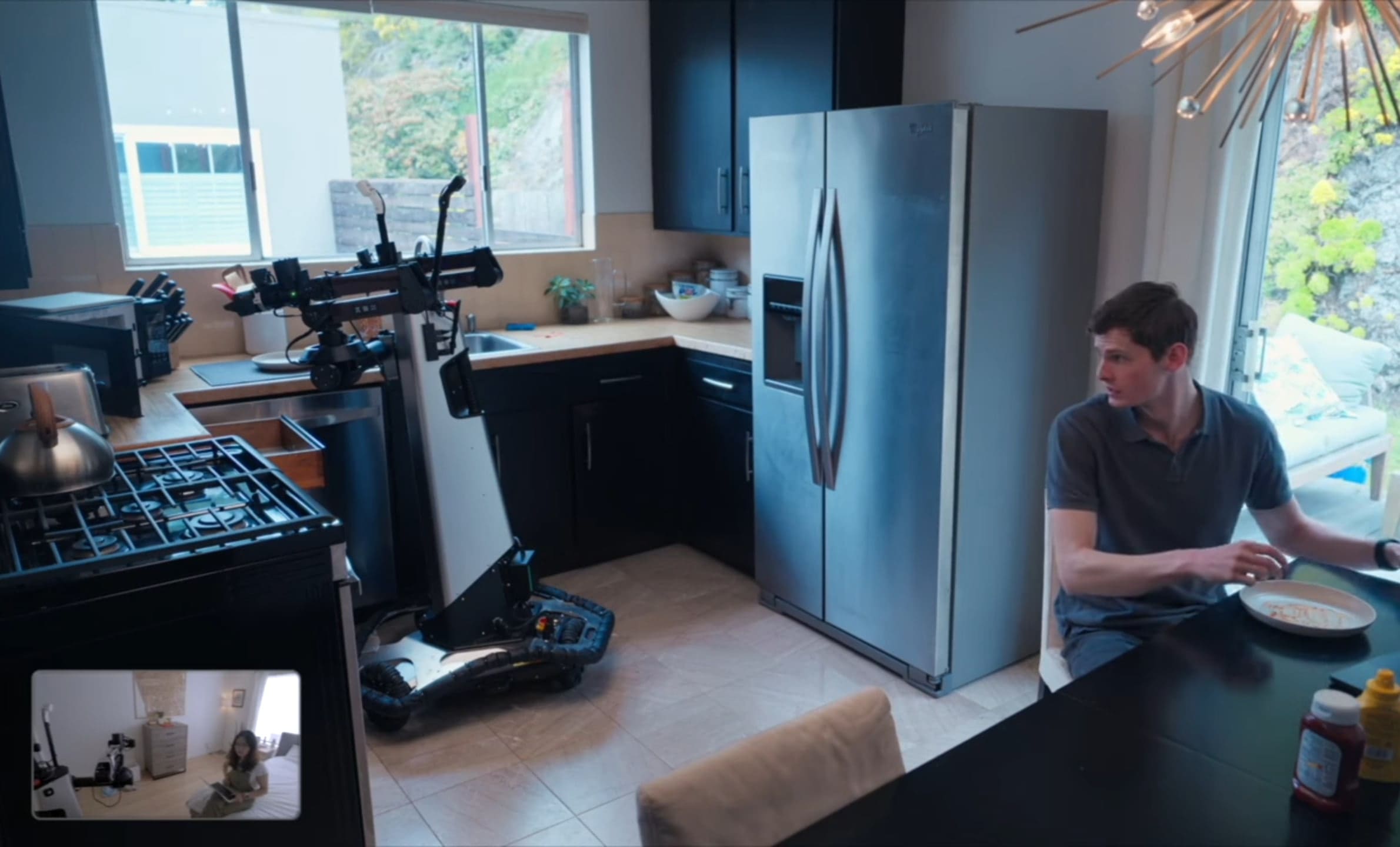
- Were able to perform various household tasks in unfamiliar homes.
- Rearranged dishes, wiped up spilled liquids with a sponge, and handled other everyday tasks.
- Displayed flexibility reminiscent of human problem-solving when facing new challenges.
The model's performance steadily improves with exposure to more diverse training environments. After training on approximately 100 unique environments, its success rate approaches that of models trained directly on test scenarios.
Company Goals
Physical Intelligence aims to create foundation models for robotics – analogous to large language models such as GPT – that could serve as universal "brains" for many types of physically embodied devices. Their vision includes making it easier to program and deploy robots across industries, from home assistance to healthcare. Although π0.5 is still not focused on high dexterity or learning entirely new skills from scratch, it represents an important milestone on the path toward creating truly versatile robotic assistants capable of flexibly adapting their behavior – even when faced with completely unfamiliar physical spaces or tasks.
Here you can watch videos of the robots being trained.