

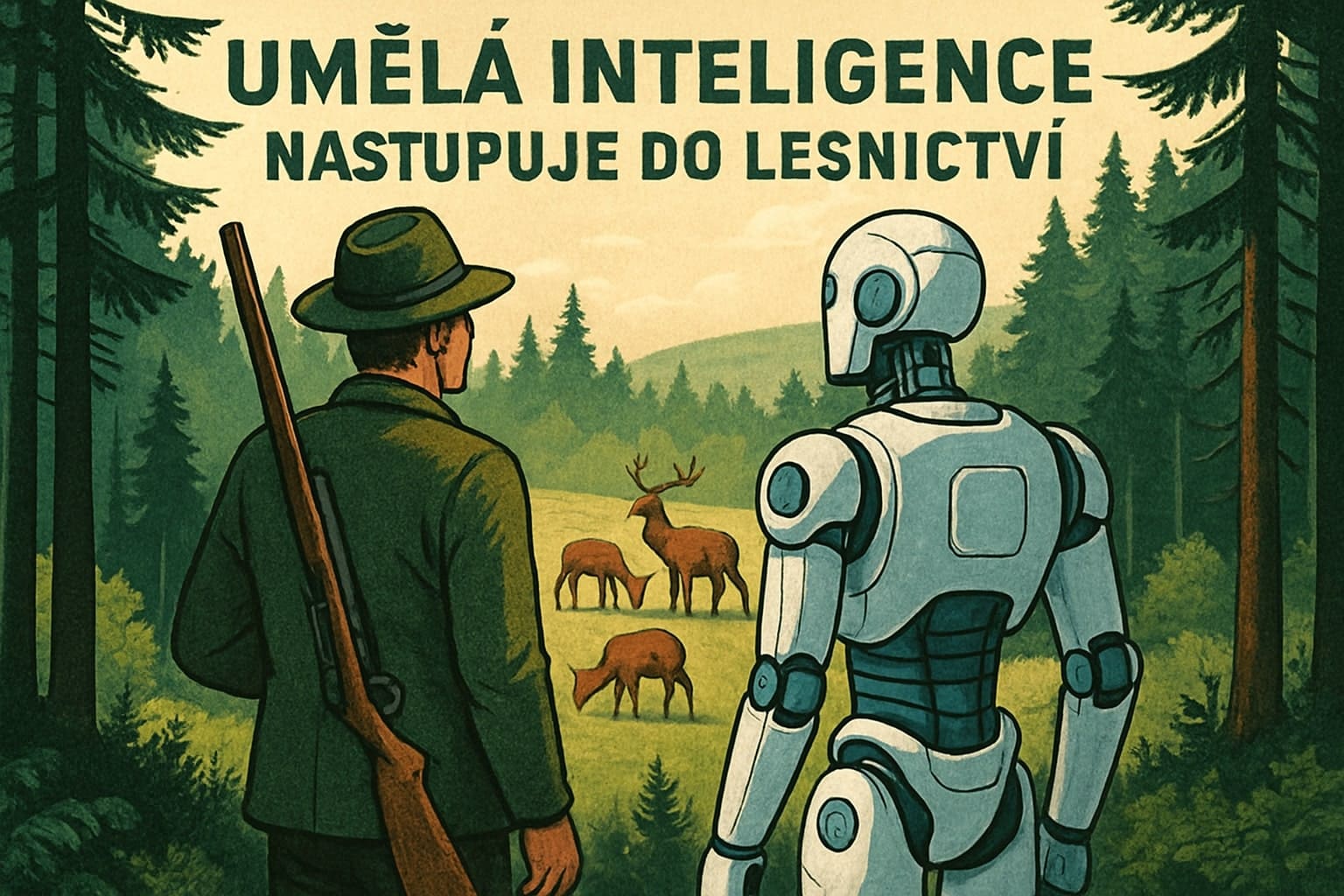
Artificial Intelligence Enters Forestry
Advanced Real-Time Monitoring of Forest Ecosystems
Forestry is undergoing a major technological transformation thanks to the implementation of artificial intelligence in monitoring systems. The Czech Republic now has a new system that provides detailed information on the condition of forest ecosystems in near real time. This system uses data from satellites and ground-based sensors to detect subtle changes in tree health, including the presence of pests and stress caused by drought or nutrient deficiencies. A key advantage is its ability to detect potential threats at an early stage, when interventions are most effective and least costly. The data is immediately compared with long-term time-series data, enabling foresters to make rapid, informed decisions about adaptation measures. This approach significantly increases the efficiency of monitoring large forest areas while reducing the time and financial costs associated with traditional inspection methods.
Optimizing Forest Management Using AI
Artificial intelligence plays a key role in optimizing forest management plans in Czech forestry. AI systems analyze forest growth patterns, soil conditions, and climate factors to recommend the most appropriate measures for specific locations. Based on comprehensive analysis of environmental data, these systems can precisely determine the optimal locations for new plantings and predict the long-term development of forest stands. Another important area is support for sustainable forest management in response to climate change and other risk factors. AI algorithms help foresters design strategies that increase the resilience of forest ecosystems to drought, pests, and other adverse effects. By continuously processing data, these systems can propose dynamic management approaches that adapt to changing conditions and long-term trends.
Modern Technologies in Forest Nurseries
Modern technologies, including artificial intelligence, are making their way into Czech forest nurseries, increasing the efficiency of forest regeneration and improving seedling cultivation processes. AI systems help optimize conditions for the growth of young trees, monitor their health, and predict the best times for various cultivation measures. These technologies enable more precise management of irrigation, fertilization, and other aspects of seedling care, resulting in higher planting success rates and better-quality planting stock. The use of AI in forest nurseries also contributes to more efficient resource utilization and waste reduction, which is important for both the economics and sustainability of forest management. Modern monitoring systems can track the growth of individual seedlings and predict their future performance after they are planted in the field.
Augmented Reality and 3D Technologies in Forestry
In addition to artificial intelligence, other innovative technologies such as augmented reality and 3D animation are also making their way into Czech forestry. Combined with AI, these tools increase analytical accuracy and capabilities in forest management. Augmented reality allows foresters to visualize complex data directly in the field, facilitating intervention planning and communication with other experts. 3D technologies provide detailed spatial models of forest stands that are used to accurately plan logging operations, design forest roads, and optimize logistical processes. These advanced visualization tools also assist in the education and training of foresters, who can work with realistic simulations of various scenarios and situations. Combining AI with augmented reality creates new opportunities for interactive work with forest data and supports the transition to digital forestry.
Early Warning and Adaptation Measures
One of the most significant benefits of AI in Czech forestry is its ability to provide early warnings of various threats and enable the rapid implementation of adaptation measures. AI systems continuously analyze meteorological data, soil moisture, and other environmental parameters to identify high-risk situations before visible damage occurs. This capability is particularly important in the context of climate change, as forest ecosystems face new problems such as extreme droughts, storms, and increased pest occurrence. The systems allow foresters to take preventive measures based on predictive analysis, which is more effective than reactive approaches to problem-solving. Linking current data with historical records provides foresters with valuable information for long-term planning and helps protect forests for future generations. Thanks to these technologies, Czech forestry is preparing for the challenges of the 21st century and strengthening its ability to adapt to changing conditions.


