

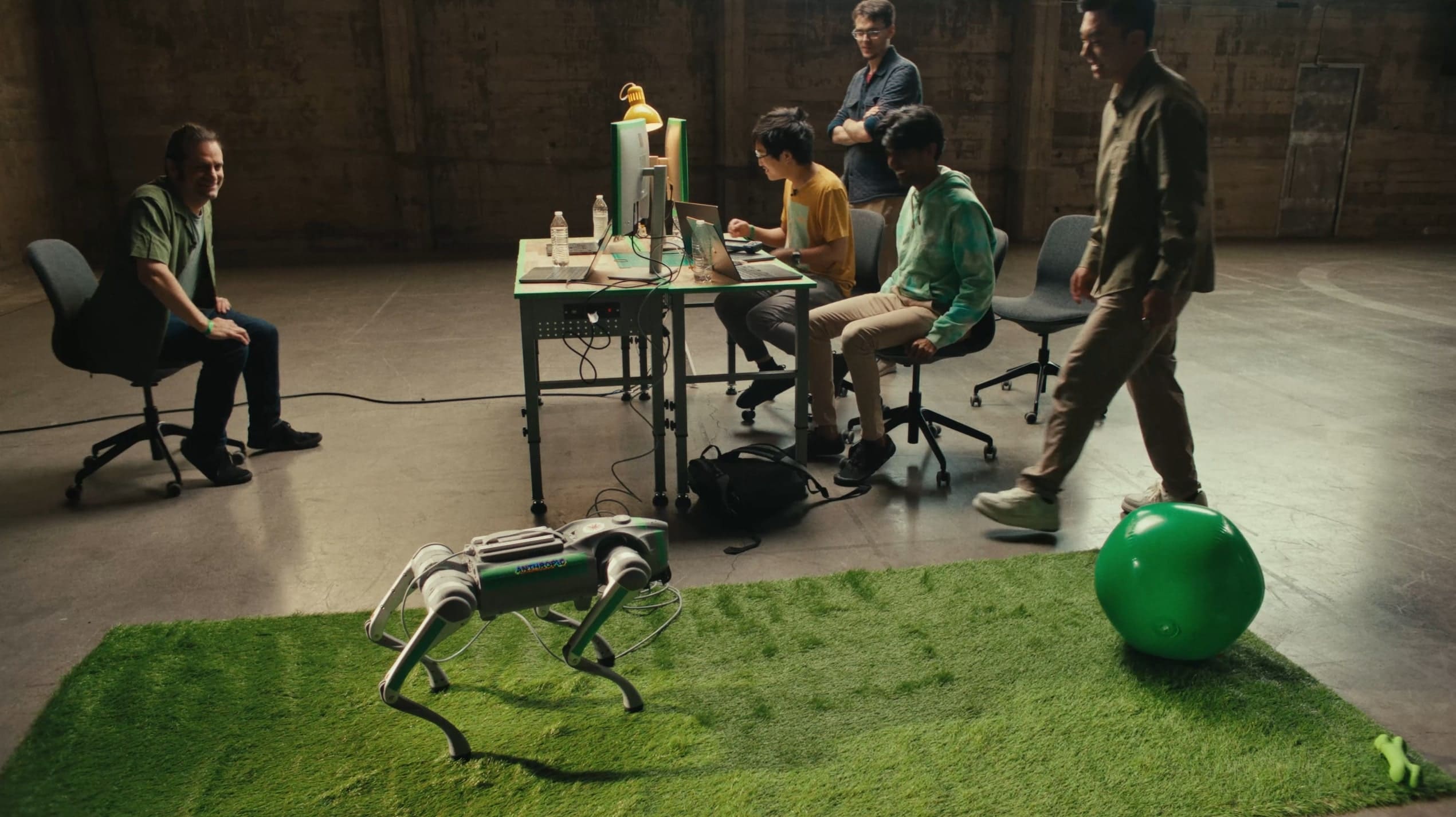
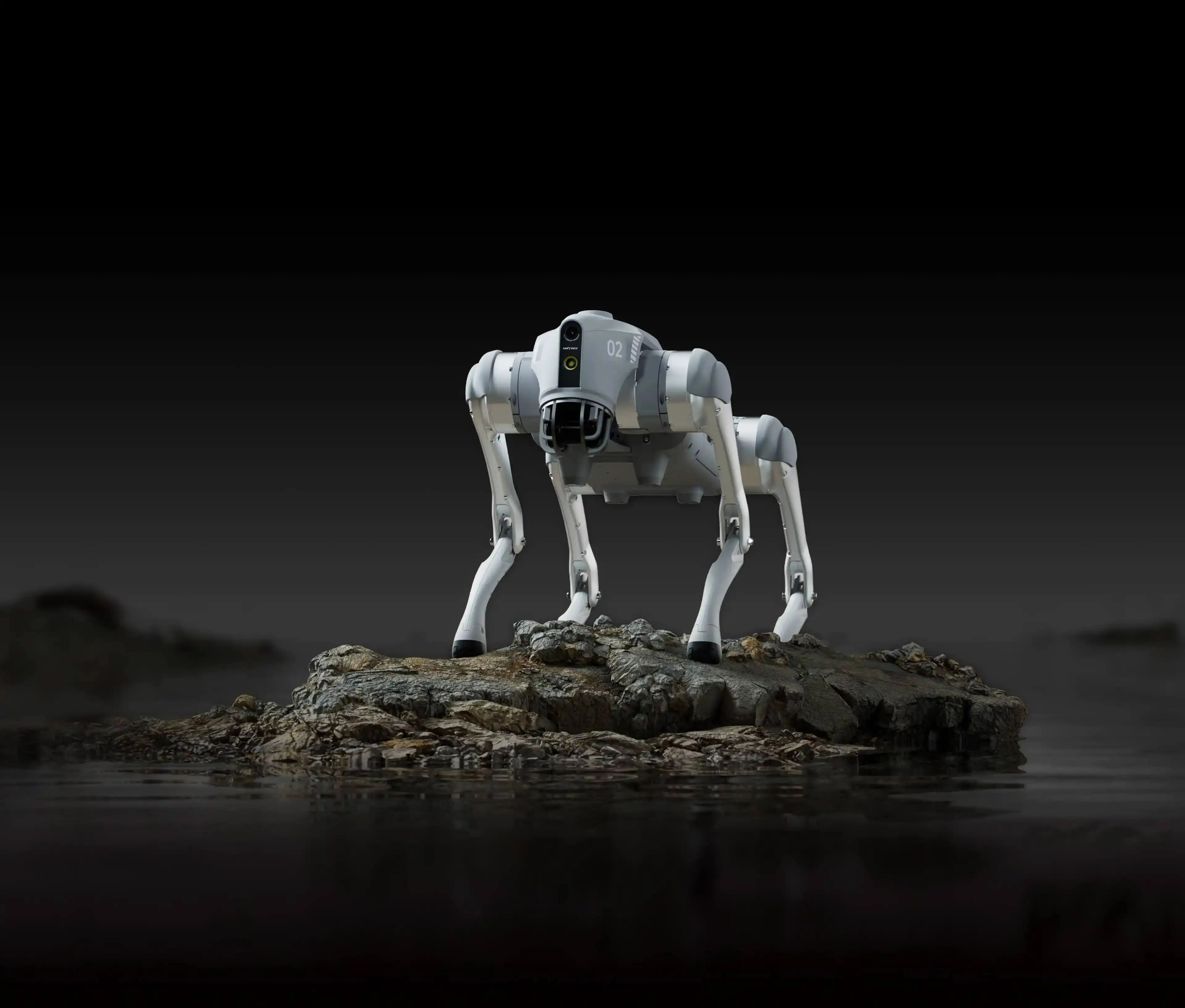
Anthropic, a company focused on AI safety, conducted an interesting experiment called Project Fetch. The goal was to find out whether its Claude AI model could help people program robots. The company took eight of its researchers, none of whom had much experience with robotics, and divided them into two teams. One team had access to Claude, while the other did not. Each team received a Unitree Go2 robotic dog, a four-legged machine that costs around CZK 388,700, and a task: teach it to fetch a beach ball.
The experiment took place in a warehouse, where the teams sat at desks with computers. The team with Claude, called Team Claude, worked faster and completed more tasks. The tasks took them only half as long as the other team, which had no AI. Both teams went through three phases: first, controlling the robot with a handheld controller; then connecting to it via a computer; and finally programming it to find and retrieve the ball on its own.
How did the teams work, and where did Claude help the most?
Team Claude had an advantage mainly when connecting to the robot and its sensors. They had to connect to the camera and lidar (a laser sensor that maps the surroundings), which is difficult because there is a lot of inaccurate information online. With Claude, they managed it quickly because the AI helped them explore the available options and avoid mistakes. By contrast, Team Claude-less, the team without AI, got stuck following bad advice from the web and needed a hint from the organizers just to establish a connection.
In the second phase, the team with Claude wrote a program that allowed them to control the robot using a computer keyboard and view a live feed from its camera. This was more convenient than the setup used by the other team, which only had static images. Team Claude wrote nine times more code, but sometimes got carried away with side ideas, such as an alternative controller that allowed the robot to be controlled directly through natural-language commands—for example, "go forward" or "do push-ups."
In the final phase, in which the robot was supposed to find the ball on its own, Team Claude managed to get their Unitree Go2 to detect the ball, approach it, and even move it. They did not complete the task because they ran out of time, but they came close. Team Claude-less did not get as far—they only managed to connect to the lidar sensor at the end of the day and did not achieve autonomous fetching.
Differences in mood and collaboration between the teams
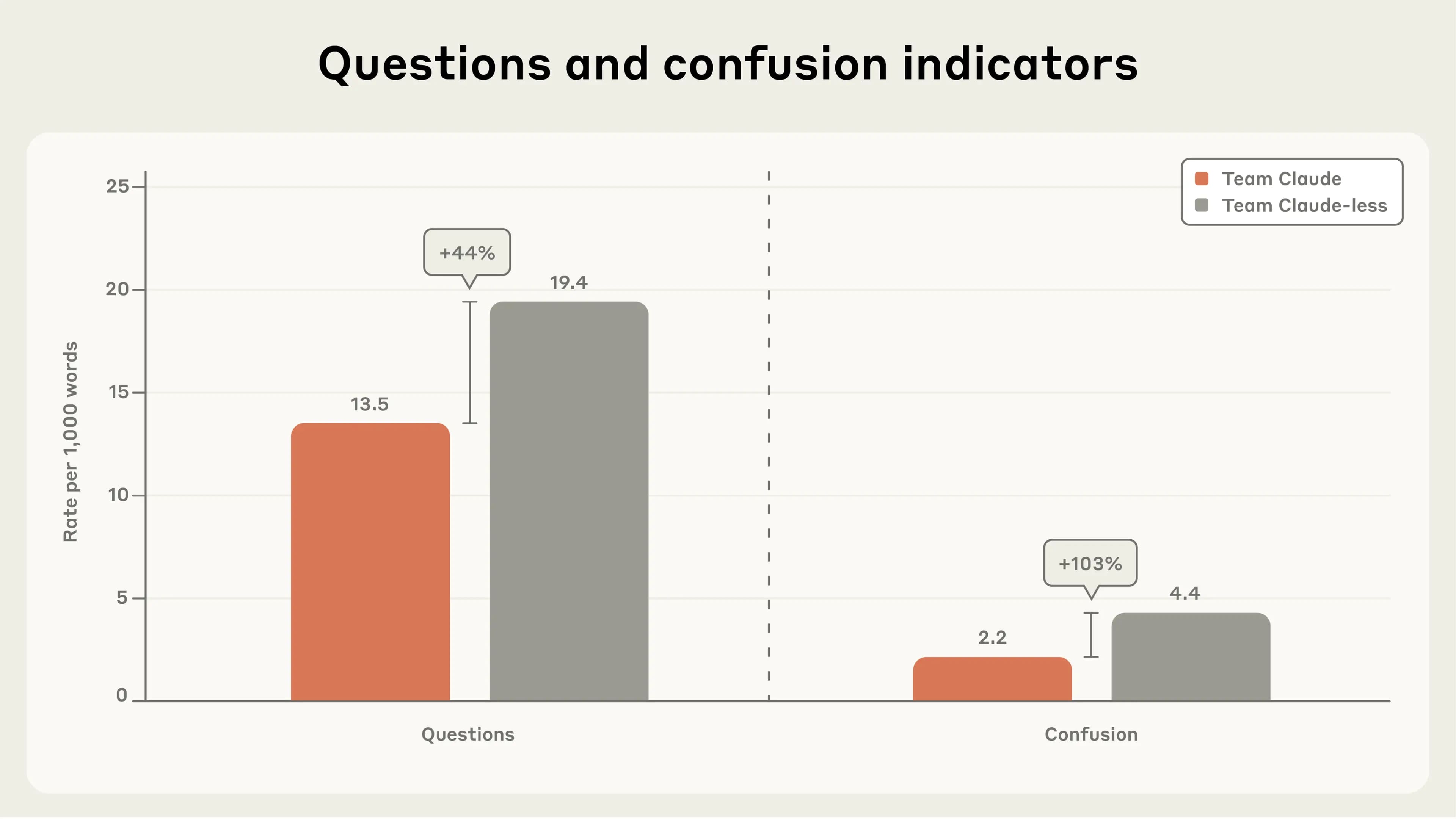
During the experiment, it was clear how AI affected the teams' moods. Team Claude-less expressed twice as much confusion and twice as many negative emotions, such as frustration, because they lacked the help from Claude that they were accustomed to. For example, one member said that without AI, they felt as though their programming skills had deteriorated. Team Claude, on the other hand, was calmer, although its members were disappointed at the end that they had not completed the task.
Collaboration also looked different: Team Claude-less consulted with one another more and asked 44% more questions. Each member of Team Claude worked more independently with their own AI instance, allowing them to try more things at once. But this also caused them to become distracted at times—for example, when working on robot localization (determining its position), they had nearly completed a solution, but instead of fixing an error, they tried a different approach.
One interesting moment occurred when Team Claude accidentally programmed the robot to move too quickly, and it nearly crashed into the other team's table. An organizer stopped it in time, but the incident showed how easily mistakes can be made in the real world.
Safety concerns surrounding AI in robots
The experiment sparked a debate about safety. According to Logan Graham of Anthropic's red team, AI is getting closer to being able to control robots more independently. A study in the International Journal of Social Robots found that models such as those from OpenAI, Google, or Meta approve commands that could cause harm if carried out by a robot. Anthropic emphasizes that current models are not yet intelligent enough to control robots fully without humans, but the future could bring rapid progress.
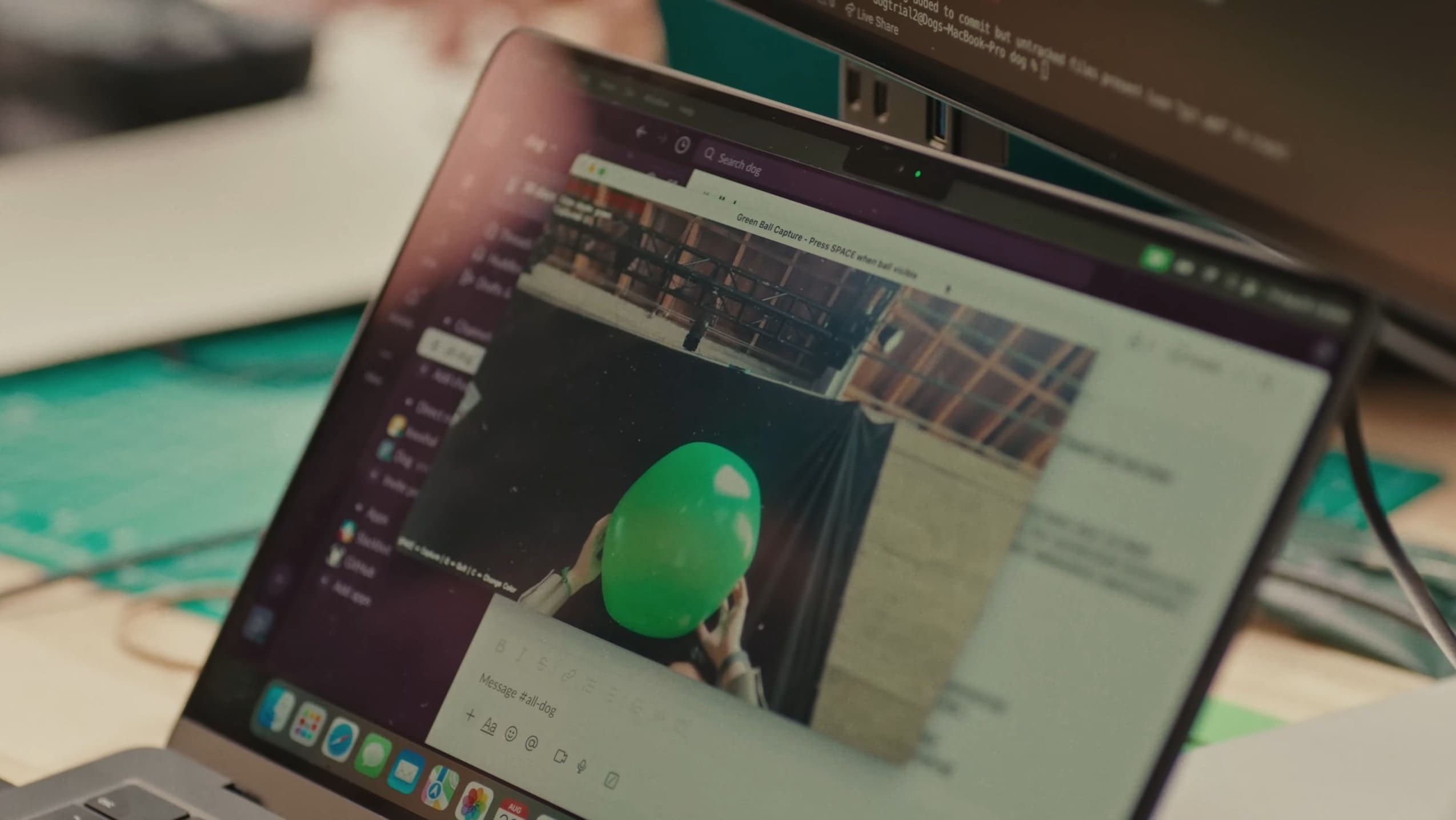
For example, during the test, Team Claude trained an algorithm to detect a green ball, which worked until the ball was placed on green artificial turf—then the robot could not distinguish it. This illustrates how important it is to consider real-world situations. The company plans further tests to monitor how AI affects the physical world through hardware.
Other interesting findings from the experiment
Unitree Go2 robots have preprogrammed tricks, such as dancing, standing on their hind legs, or doing flips, which the teams discovered and had fun with. Team Claude-less enjoyed them after successfully connecting to the robot, as a reward for their efforts. The experiment lasted only one day, so it was limited, but Anthropic sees it as a foundation for future research in which AI could control robots entirely on its own.


