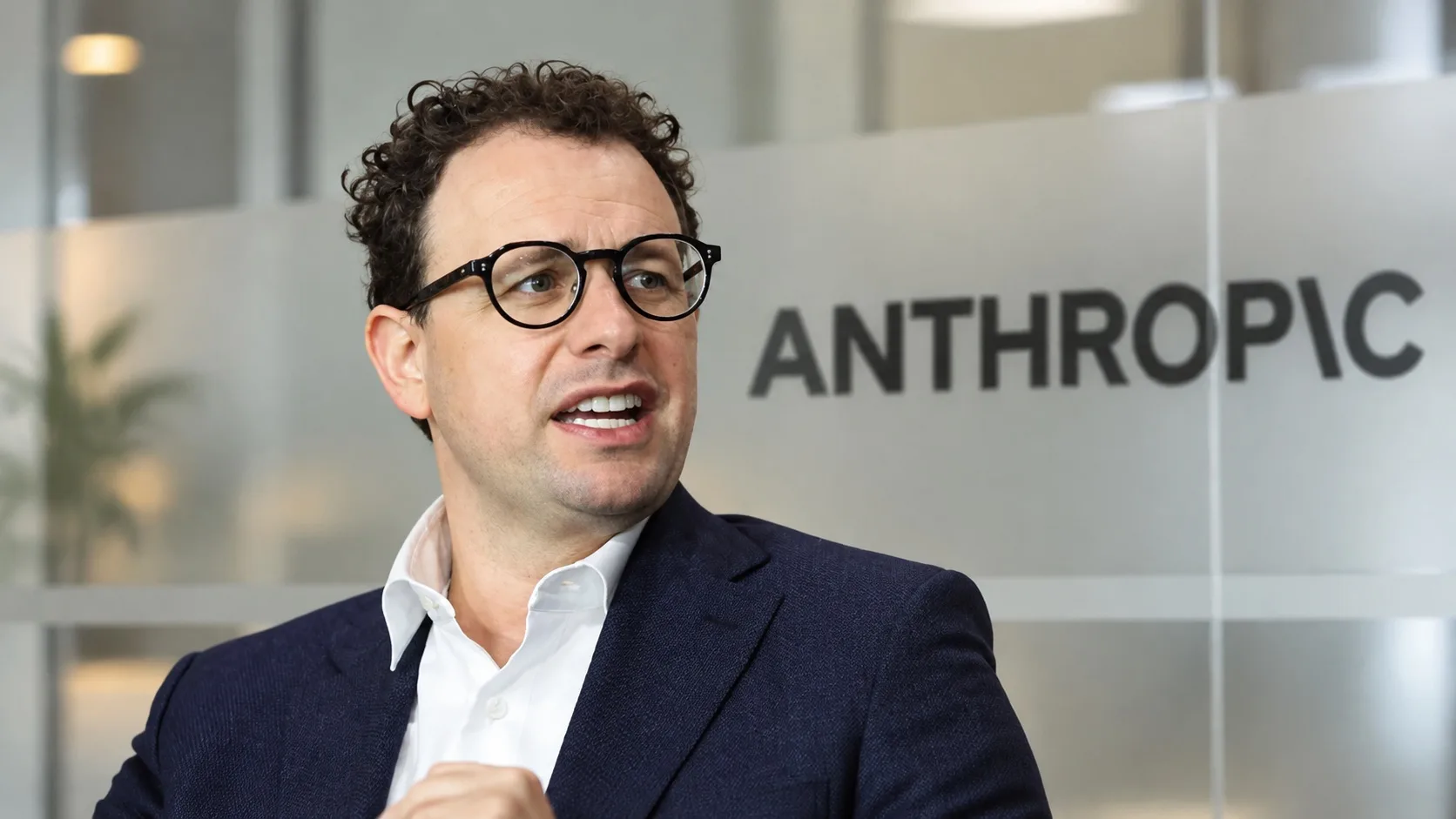
Anthropic is improving its artificial intelligence models roughly twice as fast as it was a year ago, and artificial intelligence itself is responsible for much of this acceleration. This is the conclusion reached by METR, a nonprofit organization based in Berkeley, California, which spent several weeks reviewing the company’s internal data and interviewing its employees. The findings are among the clearest evidence that artificial intelligence is accelerating its own development, and they open a debate about how close we are to systems capable of improving themselves without human assistance. Curiously, it was during this investigation that Anthropic CEO Dario Amodei called on the entire industry to slow down and give safety measures time to catch up with development.
Eleven weeks inside Anthropic
METR, whose full name is Model Evaluation and Threat Research, did not arrive uninvited. Anthropic itself invited its researchers to review internal data and speak with employees. The investigation lasted roughly eleven weeks, from mid-August to the end of October. The organization sought answers to two questions: whether the rate at which its internal models were gaining capabilities had accelerated, and how much of that acceleration was attributable to artificial intelligence. The researchers said they were given unprecedented access to the data.
The result surprised even experienced observers. The capabilities of Anthropic’s models in benchmark tests have been growing roughly 1.9 times faster since October 2025 than before. As of this October, according to METR, the company is improving its models on precisely defined tasks approximately twice as fast as it did between March 2024 and October 2025. Over the past year, it has therefore made roughly as much progress as it previously did in two years. The estimate comes with considerable uncertainty, and the authors would not be surprised if the actual acceleration were somewhere between one and a half and two and a half times the previous pace.
What is important is what is not behind the acceleration. METR confidently ruled out an increase in the computing power used for training. Traditionally, that is the factor that most strongly determines how well a model performs. The researchers estimate that roughly 80 percent of the acceleration is due to the use of artificial intelligence to improve itself.
Employees report twelvefold productivity
METR also built its picture from informal employee surveys. People working with the company’s most capable internal model reported being, on average, roughly twelve times more productive than they would be without the help of artificial intelligence. That is about twice as much as they reported only a few months earlier while working with the Mythos 5 model. However, the researchers caution that these figures are not particularly reliable.
Most of the work is still being done by humans assisted by artificial intelligence. According to the report, artificial intelligence is not yet able to make fully independent and significant contributions to the most important parts of model training. Anthropic researchers, however, described clear signs of progress suggesting that this could soon change. METR experts warn that if artificial intelligence begins improving itself, the acceleration could compound further. They found no bottleneck, such as a shortage of computing power or data, that would slow progress.
The report includes numerous caveats. The acceleration may apply only to precisely defined tasks that can be evaluated automatically, rather than to unstructured real-world tasks. It is also possible that Anthropic underestimated its earlier progress, making the new figure appear larger. On the other hand, METR compared the public and non-public versions of the company’s August risk report and concluded that the public version was more likely to underestimate the degree of acceleration.
Much of the progress is being driven by models that the public has not yet seen. Over the past six months, Anthropic has completed the training of three models that it has not yet released. Under the code names Model 2, Model 3, and Model 4, they completed training in July, around the turn of August and September, and around the turn of September and October.
The company redacted most of the evidence
What is missing from the report is just as revealing as what it contains. Under the agreement, Anthropic had the right to remove passages, and it made extensive use of that right. METR submitted a report of roughly one hundred pages to the company, and Anthropic removed from the public version most of the evidence that the researchers considered the most informative. The company rejected several requests for data outright. According to METR, the public therefore has to rely on the researchers’ judgment far more than would be ideal given the seriousness of the issue.
Anthropic co-founder Sam McCandlish defended the decision. He acknowledged that the extensive redactions make it more difficult to scrutinize METR’s work, but said that disclosing the precise causes of the acceleration would reveal sensitive business information and give competitors a blueprint for accelerating development further. The company is reportedly planning to release its own report on the pace of progress in the coming weeks and introduce new measures to strengthen safety.
Another detail has also irritated critics. Anthropic canceled some of the evaluations intended to examine how much computing power it devotes to safety and how much to improving model capabilities. The company justified the decision by saying that it wants to focus on assessing risks for now and will return to the evaluation later.
Critics call it hypocrisy
The contradiction between Anthropic’s words and actions is clearly illustrated by a September essay written by the company’s CEO. In it, Dario Amodei wrote that progress in artificial intelligence is driven primarily by the growing ability of systems to build their next generation. He warned that, without oversight, this process could outpace our ability to understand and control these systems, and should therefore be approached with great caution. In the same text, he advocated for independent evaluators embedded directly within leading laboratories and explicitly mentioned METR as a suitable candidate.
Daniel Kokotajlo, a former OpenAI researcher who now leads the AI Futures Project, sharply criticized the company. He accused Anthropic of recklessly gambling with human lives and called it unacceptable for the company to invoke faster-moving competitors to justify the redactions while barely slowing down itself. Marius Hobbhahn, head of Apollo Research, said the report suggests an even faster pace than predicted by the influential AI 2027 scenario, which anticipates a breakthrough in self-improvement in early 2027. Ryan Greenblatt of METR admitted that he had been seriously mistaken in his estimates and had expected much less acceleration this year.
Competitors are moving in a similar direction. OpenAI announced in September that it wants to build an AI researcher by March 2028 that would independently advance deep-learning research. Brianna Rosen of the Institute for AI Policy and Strategy sees a problem in the fact that decisions about automating research are effectively being made by companies rather than governments, while she believes the report was not sufficiently transparent about the evidence. New York Assemblyman Alex Bores went furthest, calling on Congress to ban recursive AI self-improvement, preferably before the end of this year.
The report comes at a sensitive time for Anthropic. The San Francisco company wants to go public later this month, in what could be the largest initial public offering in history. Hobbhahn took a simple message from the report: people should prepare for madness, because everything will move very quickly, probably much faster than society and politics can keep up with.
Sources: reuters.com, theverge.com and apnews.com