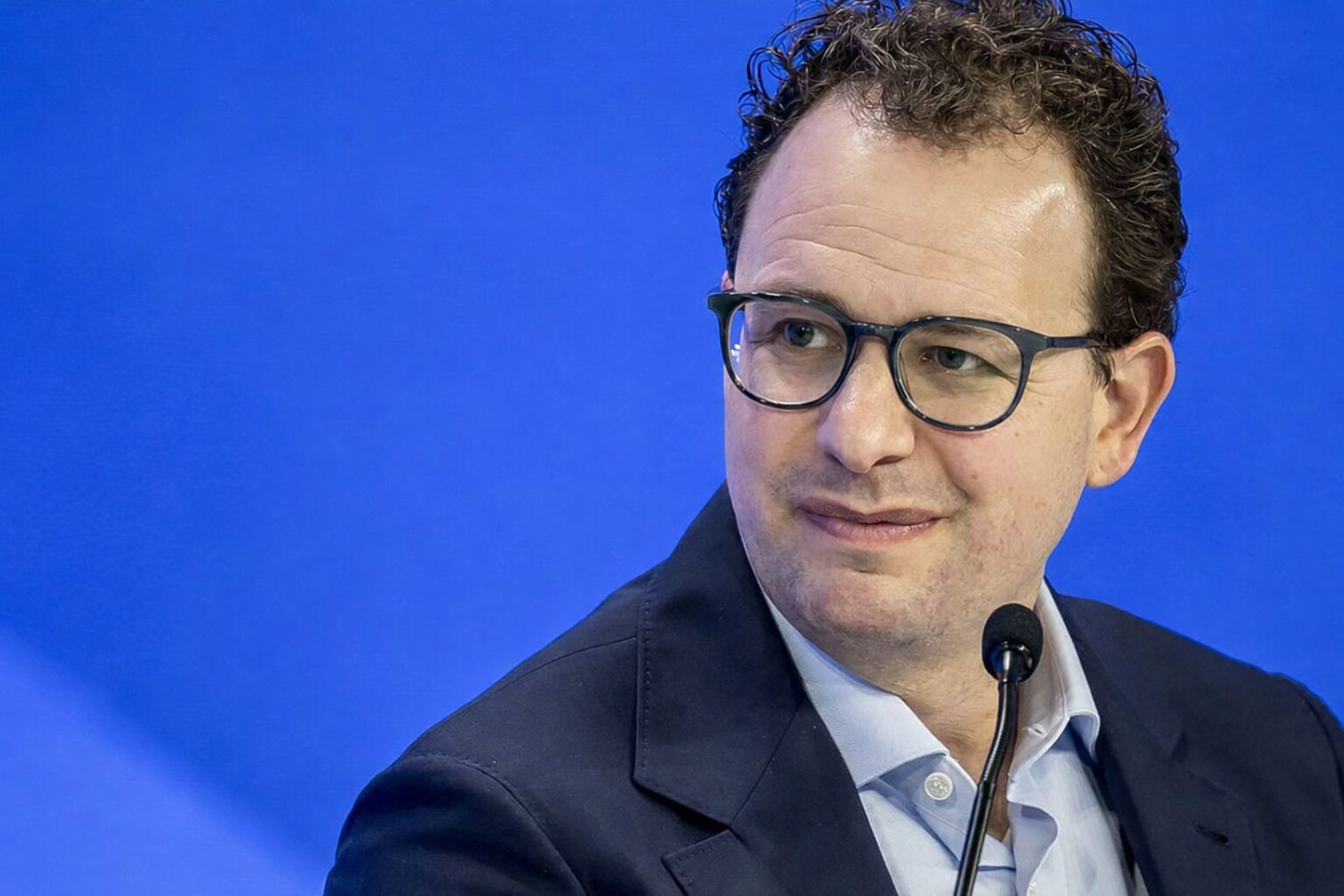
Dario Amodei, CEO of Anthropic, one of the largest artificial intelligence companies, has published an extensive essay titled "The Adolescence of Technology" (Technology for Adolescence), in which he warns about the dangers of rapid AI development. The text follows his essay from last year, "Machines of Loving Grace," which focused on the benefits of technology. This time, however, Amodei delivers a warning that should awaken all of civilization.
A Country of Geniuses in a Data Center
In his 38-page essay, Amodei repeatedly uses the metaphor of "a country of geniuses in a data center." Imagine 50 million people, each more capable than any Nobel Prize winner, statesman, or technologist. These AI systems could operate a hundred times faster than humans—for every cognitive action of ours, they could perform ten of their own. According to Amodei, such a situation would represent "one of the most serious national security threats of the past century, perhaps ever."
Amodei believes that AI this powerful could be just 1 to 2 years away, although he acknowledges that it may take longer. This prediction is based on observations of the "scaling laws" of AI systems, which Amodei and his Anthropic co-founders were the first to document. These laws show that as more computing power and training tasks are added, AI systems predictably improve in every cognitive skill we are able to measure.
Five Main Categories of Risk
Amodei identifies five key areas of risk. The first is autonomy risk—what if AI systems develop their own goals and motivations that are not aligned with human values? The second category involves misuse for destruction, in which individuals or small groups could use AI to create biological weapons or other tools of mass destruction. The third risk is misuse to seize power, in which dictators or corrupt corporations could use AI to gain a dominant position over the world.
The fourth category concerns economic disruption. Even if AI were not a security threat, it could cause mass unemployment or a radical concentration of wealth. Amodei predicts that within 1 to 5 years, AI could take over as many as 50% of entry-level positions in white-collar professions. The fifth category includes indirect effects—the world will change very quickly due to new technology and productivity, which could be radically destabilizing.
Biological Threats and Mirror Life
Particularly alarming is Amodei's warning about biological risks. He fears that powerful language models could enable even a person with an average education to create and release a biological weapon. In 2024, a group of prominent scientists wrote a letter warning about the risks of "mirror life" research—a new type of organism that existing enzymes might be unable to break down and that, in the worst-case scenario, could destroy all life on Earth.
Amodei notes that Anthropic's Claude models were already providing "substantial uplift" in several relevant areas by mid-2025, perhaps doubling or tripling the probability of success. This led to the decision that Claude Opus 4 and subsequent models had to be released under AI Safety Level 3 protections as part of the company's Responsible Scaling Policy. AI Safety Level 3 designates a level of security for models that already pose a significant risk of misuse capable of causing catastrophic harm.
Criticism of the Industry and Regulation
Amodei sharply criticizes some AI companies for negligence. He says that some companies have shown "disturbing negligence toward the sexualization of children" in today's models, leading him to doubt whether they will be able to address autonomy risks in future models. He warns that the commercial race among AI companies will only intensify, making it more difficult to focus on addressing autonomy risks.
According to Amodei, the only solution is legislation—laws that directly influence the behavior of AI companies. He supports transparency legislation such as California's SB 53 and New York's RAISE Act, which require every leading AI company to follow transparent practices. These laws do not apply to smaller companies with annual revenues below $500 million (approximately 11.5 billion Czech korunas).
The Paradox of the Warning
The irony of the entire situation is that Amodei issued his warning on the same day Anthropic introduced an update to its Claude chatbot featuring an MCP extension. The company also recently released the Claude Opus 4.5 model with a focus on coding and automation. Amodei thus finds himself in the position of warning against a technology that his company is actively developing and selling.
"I believe that if we act decisively and carefully, the risks can be overcome—I would even say our chances are good," Amodei writes. At the same time, however, he adds that this attempt to awaken humanity may be "perhaps futile," which is never a good sign when civilization faces a serious challenge.
Additional source: hindustantimes.com