

Americans and Artificial Intelligence: Fear Outweighs Enthusiasm
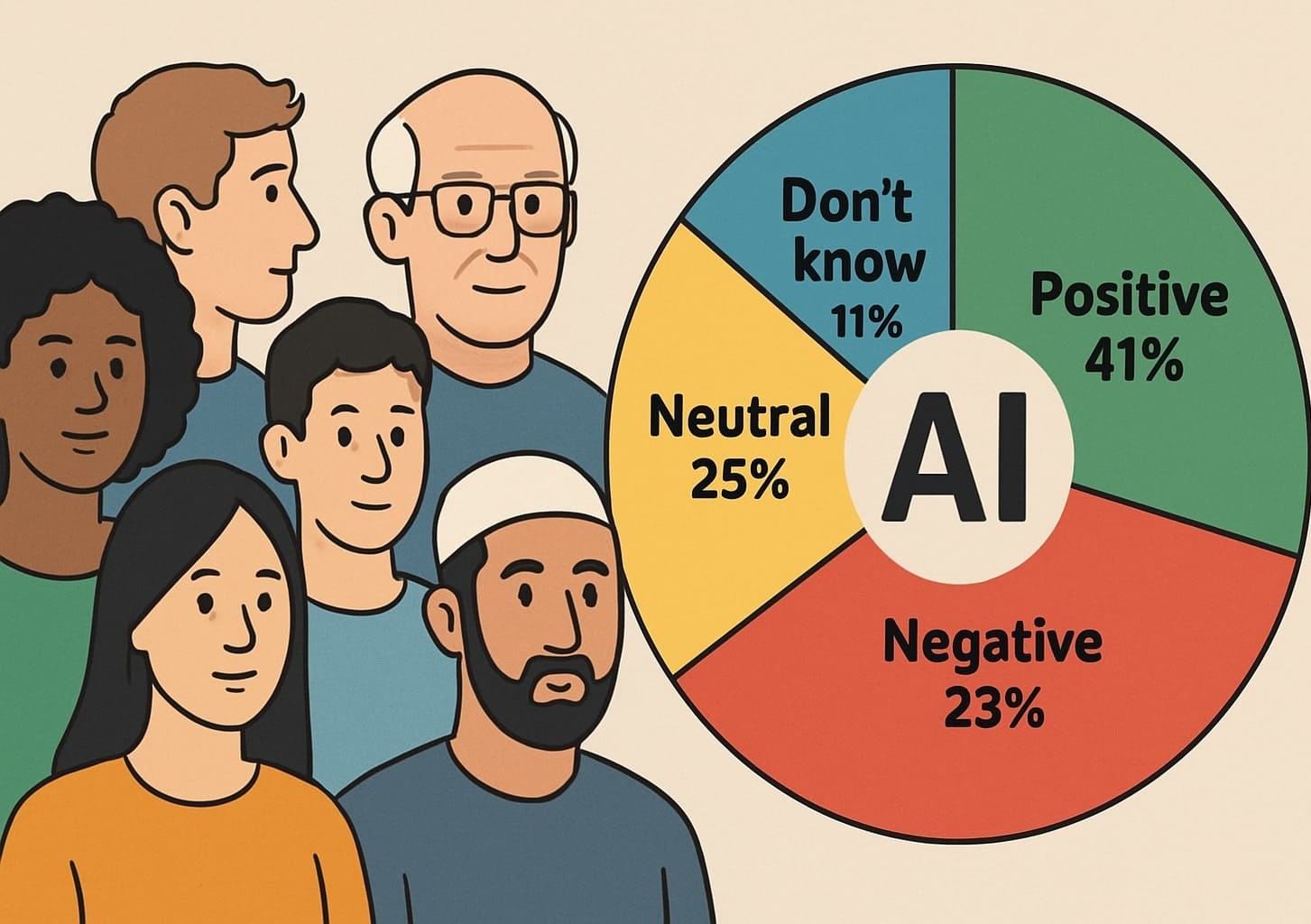
Artificial intelligence is becoming part of many areas of life, from politics and art to work. According to a recent survey by the Pew Research Center, conducted between June 9 and 15, 2025, among a sample of 5,023 American adults, respondents tend to be more cautious than enthusiastic. A total of 50 percent of Americans say they are more concerned than excited about the growing influence of artificial intelligence in everyday life. This is an increase from 2021, when only 37 percent gave this answer. By contrast, only 10 percent feel more excited, while 38 percent are equally excited and concerned. This survey reveals how Americans view artificial intelligence in the context of its impact on human abilities and society as a whole.
Concerns About Risks
Americans clearly recognize the risks associated with artificial intelligence. As many as 57 percent rate the risks as high, while only 25 percent consider the benefits significant. In open-ended responses, respondents most often mention concerns about the erosion of human skills and relationships. Regarding their own lives, approximately 60 percent of respondents want greater control over how artificial intelligence is used. Only 17 percent are satisfied with the current level of control, and 21 percent are unsure. Nevertheless, they are open to using artificial intelligence in practice—nearly 75 percent would allow it to assist them with routine tasks and activities, albeit only to a limited extent. This attitude reflects a broader trend: Americans are willing to embrace artificial intelligence for practical purposes, but they want to keep it under supervision.
Other related surveys confirm this trend. For example, studies from April 2025 show that sentiment toward artificial intelligence has shifted toward greater caution since 2021, particularly due to concerns about ethical issues and the impact on employment. Americans fear that artificial intelligence could disrupt traditional social norms, such as trust in human creativity or personal interactions.
Impact on Human Abilities
One of the greatest concerns is the impact of artificial intelligence on fundamental human skills. A full 53 percent of Americans believe that artificial intelligence will impair people's ability to create, compared with only 16 percent who think it will improve it. Another 16 percent say it will make no difference to creativity. When it comes to building meaningful relationships, pessimism is even greater: 50 percent expect a decline and only 5 percent an improvement, while 25 percent foresee no change.
Views on problem-solving are more positive—29 percent think that artificial intelligence will help people become better at it, although 38 percent expect the opposite. Optimism is even lower regarding decision-making in difficult situations: 19 percent foresee improvement, but 40 percent expect a decline. Between 16 and 20 percent of respondents acknowledge uncertainty about these impacts. These figures underscore that Americans fear losing what they consider the essence of humanity—creativity and authentic connection with others.
Related research, such as studies from May 2025, emphasizes that younger generations share these concerns even more intensely because they themselves often interact with artificial intelligence on social media or in education, giving them firsthand insight into the potential risks.
The Role of Artificial Intelligence in Different Areas of Life
Americans are selective about where they would allow artificial intelligence to play a role. In personal matters, such as religion or finding a partner, the majority reject it. For example, 73 percent say that artificial intelligence should play no role in offering advice about belief in God, and 66 percent oppose its involvement in assessing whether two people could fall in love. No area received more than 33 percent support for artificial intelligence playing a major role.
By contrast, there is greater openness to its use in analytical and data-intensive tasks. Seventy-four percent support a role for artificial intelligence in weather forecasting, 70 percent in detecting financial crimes, and the same proportion in investigating fraud involving government benefits. Sixty-six percent see a place for it in the development of new medicines, and 61 percent in identifying suspects in criminal cases. As many as 46 percent would even allow it to assist in providing mental health support. This difference shows that Americans trust artificial intelligence in technical fields where it replaces routine work, but not in sensitive, human dimensions.
Other studies from 2025 report similar findings, emphasizing that the public values artificial intelligence for its efficiency in medicine or security but warns against expanding its use into ethical areas.
Detecting AI Content
Another key issue is the ability to distinguish content created by artificial intelligence from content created by humans. Seventy-six percent of Americans consider it very important to be able to determine whether images, videos, or texts come from artificial intelligence or people. Nevertheless, 53 percent are not very confident that they could do so themselves. This uncertainty also applies to broader impacts, such as influencing public opinion or art, where artificial intelligence generates content that can be misleading.
Young People and Artificial Intelligence
Young adults under the age of 30 are more aware of artificial intelligence than older generations. Sixty-two percent of them have heard or read about it, compared with 32 percent of seniors aged 65 and older. This gap has widened further since 2022. Young people also interact with artificial intelligence more frequently—the majority use it regularly. Nevertheless, their views are pessimistic: 61 percent believe that artificial intelligence will impair creativity and 58 percent believe it will harm relationships, significantly higher than among older adults, for whom these figures fall to 40 percent.
This contrast between awareness and concern suggests that young people who are growing up with technology are more aware of potential threats than previous generations. Surveys from July 2025 confirm that young Americans are a key group pushing for better regulation of artificial intelligence in areas such as education and social media.
In conclusion, this Pew Research Center survey shows that Americans view artificial intelligence as a tool with enormous potential, but also with risks that cannot be underestimated. Their desire for control and selective acceptance suggest the need for a balanced approach in which technology serves people, not the other way around.


