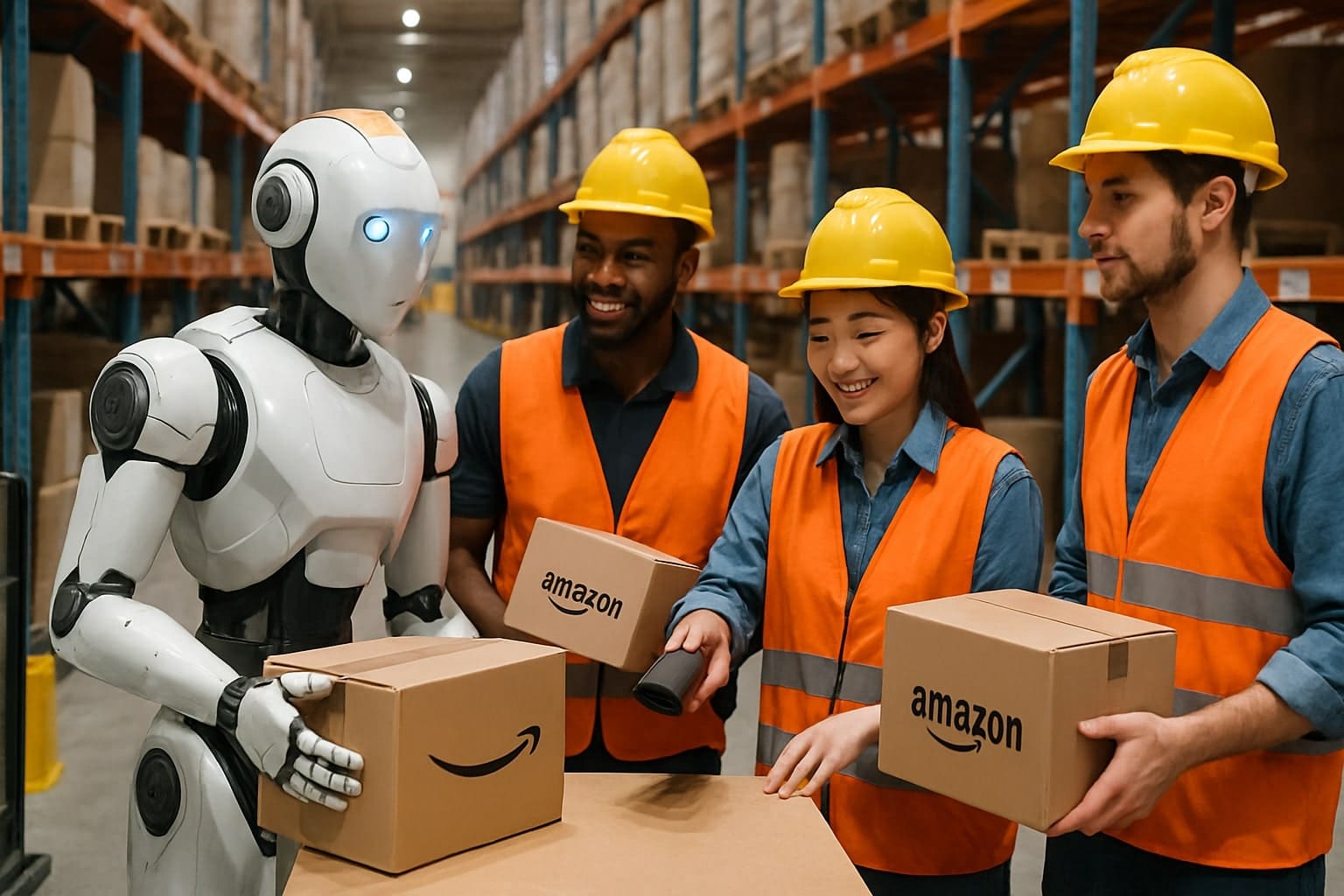
Amazon shows what human jobs will look like in the world of AI robots
Amazon offers an unusual perspective on how human roles are evolving in its operations. Rather than simply replacing workers, the company is actively reshaping job categories and retraining employees so they can work alongside advanced robotic systems.
Introducing the Vulcan robot
Amazon recently unveiled its new robot called Vulcan, which is designed to handle ergonomically demanding warehouse tasks. These tasks include, for example, picking items from high or low shelves—activities that previously required people to climb ladders or bend over. This technological solution not only increases workplace safety but also changes the nature of human work in these environments. "Robots will handle more physically demanding tasks, while people will perform work that requires fine motor skills and judgment," Amazon's report states. For example, while Vulcan robots take responsibility for picking items from hard-to-reach locations, people remain essential for tasks that require dexterity, judgment, or problem-solving—such as collecting items from middle shelves or resolving exceptions where robots fall short.
The emergence of new job categories
The deployment of warehouse robots has led to the creation of hundreds of new types of jobs at Amazon. Examples include:
- Monitoring robotic floors.
- On-site reliability maintenance engineers.
- Automation monitors (similar to checkout attendants overseeing self-checkout lanes).
- Robotics technicians trained from among existing warehouse workers.
These new roles represent a significant shift in the skills and responsibilities required. Instead of traditional manual tasks, employees are now focusing more on overseeing, maintaining, and supporting automated systems.
Reskilling and retraining initiatives
Amazon is investing in programs that train selected warehouse workers for technical roles in robot maintenance and support. The company recognizes the need to adapt its workforce to new technological requirements and is actively supporting employees' transition into these emerging roles. However, it should be noted that these opportunities may not be universally available; not all employees will have the skills or interest required for such transitions. Amazon is therefore developing various educational programs designed to prepare workers for different levels of technical complexity.
Historical data supports the trend whereby technological progress eliminates some jobs but creates even more new ones. The World Economic Forum predicted that by 2025, approximately 92 million jobs could be lost due to automation, but as many as 170 million new positions could emerge at the same time—often requiring different skills. Amazon's approach is in line with this outlook: rather than mass layoffs followed by full automation, there is a gradual transition toward hybrid teams in which people oversee and maintain automated systems. Despite these efforts, not every worker whose position is replaced will find an easy transition into technical roles. Uncertainty will persist over whether enough new positions will be created to compensate for losses among traditional blue-collar jobs. Last but not least, some experts suggest that if AI ultimately performs most work tasks, society may need broader solutions, such as government social support programs for those who are unable to retrain quickly enough.
Comparison of old and new roles in Amazon warehouses

Amazon's view of future human jobs reveals an environment in which people are most likely not directly replaced by machines—instead, they are moved into roles involving oversight, technical support, and exception resolution alongside increasingly capable AI robots. The company's continued investment in reskilling reflects both optimism about technology-driven job creation and recognition of the challenges many workers face when adapting to this rapidly changing environment. As technological transformation continues, Amazon is trying to strike a balance between increasing efficiency through automation and preserving meaningful employment opportunities for its extensive workforce. This example may serve as a model for other companies preparing for a similar transformation in their own operations.