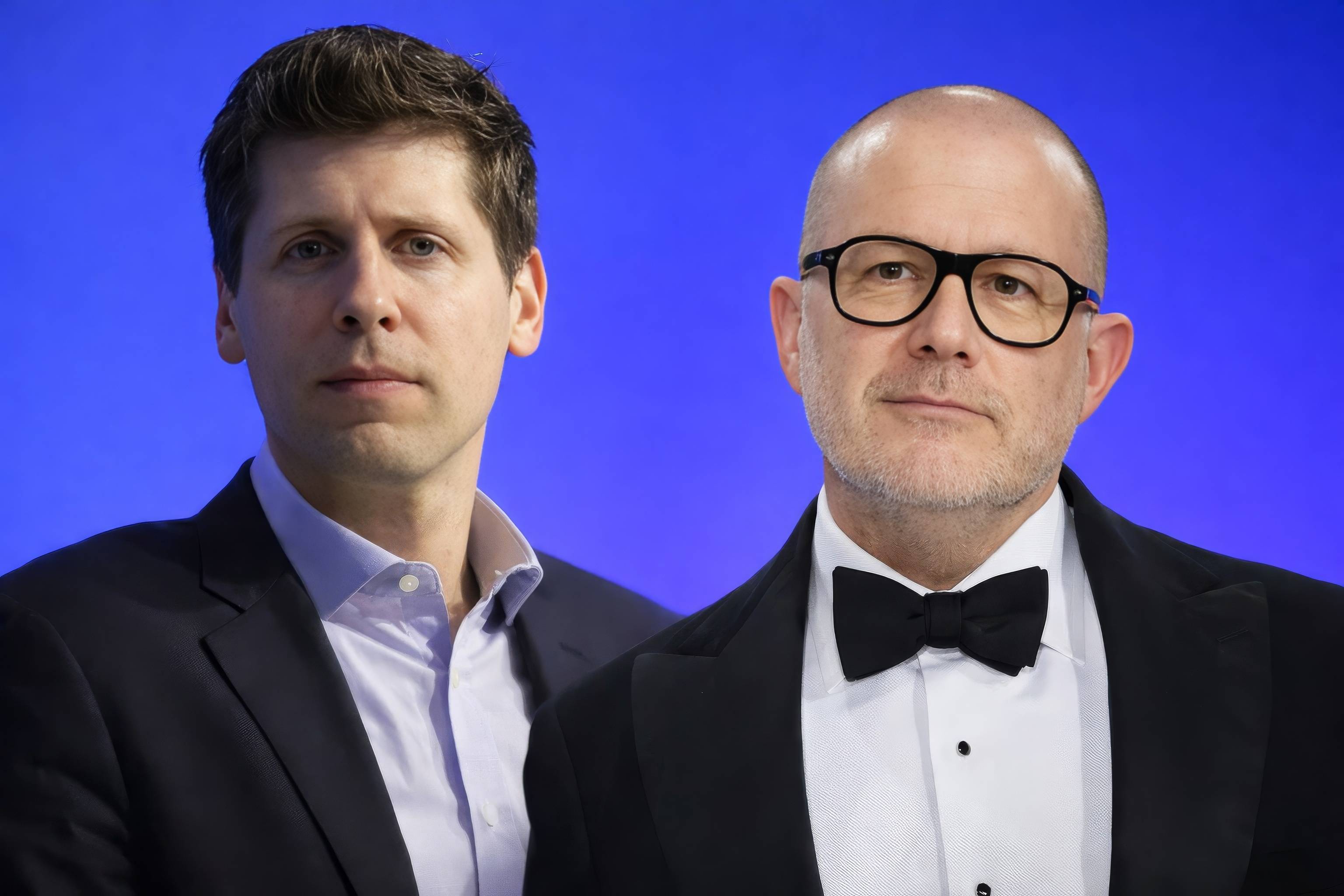
Last May, in 2025, OpenAI acquired legendary designer Jony Ive's hardware startup io Products for nearly $6.5 billion. At the time, many were left scratching their heads—what exactly did the company behind ChatGPT want from the man who gave the world the iPhone and iMac? The answer is now beginning to take shape, and it is a highly ambitious plan.
What Is OpenAI Planning?
According to The Information, OpenAI is working on an entire family of AI devices. The products under consideration include a smart speaker with a camera, smart glasses, and a smart lamp. The team behind them comprises more than 200 people from the hardware division.
The first product to reach customers will be the smart speaker. The price? Somewhere between $200 and $300, equivalent to roughly CZK 4,100–6,200. The launch date? No earlier than February 2027. The smart glasses probably will not enter mass production before 2028, while it is not yet clear whether the lamp will ever be released at all.
A Speaker with a Camera
The device will not merely play music and answer questions like today's smart speakers. It will have an integrated camera that recognizes objects on a table, picks up conversations in its surroundings, and—most notably—identifies users through a system similar to Face ID. Users will even be able to shop through the speaker.
During an internal presentation for OpenAI employees, it was said that the device would actively monitor users and suggest actions. For example, if you have an important meeting in the morning, the speaker will recommend that you go to bed earlier the night before. Sam Altman described the first prototype as “the coolest piece of technology the world has ever seen." It is hardly a modest claim, but we would expect nothing less from Altman.
Jony Ive: The Design Genius Who Left Apple
Jony Ive is no newcomer. The man behind the designs of the iMac, iPod, iPhone, and Apple Watch left Apple in 2019 and founded his own design studio, LoveFrom. When he joined forces with OpenAI, the tech world took notice.
LoveFrom formally remains an independent company, but it provides OpenAI with hardware designs. Industrial design is led by Evans Hankey, another former Apple designer, while Ive has the final say on almost every design decision. The development team also includes other former Apple figures—Tang Tan, Scott Cannon, and even Adam Cue, son of Eddy Cue, who is working on the software.
But not everything is going smoothly. OpenAI employees have reportedly complained about LoveFrom's excessive secrecy and the slow pace of design reviews. Collaboration between two such powerful entities inevitably creates friction.
Going Head-to-Head with Apple
Meanwhile, Apple is watching closely. The Cupertino-based company is preparing its own smart home hub with a display, camera, and deep Siri integration. It is also working on smart glasses, an AI pendant, and AirPods with cameras. Meta, meanwhile, is enjoying success with its Ray-Ban glasses, which can take photos, record video, and stream content.
The AI hardware market is gaining momentum like an avalanche. Everyone wants a piece of it, and OpenAI is entering the battle with the biggest weapons possible: the world's most popular AI chatbot and a designer whose work shaped an entire generation.
Privacy or Convenience? The Question Remains
Do we really want a device that continuously watches us at home through a camera, recognizes our faces, and listens to our conversations? Public reactions are mixed. Some people see such an assistant as the future. Others—and there are many of them—have legitimate concerns about this level of surveillance. OpenAI has not yet responded to media inquiries. Altman and Ive promise a device that will be “calm, joyful, and unobtrusive." How exactly they will reconcile that with a camera, facial recognition, and constant monitoring of its surroundings remains to be seen.