

Alibaba introduces advanced Qwen 3 AI model with unique hybrid reasoning
In April 2025, Alibaba introduced its latest family of large language models - Qwen 3. This new step in the field of artificial intelligence brings a number of innovative features and significantly pushes the boundaries of what open-source AI models can offer.
Hybrid reasoning
The most prominent innovation of the Qwen 3 models is the introduction of so-called "hybrid reasoning". This feature allows the models to dynamically switch between two modes of operation depending on the type of task they are solving. In "thinking mode", the model performs thorough, step-by-step structured reasoning, which is ideal for complex tasks such as mathematical problems, programming, or logical reasoning. Conversely, in "non-thinking mode", it provides fast answers to simpler questions. What is particularly practical is that users can control these modes themselves using special tokens in the prompt (/think and /no_think), allowing them to balance accuracy with speed and computational demands according to their current needs.
Scalability for different needs
Qwen 3 is not just one model, but an entire family of models with different sizes and architectures:
- Traditional "dense" models with between 0.6 billion and 32 billion parameters
- Advanced Mixture-of-Experts (MoE) models, including the flagship model with an impressive 235 billion parameters (Qwen3-235B-A22B)
The smaller models are optimized for deployment on end devices, while the larger ones target demanding research and enterprise use. In addition, all models are capable of working with an extensive context window of up to 131 thousand tokens, allowing them to process long documents or conversations without problems caused by text truncation.
High-level multilingual capabilities
Qwen 3 was trained on an impressive volume of data - nearly 36 trillion tokens comprising textbooks, source code, dialogue pairs, and other diverse sources. As a result, it supports an astonishing 119 languages, including Czech, making it exceptionally versatile for global deployment. Thanks to its strong multilingual capabilities, Qwen 3 should be able to handle texts written in Czech, answer questions in Czech, and generate Czech content. Language models with such extensive language support are generally capable of working with the major European languages.
Performance surpassing the competition
In a range of benchmarks, Qwen 3 outperforms even renowned competitors:
- In programming, it surpasses Gemini Pro and excels in competitive programming tasks such as Codeforces.
- In mathematics, it beats OpenAI o3-mini on AIME mathematics tests.
- In general reasoning, it outperforms DeepSeek R1 and matches or surpasses OpenAI o1/Gemini in instruction following, text generation, and logical reasoning.
- In its ability to use tools and function as an agent, it achieves a leading position among open-source LLMs.
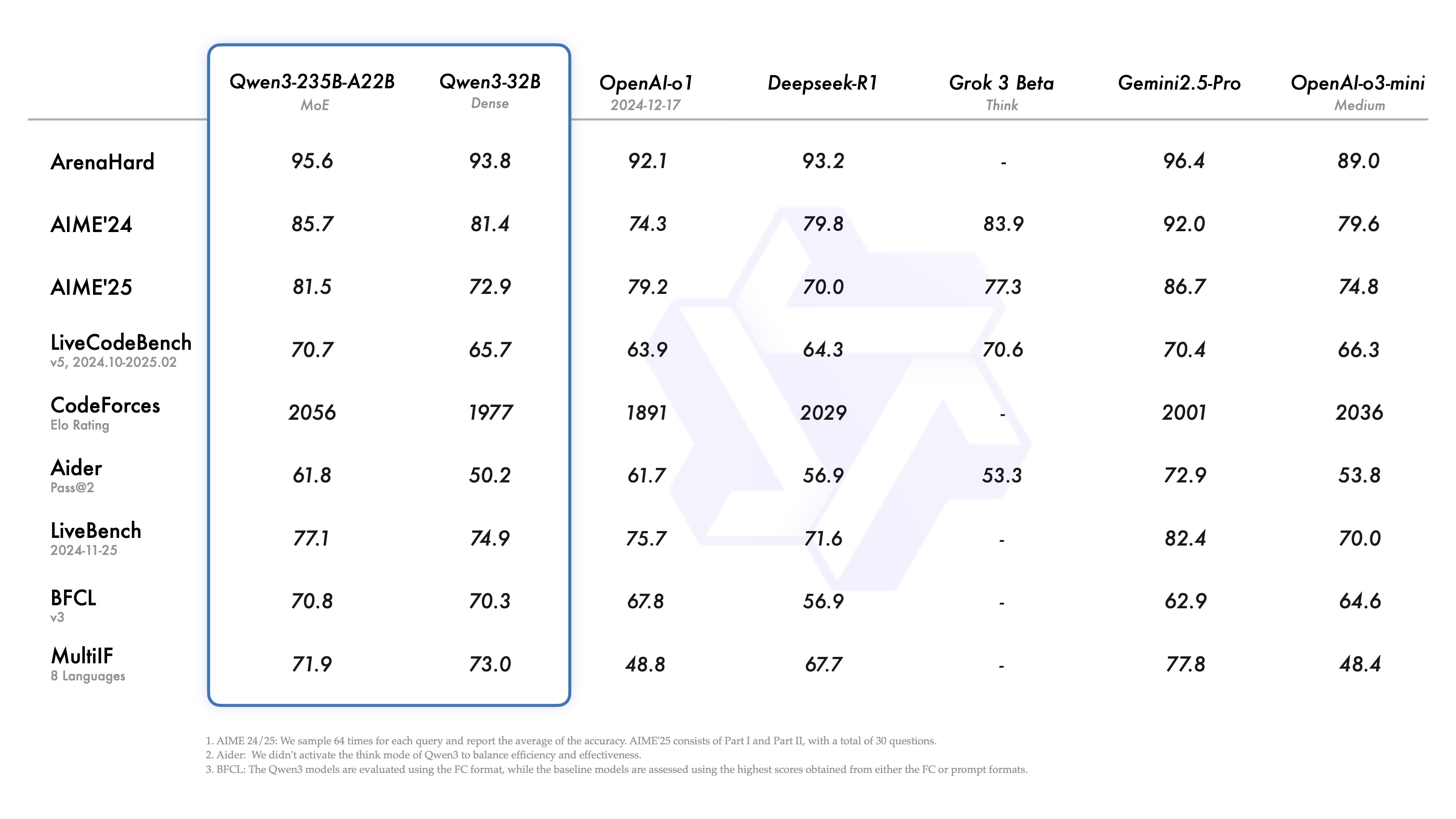
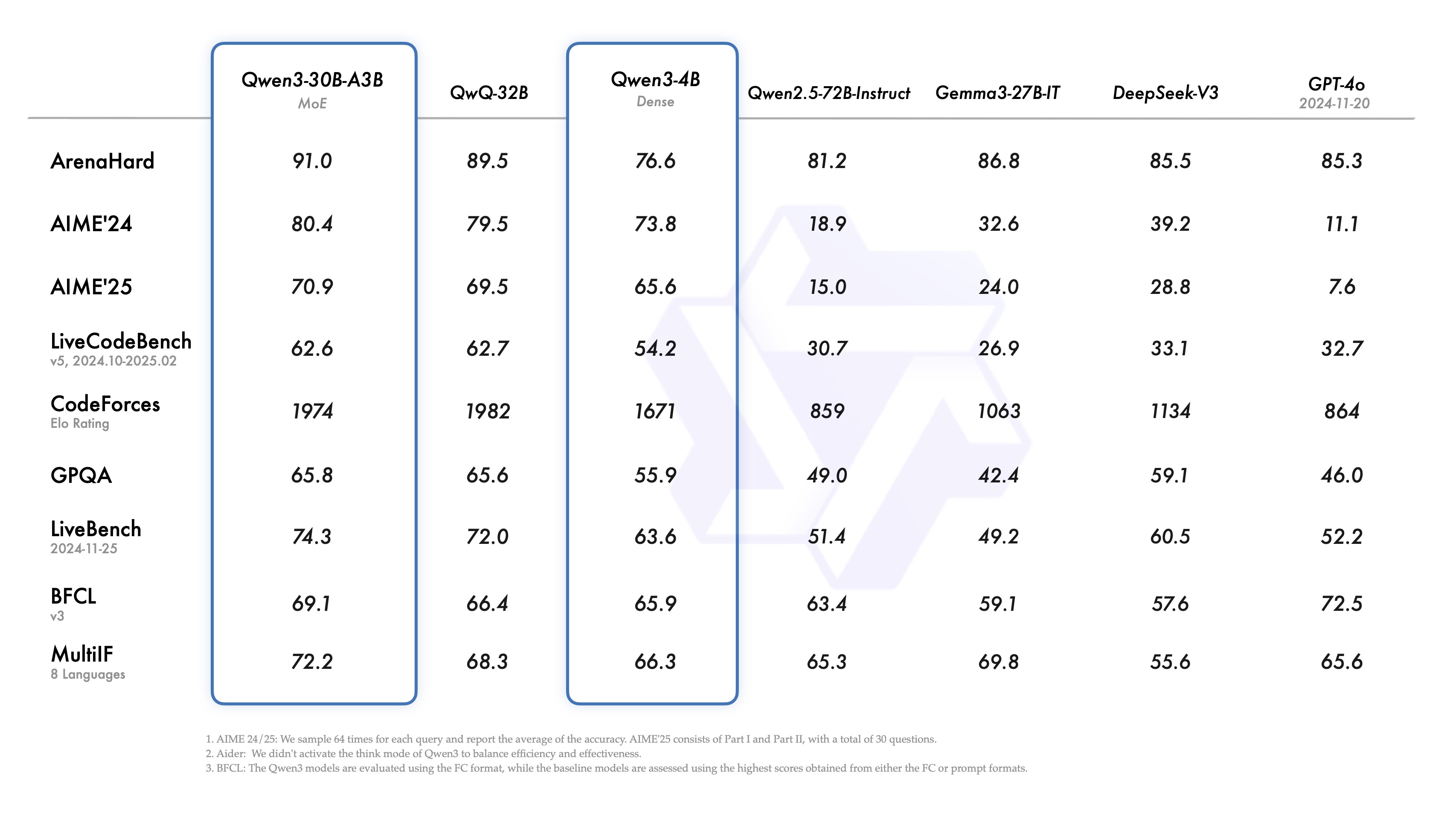
Hybrid reasoning allows the Qwen 3 model to verify its own outputs more effectively than many competing models - at the cost of increased latency when deep thinking mode is activated.
Open availability
An important aspect is that all released model weights are available under the open Apache 2.0 license. The models can be downloaded from platforms such as Hugging Face or GitHub and can be run on popular inference engines such as Transformers and Ollama. For practical testing, chat.qwen.ai is available, offering direct access to several model variants. Qwen 3 is also available through cloud providers such as Fireworks AI.
Position in the world
Alibaba states that Qwen represents the world's largest open-source AI ecosystem by the number of derivative projects - surpassing even Meta's Llama community - with more than 100,000 derivative models built on previous versions. This release further intensifies competition with American labs such as OpenAI while also raising questions about future access to chips in light of ongoing export restrictions targeting Chinese AI companies. Qwen 3 represents a significant milestone in the field of open-source AI models, where Alibaba demonstrates that it can keep pace with - and in some respects even surpass - the best closed systems from Google and OpenAI. The combination of performance, versatility, and openness makes this model an attractive choice for developers, researchers, and businesses seeking to harness the advanced capabilities of the current generation of AI.


