

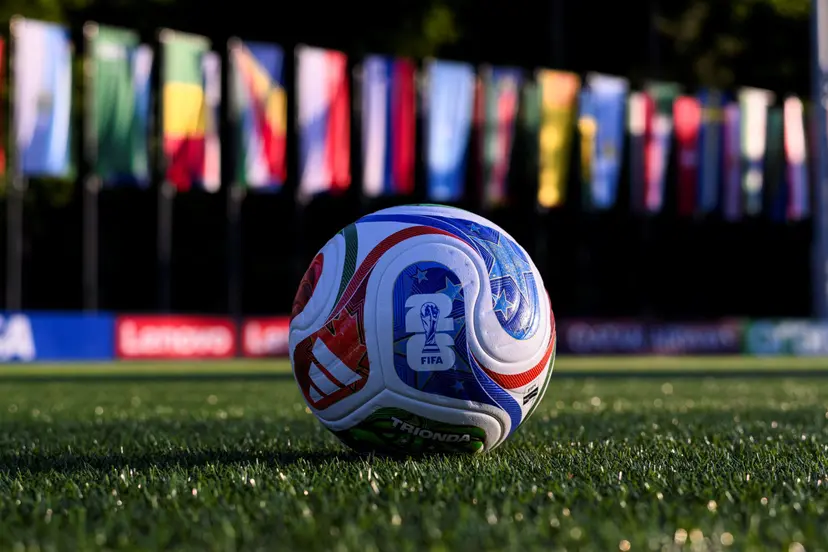
The 2026 FIFA World Cup kicks off on June 11, and one thing is clear from the outset: this will be the biggest football tournament in history. Forty-eight teams, 104 matches, and sixteen host cities spread across the USA, Canada, and Mexico. An estimated six and a half million fans will attend the stadiums in person. And before the ball even touches the grass, artificial intelligence has entered the game with bold predictions. Humans and algorithms disagree.
Bank of America Asked AI
Bank of America asked 65 analysts from its Global Research division who would win. Roughly 40% of them backed France. Mbappé as the tournament's top scorer, Spain's Lamine Yamal as player of the tournament, and a France versus Spain final. Those are the human predictions. The bank then asked Microsoft's Copilot tool the same question.
The answer was different. Artificial intelligence gave Spain the same chance of winning as France. AI selected two teams with virtually identical probabilities. And Copilot was not alone. ChatGPT, Google Gemini, and most other language models favor France in their responses. Seven of the eight tools tested in one extensive experiment chose Les Bleus as champions. But numerical models, which work not with text but with statistics from thousands of matches, give a different answer.
What the Number-Crunching Models Say
Frank Andrade built his own model for Artificial Corner with the help of Claude, without writing a single line of code. He entered instructions in natural language, while Claude downloaded data and generated charts.
The model is based on roughly 49,000 international matches from 1872 to the present. The more recent the match, the greater the weight it received. A result from last November simply says more than a draw from 2008. Each team then receives a rating based on the Elo system familiar to chess players: win and the number rises; lose to a weaker opponent and it plummets. Across approximately 50,000 simulations, Spain emerged with a 28% chance of winning the title, closely followed by Argentina at 21%. France finished third with 11%. The most likely final was Spain versus Argentina.
A different picture was offered by the Opta supercomputer, which ran more than ten thousand simulations of its own. Spain remained in first place, but with a significantly lower probability of roughly 16%. France finished second at approximately 13%. The betting odds broadly confirm this, although bookmakers rate the chances of both France and England slightly higher than the bare figures from Andrade's model.
Sportradar even ran 100,000 simulations of each of the 104 matches. And the conclusion? France and Spain are so close in their chances of winning the title that it is impossible to separate them. Each team won the simulated final roughly sixteen thousand times. Three different models, three different methods, yet they agree on the favorite.
Why Spain, Why Now?
As recently as the end of April, the models ranked England first. What caused this reversal? Spain arrives as the reigning European champion, with eighteen-year-old Lamine Yamal in attack and a Rodri-Pedri midfield pairing that is unmatched anywhere in the world. Andrade's model adds one simple fact: based on the numbers from recent years, La Roja simply stands out.
Everyone agrees, however, that the models are not infallible. Their accuracy in predicting results based on historical data is around 52%. In football, where favorites regularly lose to underdogs, that is a respectable record. But it is no guarantee.
While the models compete over the title, there is remarkable agreement on the individual awards. Kylian Mbappé, at the peak of his career at twenty-seven and France's main goalscorer and penalty taker, is listed as the favorite for the Golden Boot virtually everywhere. Sportradar's simulation selected him as the top scorer in more than 13,000 of 100,000 runs, just ahead of Harry Kane. And Yamal takes the role of best young player, where the consensus is even stronger.
The Biggest Tournament, the Biggest Bet
The chance to attend in person is exceptionally rare this year. FIFA received more than 508 million ticket applications for a tournament with only seven million tickets available. The new dynamic ticket pricing system has stirred controversy. Group-stage matches start at $380, while a premium seat for a USA match costs more than four thousand dollars. A ticket priced at $11.5 million even appeared on the official resale platform.
According to a study by FIFA and the World Trade Organization, the tournament could add nearly $41 billion to global GDP and support more than 800,000 jobs. The final at MetLife Stadium will take place on July 19.
Sources: cnbc.com and seekingalpha.com


