

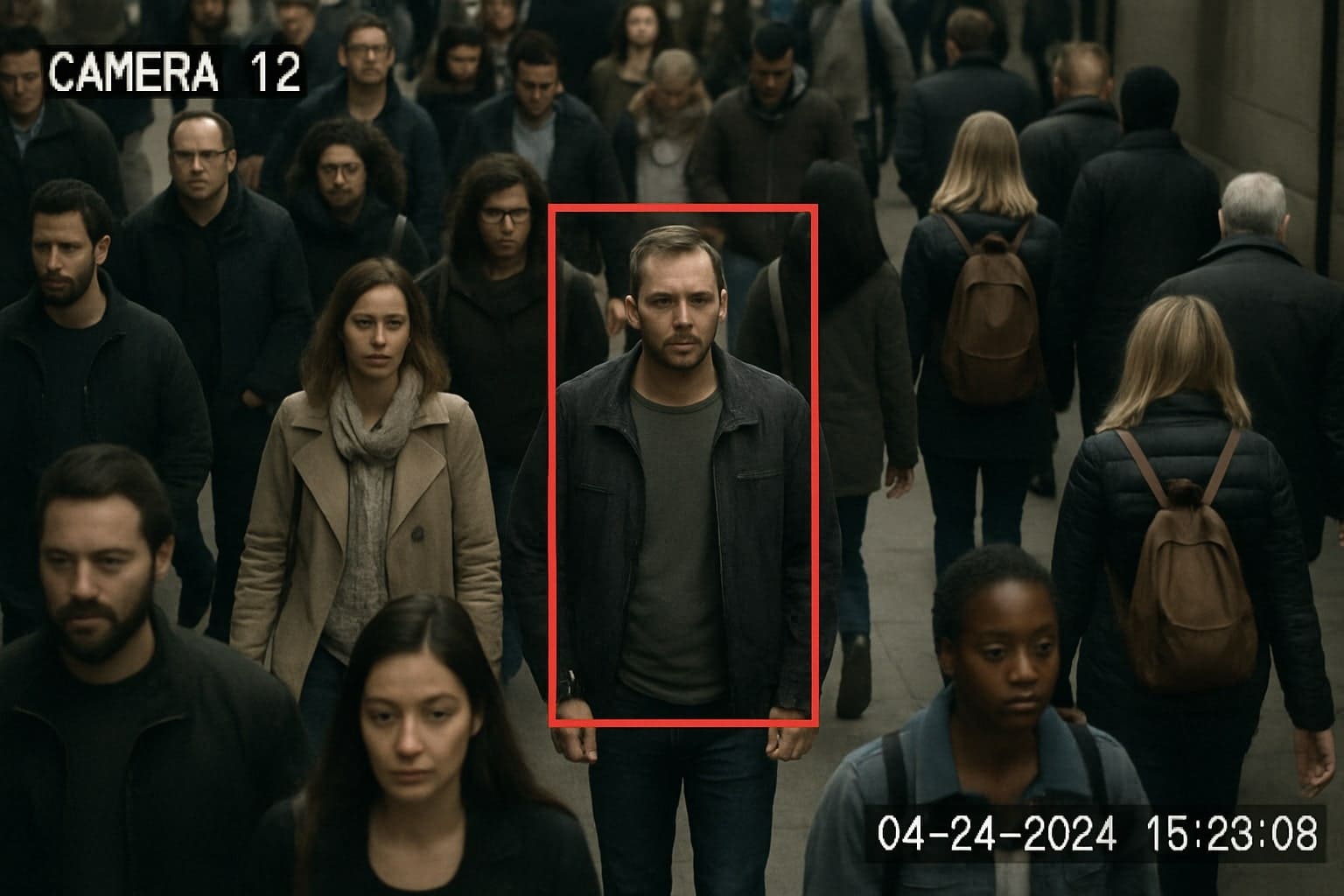
How the Track AI Tool Circumvents Facial Recognition Bans in the US
At a time when fifteen US states have decided to restrict facial recognition technology due to concerns about privacy and reliability, Veritone is introducing an innovative solution. Their new tool, called Track, is a sophisticated AI-powered surveillance system that effectively bypasses legal obstacles. Track differs significantly from traditional biometric systems and, instead of analyzing faces, uses so-called "non-biometric" analytical methods that are not regulated by current legal restrictions.
How does it work?
Rather than focusing on facial features, Track identifies people in video footage using other visual attributes - footwear, clothing (including color and type), body shape, appearance corresponding to a particular gender, hairstyle, and accessories such as bags or headwear. The tool's user interface is designed with an emphasis on simplicity and efficiency. Operators can select from drop-down menus containing categories such as "Accessory," "Body," "Footwear," "Gender," and others, with each of these categories containing additional subcategories – for example, sleeve length in the outerwear section. After entering these parameters, the system presents stills from the analyzed video material that match the selected criteria. The strength of the Track tool lies in its ability to progressively refine searches, allowing users to map the movements of individuals under surveillance across various types of footage. The system can work with a wide range of sources - from CCTV security camera footage and police body-camera videos to drone footage, recordings from Ring doorbell cameras, and public and crowdsourced videos from social media. This versatility significantly expands the possibilities for tracking individuals even in environments where traditional facial recognition is prohibited or in situations where faces are obscured.
Who uses Track?
Track is specifically marketed as a solution for jurisdictions with restrictions on conventional facial recognition. As of May 2025, more than 400 clients in areas with such restrictions had already adopted the tool. A significant milestone came when a US state attorney's office expanded Veritone's authorization to operate last summer, enabling broader use of the tool for surveillance activities.
Security concerns still remain
Veritone's CEO proudly describes Track as his "Jason Bourne tool," which has the potential to clear wrongfully accused individuals by providing alternative identification methods. However, critics point out that Track essentially replicates many of the risks associated with facial recognition. The main concerns relate to privacy violations - although the system does not use biometric data, it still enables the tracking of individuals' movements and behavior across different contexts. There is also a significant risk of misidentification, similar to traditional systems that rely on pattern recognition rather than unique biometric data. "If it sounds similar to current facial recognition technologies - suggesting that it is a potentially flawed and invasive system that will likely misidentify numerous individuals - Veritone sees it differently." The company argues that Track offers an alternative in environments where traditional methods are not permitted or effective, while also serving legitimate purposes such as crime detection or protecting public safety.
Track is a prime example of how AI companies are rapidly adapting to the regulatory environment - sometimes by exploiting legal loopholes rather than addressing the fundamental ethical questions surrounding mass surveillance. Although under current laws it technically does not qualify as "facial recognition" software, its ability to track people through other visual cues raises similar questions about the right to privacy and potential misuse that led to the original bans on facial recognition technologies.


