Artificial Intelligence Discovers Hidden Details in Classical Art
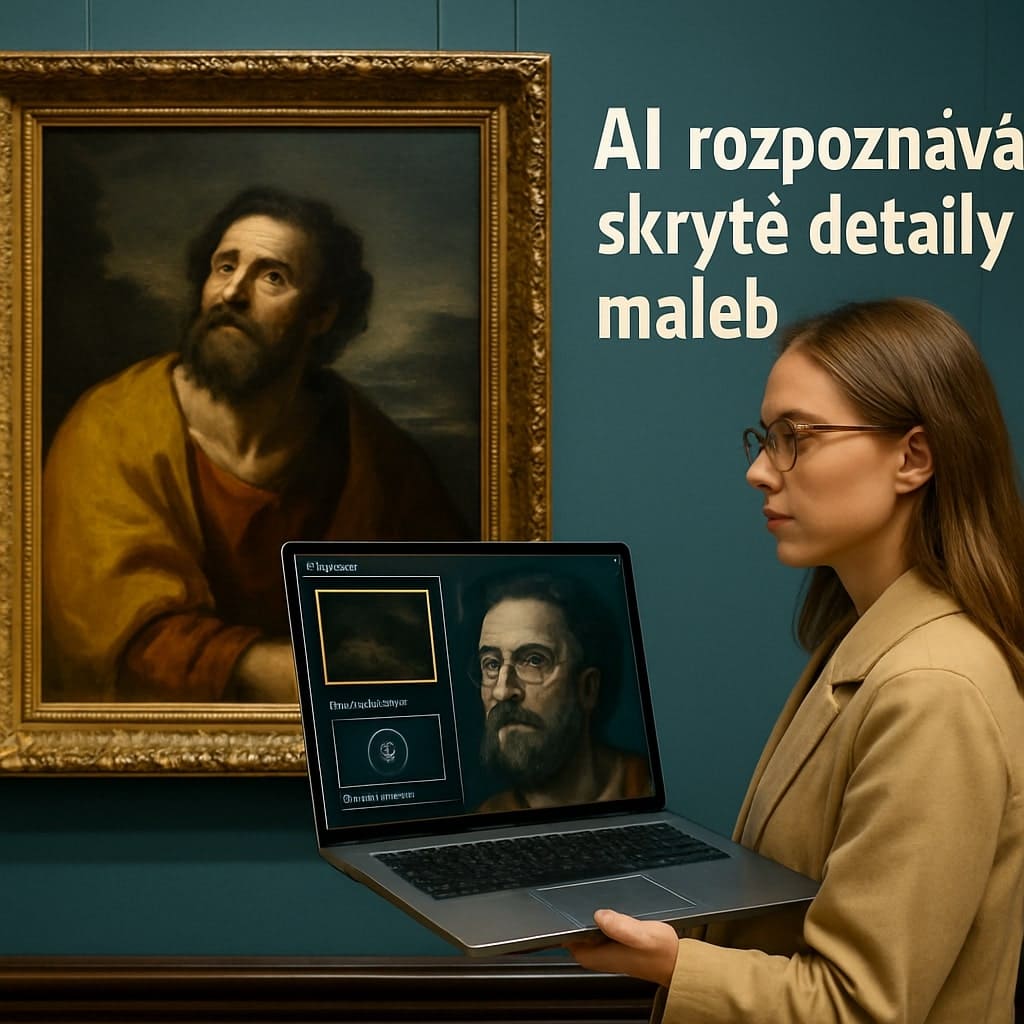
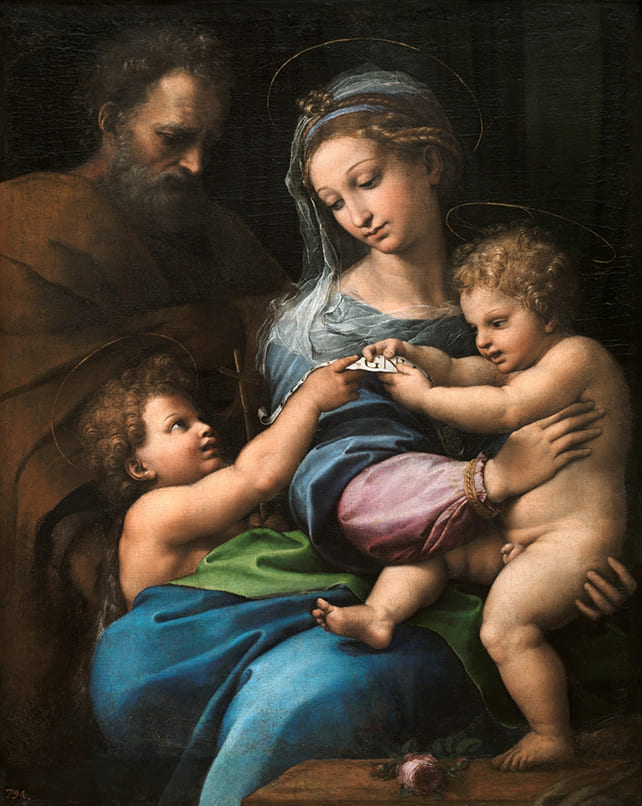
Artificial intelligence is once again pushing the boundaries of our knowledge, this time in the field of art and cultural heritage. A recently published study revealed how advanced AI algorithms managed to recognize a previously unknown detail in one of the most famous works by Renaissance master Raphael Santi. Scientists from the University Hospital Basel in Switzerland used a special AI system to analyze Raphael’s painting "The Sistine Madonna" from 1512 and uncovered a remarkable detail that had escaped the human eye for centuries—a small cross hidden in the Madonna’s eyes, visible only at extreme magnification. "This discovery shows how technology can expand our understanding of historical works of art and offer new perspectives on works that we considered thoroughly explored," said the lead researcher.
How AI Technology Works for Analyzing Works of Art
The technology used to analyze works of art combines several advanced artificial intelligence methods. At its core are convolutional neural networks (CNNs), which were originally developed for recognizing objects in photographs but are now also being used in the field of art. These systems work on the principle of multilayer image analysis. First, they divide the image into small segments, which they then analyze in terms of colors, textures, shadows, and other visual elements. Thanks to deep learning, AI can identify patterns and anomalies that the human eye often overlooks. Specialized algorithms are used to analyze historical paintings, taking into account the specific characteristics of old paintings, such as cracks, color changes caused by aging, or restoration interventions. The system learns to distinguish between the artist’s original brushstrokes and later modifications. In the case of Raphael’s painting, multispectral analysis techniques were used, enabling the system to "see" beyond the limits of the visible spectrum. This includes infrared and ultraviolet imaging, which reveals underlying layers of paint and details that are not visible to the naked eye.
AI technology is finding increasingly more applications in the field of art:
- Authentication of Works of Art
One of the most important applications is verifying the authenticity of works of art. In 2023, an AI algorithm uncovered a fake painting attributed to Rembrandt in a private collection. The system analyzed characteristic brushstrokes and the use of colors and revealed inconsistencies that experts had overlooked. "AI can quantify an artist’s handwriting in a way the human eye cannot," explains Dr. Elizabeth Johnson from the Institute of Art Conservation in London. "It can process and compare thousands of image points per second and find patterns that define an artist’s unique style." - Digital Restoration
In recent years, AI has also been used in the digital restoration of damaged or degraded works of art. In the "Next Rembrandt" project, an entirely new painting in Rembrandt’s style was created based on an analysis of his existing works. At the Prado Museum in Madrid, AI was used in 2024 to digitally restore parts of Velázquez’s painting "Las Meninas" that had been damaged by time and previous restorations. The technology made it possible to virtually remove centuries of changes and show what the painting might have looked like shortly after its completion. - Cataloging and Organizing Collections
Large museum institutions such as the Metropolitan Museum of Art in New York and the Louvre in Paris use AI to catalog and organize their extensive collections. Systems can automatically identify objects, people, or scenes in paintings and link works with similar motifs or techniques. "The digitization of art collections is an enormous task," says Jean-Michel Lambert, Director of Digital Technologies at the Louvre. "AI allows us not only to catalog efficiently but also to discover new connections between works that would otherwise remain hidden."
The Future of AI in Art
As the use of AI in the field of art grows, important questions are also emerging. Critics point to the risk of excessive dependence on technology when evaluating works of art and the possible loss of the human element in the interpretation of art. "Technology should be an aid, not a replacement for human judgment," warns Professor Bernard Williams of the University of Cambridge. "Art is a deeply human experience, and its interpretation requires cultural, historical, and emotional context that AI still lacks."
Nevertheless, experts predict that the role of AI in the analysis and preservation of works of art will continue to grow. Researchers from MIT and Harvard University are working on systems that could predict how paintings will age, which would enable preventive conservation and the protection of valuable works. AI technology is thus opening a new chapter in our relationship with the artistic treasures of the past, allowing us to see them with new eyes and discover secrets that have been hidden within them for centuries.