The gaming industry is undergoing a turbulent transformation. According to the State of the Game Industry 2026 report published by the organizers of the Game Developers Conference, 52% of gaming industry professionals now believe that generative AI is harming the industry. This represents a dramatic increase from last year's 30%. Conversely, only 7% of respondents believe AI is having a positive impact—a figure that has been steadily declining over the past two years.
The survey included responses from more than 2,300 professionals across various roles and fields within the gaming industry. The results reveal an industry caught in the crossfire between promises of greater efficiency through artificial intelligence and genuine concerns about job security, the erosion of creativity, and the long-term impact on the industry as a whole.
Layoffs and uncertainty in the job market
The situation is further complicated by the wave of layoffs that has hit the gaming industry in recent years. 28% of respondents said they had been laid off within the past two years, with that figure rising to 33% among workers in the United States. Half of those surveyed also confirmed that their current or most recent employer had carried out layoffs within the past 12 months.
Despite this, 36% of gaming industry professionals now use generative AI tools as part of their work. However, usage varies significantly by role. Only 30% of people working directly in game studios said they use AI, while among employees in publishing, marketing, PR, and support, AI usage reaches as high as 58%.
Tools that make work more difficult
Andrew Maximov, who has spent 12 years in the gaming industry and worked for PlayStation, highlights the astronomical cost of developing major games. "The last game I worked on cost $220 million (approximately CZK 5.1 billion) just to produce, and when you add marketing, you get to half a billion dollars for each game," he explains. His company, Promethean AI, offers developers a suite of tools for creating virtual worlds. Maximov believes AI can play a key role in reducing costs and saving time by automating repetitive tasks. "We are trying to replace that with a system that can learn directly from artists, so artists can be the authors of their own automation," he says.
However, the reality is often different. Even at major studios such as EA, developers report that AI tools can cause more problems than they solve because artists and designers have to fix "hallucinated" or non-functional assets. Many are also concerned that they are effectively training systems that could replace them in the future.
Cost reduction versus creativity
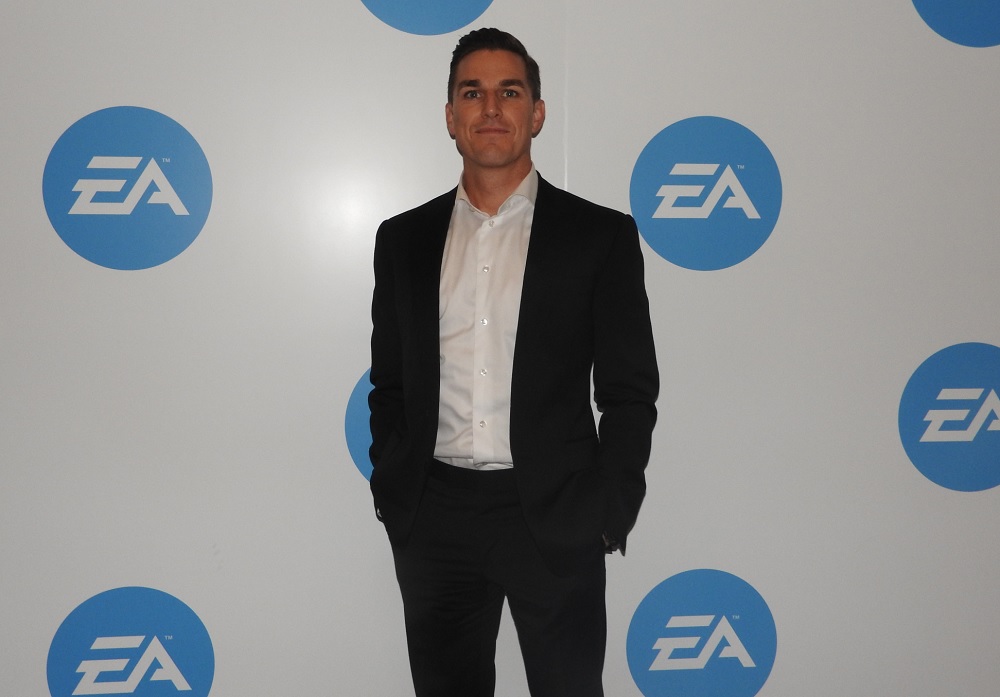
Andrew Wilson, CEO of EA, recently stated at a conference that approximately 60% of the company's development processes could be affected by AI tools. The company recently laid off 5% of its employees, representing approximately 670 jobs.
California-based software company Inworld has created an engine that enables developers to add realism and emotional depth to characters in game worlds. CEO Kylan Gibbs believes AI will allow developers to "dream bigger than ever before." "The engine enables developers to add AI agents that can see, perceive, and understand the world around them while interacting with players and performing in-game actions," he explains.
Nick Walton, CEO of gaming company Latitude.io, believes AI has the power to personalize the gaming experience. His company developed AI Dungeon, a game that allows players to choose from various worlds and create their own stories within them. "Instead of a developer coming up with everything you can do in advance, AI can dynamically decide what happens next. So any action is possible," Walton says.
Concerns about plagiarism
Google recently introduced a new generative AI tool called Project Genie, which can reportedly create game worlds "generated in real time." People quickly used it to create copies of Mario and Fortnite. The announcement sparked panic among investors, and shares of companies such as Take-Two (owner of GTA 6), Unity, and Roblox suffered dramatic declines.
Rhys Elliott of Alinea Analytics, however, argues that "Wall Street has lost the plot again" and that generative AI "is not coming to eat the gaming industry." "It is a technical impossibility masquerading as a breakthrough," Elliott explains. "It is the same kind of DiSrUpTiOn we have seen with web3, blockchain, the metaverse, cloud gaming, and esports." Elliott also points to potential legal issues. "Nintendo's lawyers are ruthless, and they are not going to like this," he says. Nintendo has a history of filing lawsuits even against fan projects that use its assets and intellectual property.
Human creativity
Strauss Zelnick, head of Take-Two, recently commented on the decline in the company's share price and said that people on Wall Street may be confused about what Project Genie actually does. "I think the confusion lies in the idea that new technologies and tools will themselves become entertainment experiences. That simply is not going to happen. Tools are not entertainment experiences. Creators use tools to create great entertainment," he said.
Maximov does not see AI as a replacement for people, but rather as a means of giving them greater "creative dignity." "There are a lot of developers who watched Harry Potter and The Lord of the Rings and were inspired to create something great, but now they spend their days placing rocks in front of a castle for a year," he says.
Elliott warns of a "profound ethical degradation at the heart" of the generative AI model that fundamentally devalues the medium of video games. "If games prioritize high-speed, automated output over human intentionality, they risk trading their creativity, their jobs, and their soul for a library of endless, bland content," he concludes.
Sources: digitaltrends.com and finance.yahoo.com