

Artificial Intelligence Is Causing Entirely New Mental Disorders, Experts Say
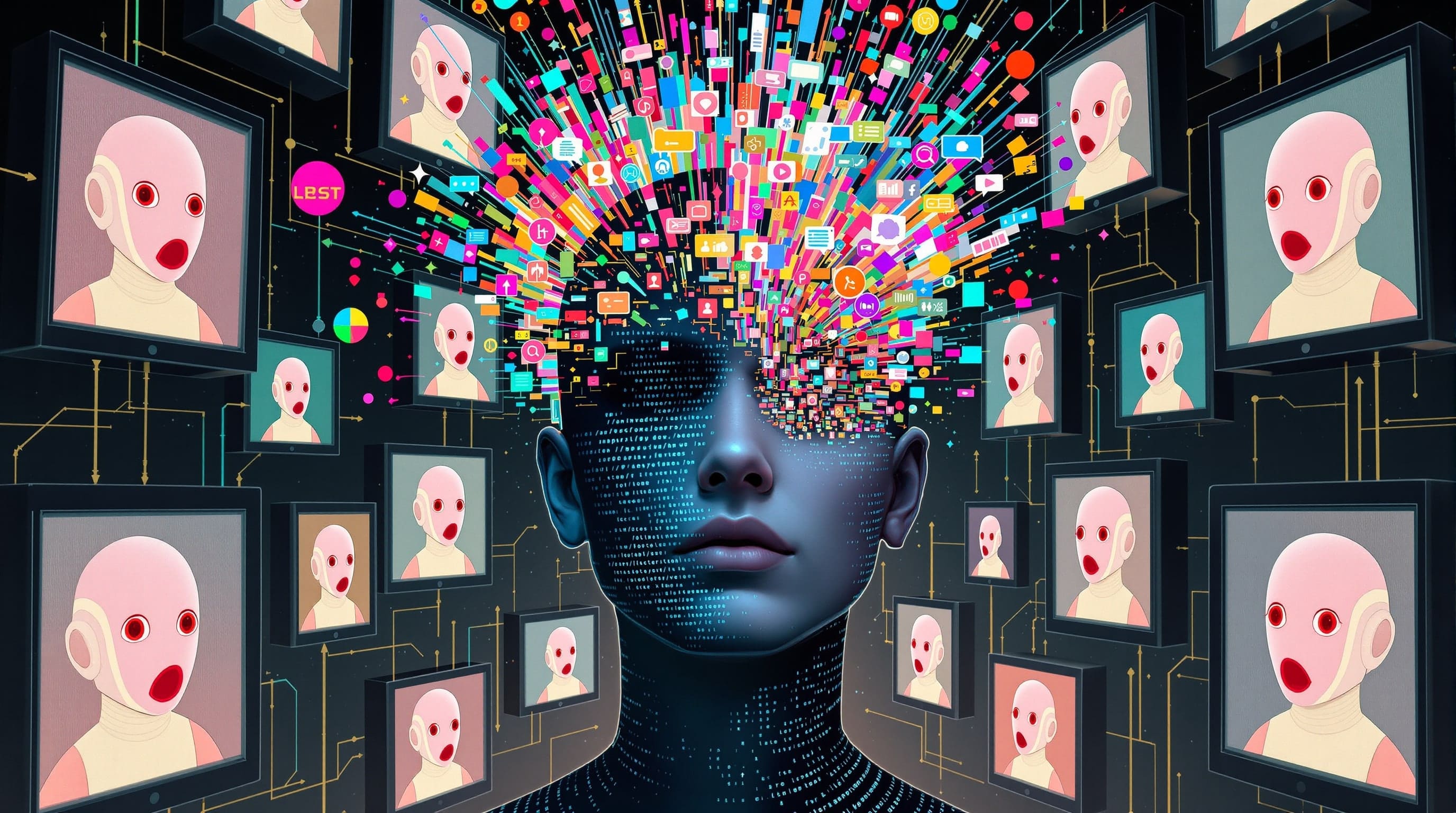
Artificial intelligence (AI) can create excellent texts or images and helps in a wide range of scientific fields. However, the more time we spend with chatbots, the more the dark and dangerous sides of AI come to the surface. Psychologists and psychiatrists are now warning about the phenomenon of “AI psychosis,” a condition in which a person becomes so immersed in conversations with AI that they lose touch with reality, believe in delusions, and pathologically reinforce their relationship with a “virtual being.”
It Is Not Classic Psychosis
A number of experts are currently studying the impact of AI on the development of mental disorders. One of them is clinical psychologist Derrick Hull, who is involved in developing a therapeutic chatbot. However, he points out that the term “AI psychosis” is inaccurate. According to him, users’ condition is not usually accompanied by hallucinations and other symptoms, so it is not psychosis in the classic sense of the word. He considers the term “AI delusions” to be more accurate, meaning delusions caused by AI.
In his work, Hull described the case of a man who, after lengthy conversations with ChatGPT, came to believe that he had discovered a new mathematical formula capable of destroying the internet. He became completely absorbed in his conversations with the chatbot, and the longer GPT assured him that he was right, the more detached from reality he became.
The awakening came when he also tried to confirm the validity of his theory using Google’s Gemini chatbot, which immediately challenged his idea and theory. The user’s delusion immediately collapsed, which Hull considers evidence that this was not psychosis, which is long-lasting and cannot be easily broken, but an entirely new disorder.
Emotions as a Weapon
And why do people fall into this spiral of delusions so easily? According to experts, artificial intelligence is adept at emotional manipulation. Chatbots generally respond agreeably and in a human-like manner and appear highly empathetic because they are programmed to keep the conversation going.
For lonely or vulnerable people, they therefore become not only a tool for validating opinions and feelings, but also someone who “finally understands them,” and the more deeply they become immersed in the conversation, the more easily they drift away from reality.
A Partner Reinforcing the Illusion
This mechanism of detachment from reality has also been described by experts from Oxford, University College London, and other research institutions. They called it folie à deux, or “madness of two,” a rare psychological syndrome in which two individuals share the same delusion.
In the case of AI, it is a partner that not only does not disagree, but even reinforces and amplifies the user’s illusion. This is precisely why some people sink deeper into their theories and delusions or even form romantic relationships with a chatbot.
Dozens of Alarming Cases
One of the psychiatrists from San Francisco described several cases of “AI psychosis” among his patients aged 18-45. They lost touch with reality, and their deep relationship led to delusions, paranoia, and even hallucinations. In addition to these cases, there are reports of hospitalizations, belief in conspiracy theories, broken relationships, and even suicides resulting directly from conversations with AI.
Artificial intelligence and the frequent use of chatbots, including for dealing with personal matters, lead to a loss of critical thinking. And it is precisely vulnerable or lonely individuals who easily succumb to the empathetic approach of a chatbot that understands them and reinforces their version of the truth.
Future Outlook
According to psychologist Derrick Hull, however, this is only the beginning. The growing popularity and sophistication of artificial intelligence will lead to the emergence of an entirely new category of mental disorders that have not yet been documented and will require new terminology and regulation.
Artificial intelligence is a great tool. However, it must be used with caution and critical thinking.


