

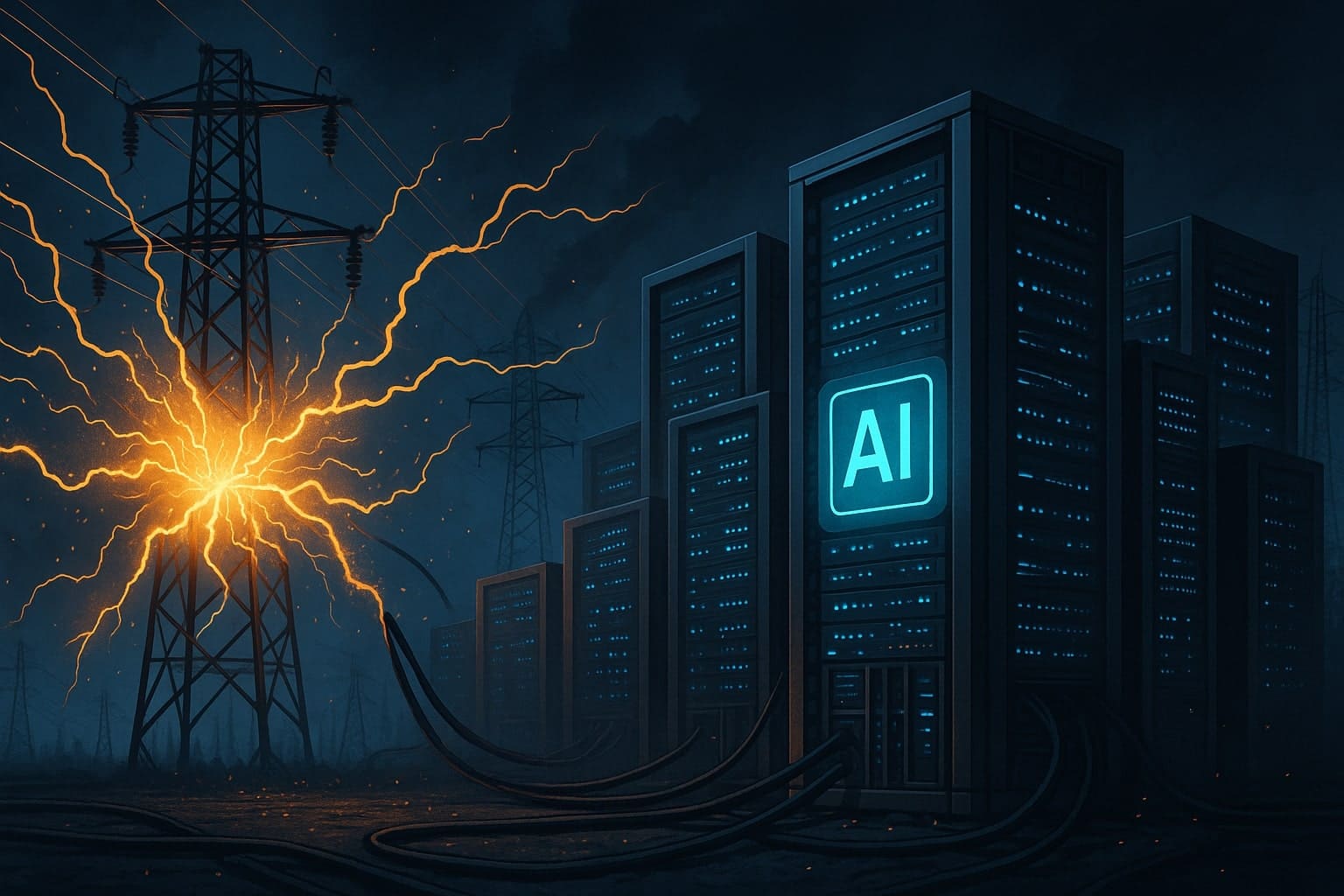
AI Boom Is Driving Up Electricity Bills in the US
In recent years, artificial intelligence (AI) has become one of the most important drivers of technological progress, and this boom is bringing unexpected costs. According to information from Bloomberg, the data centers that power AI models consume enormous amounts of electricity. This is leading to a significant increase in electricity bills for millions of American households. Specifically, for more than 67 million US residents, average annual electricity bills have risen faster than the national average, by more than 6%. In some regions of the northeastern US, this increase has even exceeded 13%.
These data centers are extremely energy-intensive because they perform complex computations to train and run AI models. Electricity providers that supply these centers must invest in grid upgrades to handle the growing demand. They then pass these costs directly on to consumers, meaning that ordinary households are paying for the development of technology they may not even use directly.
Regional Differences and Specific Examples
Not all areas of the US are affected equally. According to data from the U.S. Energy Information Administration (EIA), residential electricity prices rose nationwide by 6.5% between May 2024 and May 2025. The most affected states are those with large clusters of data centers, such as Maine, where prices increased by 36.3%, Illinois with an increase of 12.2%, Texas by 4.4%, Oregon by 5.5%, and Virginia by 3.1%. These figures show how the concentration of AI infrastructure affects local prices.
For example, consumers are experiencing the greatest pressure in the northeastern states, where many data centers are concentrated. Providers there are seeking approval for higher rates to finance necessary grid upgrades. This means that households in these areas are paying not only for their own consumption but also for the energy consumed by massive AI servers.
Future Electricity Costs
According to estimates from the American Action Forum, AI data centers' share of total US electricity consumption will increase from 4.4% in 2023 to as much as 12% by 2028. The country's total electricity consumption is expected to grow by 1.7% annually through 2026, significantly more than in previous years, when consumption was stable. If these trends continue, electricity bills for consumers and small businesses could rise by as much as 70% by 2029 due to the combination of growing demand and infrastructure investment.
The US Department of Energy warns that this growth could threaten grid reliability and energy availability. AI data centers are much more demanding than traditional ones because they use specialized hardware, such as graphics processing units (GPUs), which consume enormous amounts of energy. These centers draw from the same grid as households, creating competition for resources and pushing prices higher for everyone.
What Are Providers and the Government Doing?
Electricity providers are responding to this demand by requesting price increases to cover the cost of expanding the grid. The federal government recognizes the situation as a national energy emergency and emphasizes the need for major infrastructure investments and the diversification of energy sources to keep prices at an affordable level. Without these measures, the impact on households could intensify further.
While AI brings innovation, its energy demands mean that consumers are paying a higher price—literally. If the situation does not change, similar problems may also emerge in other countries where AI is developing rapidly.


