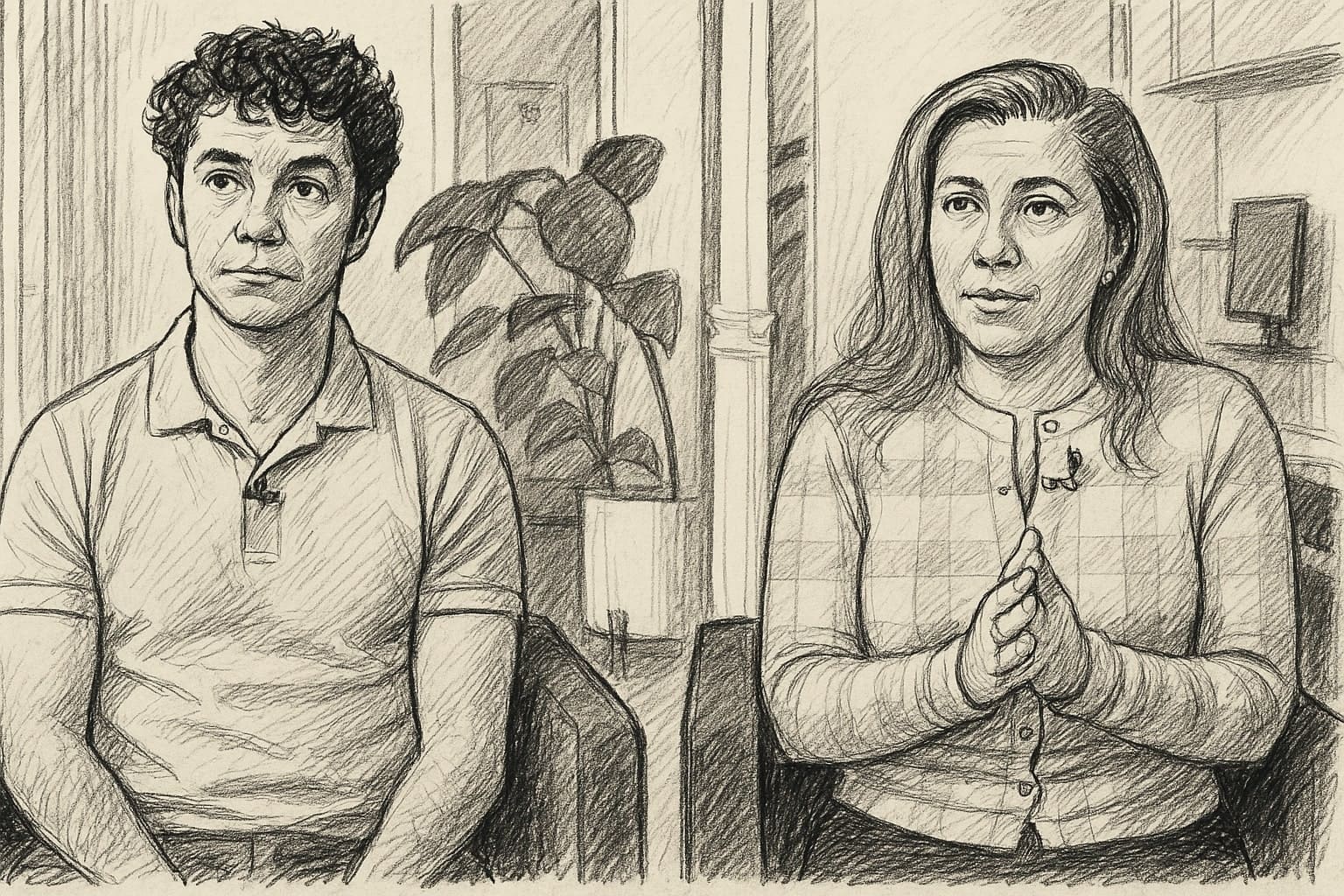
Voice Cloning and Legal Battles: Actors Sue AI Company Over Voice Theft
A federal judge in New York has ruled that a lawsuit filed by two voice actors against an AI startup that allegedly stole their voices may proceed. The case of Paul Skye Lehrman and Linnea Sage is becoming a landmark in artists’ fight against the unauthorized use of artificial intelligence.
How the Voice-Cloning Case Began
Paul Skye Lehrman and Linnea Sage, a professional voice-acting couple living in New York, filed a class-action lawsuit against California-based Lovo Inc. in 2024. The case began unexpectedly—when the couple were driving near their home in New York and listening to a podcast about the ongoing Hollywood strikes and the impact of artificial intelligence on the industry.
The podcast had a unique hook—an interview with an AI chatbot equipped with text-to-speech technology. When the bot spoke about how AI could affect jobs in Hollywood, it sounded exactly like Paul Lehrman.
"We had to pull over," Lehrman told the BBC. "The irony that AI was coming after the entertainment industry, and here was my voice talking about the potential destruction of that industry, was really shocking."
Deceptive Practices on the Fiverr Platform
According to the lawsuit, Lehrman and Sage were approached by anonymous Lovo employees through the online freelance platform Fiverr. Lehrman was paid $1,200 (approximately CZK 25,000), while Sage received $800 (approximately CZK 17,000).
In messages shared with the BBC, the anonymous client claimed that Lehrman’s and Sage’s voices would be used "for academic research purposes only" and for "test scripts for radio advertisements." The anonymous writer assured them that the voice recordings "would not be released externally and would only be used internally."
Discovery of the Clones on the Genny Platform
After returning home, the couple discovered that voices named Kyle Snow and Sally Coleman were available to Lovo’s paying subscribers. They later found Sage’s alleged clone speaking in a fundraising video for the platform, while Lehrman’s was used in an advertisement on the company’s YouTube page.
The company eventually removed the voices, stating that neither voice was popular on the platform.
Court Ruling and Continuation of the Case
The federal judge in New York dismissed the artists’ claim that their voices were protected by federal copyright law. However, she allowed claims for breach of contract and deceptive business practices to proceed, along with separate copyright claims concerning the improper use of the voices as part of AI training data.
The artists’ attorney, Steve Cohen, called the ruling a "spectacular" victory for his clients and said he was confident that a future jury "will hold big technology companies accountable."
Lovo’s attorneys described the artists’ allegations as a "chaotic kitchen-sink approach" and said that the artists’ claims did not establish an actionable case against the company. Lovo Inc. has not yet responded to the BBC’s request for comment.
Impact on the Artificial Intelligence Industry
The judge’s ruling comes amid a flood of cases brought by artists against artificial intelligence companies accused of improperly using their work to train AI models. The case of Paul Skye Lehrman and Linnea Sage is considered a pivotal legal battle with potential implications for how digital identities and AI voice cloning will be regulated and protected in the creative industry.
The case will now proceed in the U.S. District Court in Manhattan, where the future of voice cloning in the age of artificial intelligence will be decided.