

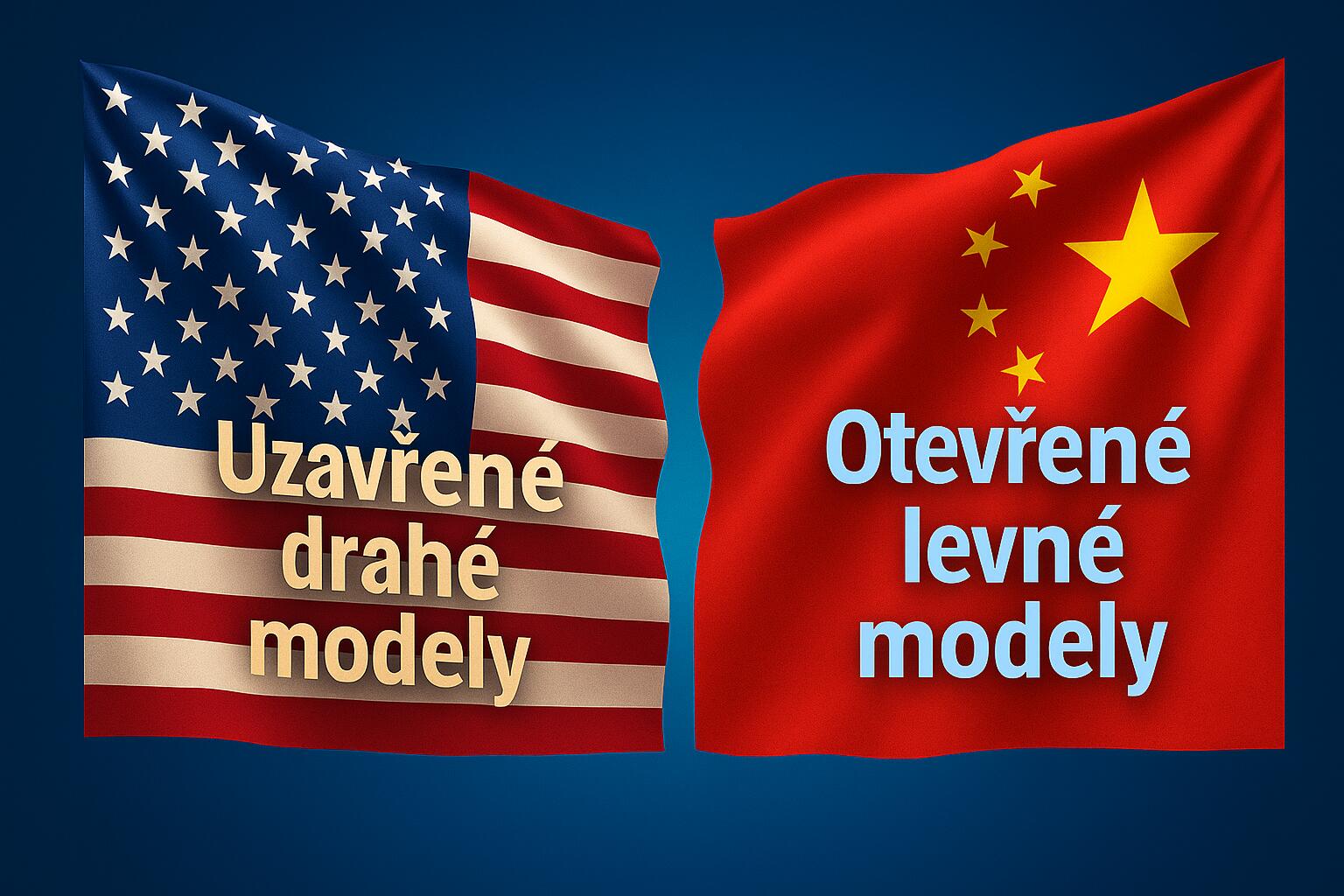
Something interesting is happening in Silicon Valley. Many American startups are beginning to use freely available artificial intelligence models from China that are rapidly approaching the quality of the most advanced American systems. These Chinese models are open, which means anyone can download, modify, and use them for free. This brings major benefits, such as lower costs and greater flexibility, but it also raises questions about the future of American leadership in this field.
Misha Laskin, a theoretical physicist and machine learning engineer who helped create some of Google’s most powerful models, noticed this at the beginning of the year. He saw American companies increasingly turning to these open Chinese models, which are not far behind the leading ones. Laskin founded the startup Reflection AI, which recently reached a valuation of $8 billion (approximately CZK 180 billion), to offer an open American alternative. According to him, models that are pushing the boundaries of intelligence are emerging in China.
Why are American companies choosing Chinese models?
NBC News spoke with more than 15 startup founders, machine learning engineers, experts, and investors. They explain that while American models from companies such as OpenAI and Anthropic still lead at the absolute cutting edge, Chinese systems such as DeepSeek R1 and Alibaba Qwen are cheaper, easier to customize, and, in many cases, good enough. Michael Fine, head of machine learning at Exa, which focuses on AI-powered search and is valued at $700 million (approximately CZK 15.75 billion), says that using Chinese models on the company’s own hardware is faster and cheaper than using large American models such as OpenAI’s GPT-5 or Google’s Gemini.
Fine describes a situation in which a team first develops a feature using a closed model but then discovers that it is too expensive or slow. They then replace it with an equivalent open model and run it on their own infrastructure. Chinese models are open source or open weight, so they can be freely copied and modified, unlike closed American systems that run only through the data centers of large companies.
How China is catching up with America
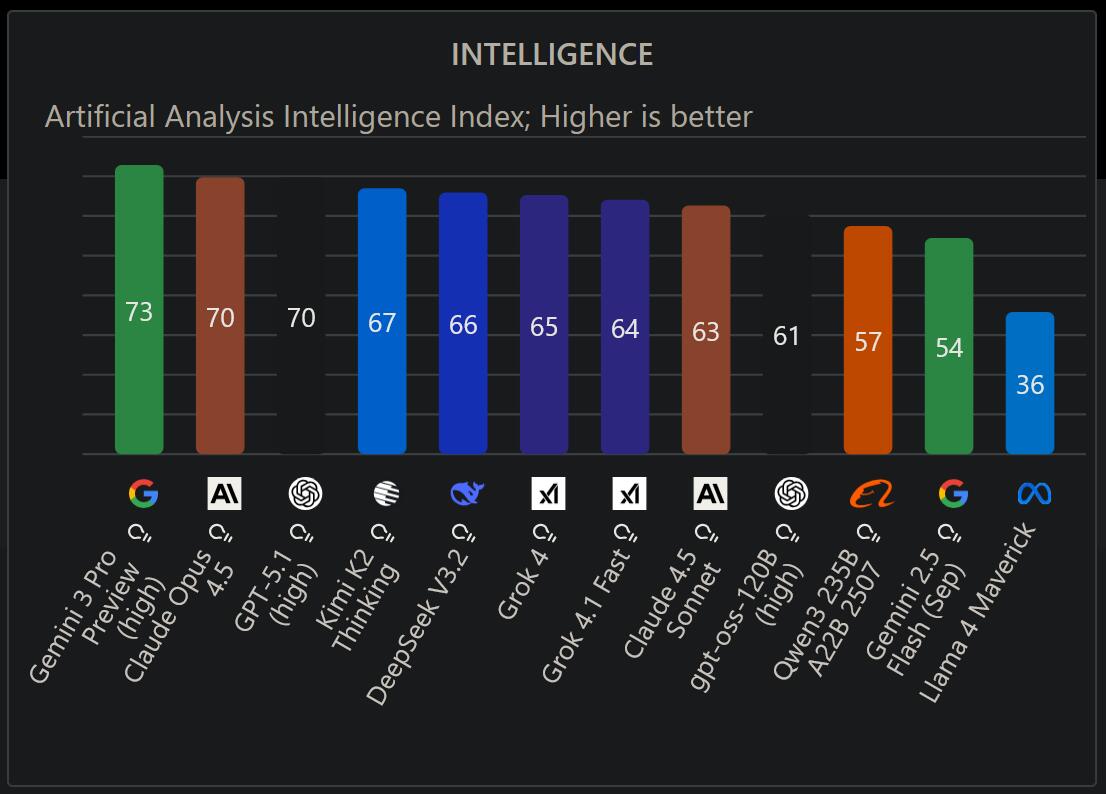
Over the past year, Chinese companies such as DeepSeek and Alibaba have made enormous progress. According to metrics from Artificial Analysis, their models now achieve performance close to or equal to that of closed American systems in many areas. Lin Qiao, CEO of Fireworks AI and co-creator of the PyTorch framework for training artificial intelligence models, says that the capability gap between closed American and open Chinese models is rapidly narrowing.
On platforms such as OpenRouter, where users choose models, people are increasingly turning to open Chinese options. Jerry Liu, founder of the Dayflow productivity app, estimates that about 40% of Dayflow users now choose open models. The app supports tasks such as scanning screenshots or summarizing activities, and users can choose between Google Gemini and smaller open models such as Alibaba Qwen.
Liu explains that Qwen is just as reliable as GPT-5 for describing what is on a screen, but smaller versions run cheaply or for free. Paying for closed models can cost Dayflow up to $1,000 (approximately CZK 22,500) per user, so open models are essential to the company’s operations. In addition, these models process data directly on the user’s device, protecting privacy—Liu himself would not want to send data to someone else’s cloud.
Advantages of open models
In addition to performance, privacy, and price, open models are also attractive because of their ecosystem. Antonio Vespoli, co-founder of Circlemind AI, a startup developing browser agents, says that Chinese models dominate online resources for developers. They have plenty of tutorials and community support, and Airbnb even relies heavily on Qwen, according to CEO Brian Chesky.
Charles Zedlewski, chief product officer at the artificial intelligence infrastructure company Together AI, adds that developers now prefer to start with open models and add their own data for specific skills. In Kilo Code, an application for writing code with artificial intelligence, seven of the 20 most popular models are Chinese, six of which are open.
In China, the government supports open models. In an economic speech in November, President Xi Jinping called for greater cooperation on open technologies. Chinese companies release new models faster, on average every 20 days, compared with Anthropic’s models, which are released once every 47 days on average. Nathan Lambert, a senior researcher at the Allen Institute for AI and an expert on open models, says that the Chinese are true innovators and that the balance of power has been shifting rapidly over the past 12 months.
American advantages and risks
Closed American models still lead at the absolute cutting edge and offer ease of use. Tim Tully, a partner at Menlo Ventures, which invests in Anthropic, says that tools and productivity are better with closed systems. Many companies avoid Chinese models because of risks such as weaker security protocols or pro-China outputs, as shown by a U.S. Center for AI Standards and Innovation report on DeepSeek.
The White House recently accused Alibaba of supporting the Chinese military, adding political barriers. Some experts also claim that Chinese models copy American work, which could limit their long-term progress. Alibaba dismisses this as nonsense.
America’s response to the Chinese challenge
American companies and the government are taking note of the rise of Chinese models. In July, the White House issued a plan to support open models. In August, OpenAI released its first open model in five years to strengthen democratic access to artificial intelligence. In November, the Allen Institute introduced Olmo 3 for rapidly building trustworthy features.
Lambert launched the ATOM (American Truly Open Models) project, whose manifesto warns that America is losing its leadership in open models. If it wants to remain a leader in the era of artificial intelligence, it must not cede this field to other countries.
Source: nbcnews.com


