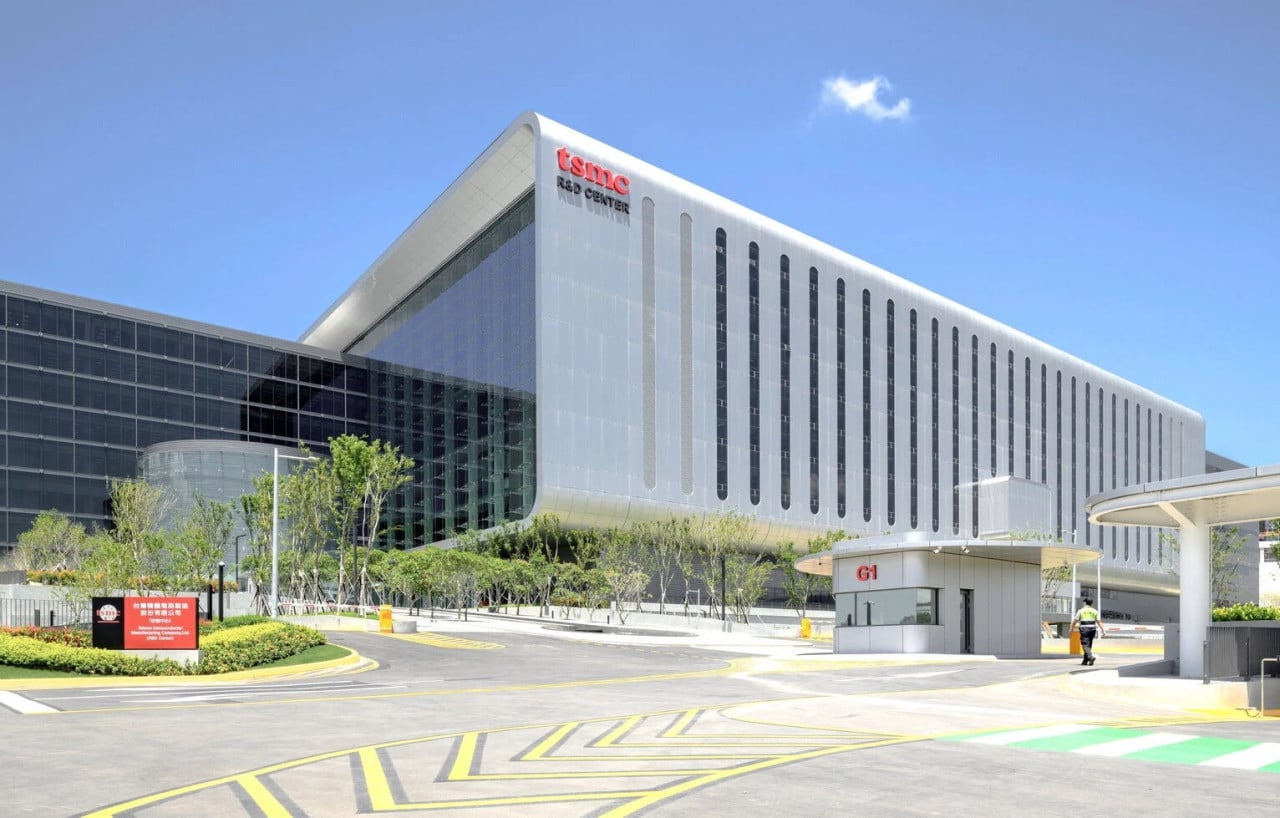
Taiwanese company TSMC, the world’s largest manufacturer of advanced chips for artificial intelligence, has released its results for the second quarter of this year. And they were record-breaking. Revenue reached roughly $40 billion, while net profit jumped by more than 77 percent to nearly 707 billion New Taiwan dollars. The company also announced that it will invest an additional $100 billion in its U.S. factories in Arizona. Customers want more than TSMC can produce, CEO C. C. Wei said.
The results beat analysts’ estimates across virtually all metrics. The market had expected profit of around 633 billion New Taiwan dollars, but the actual figure was significantly higher. It was the fifth consecutive record quarter and the ninth quarter in a row in which profit grew at a double-digit pace.
Demand driven by AI chips
One thing lies behind the record figures. Artificial intelligence is consuming silicon faster than new factories can be built. The high-performance computing segment, which includes data center accelerators, grew by one-fifth quarter over quarter and now accounts for two-thirds of all chip manufacturing revenue. As recently as 2022, smartphones generated the most revenue for the company. Their share has fallen to 22 percent.
The most advanced manufacturing processes are seeing the strongest growth. Three-nanometer technology accounted for 30 percent of revenue, while five-nanometer technology accounted for 33 percent. When the seven-nanometer process is included, advanced chips together account for 77 percent of wafer revenue. This shows just how much value has become concentrated in the cutting-edge technologies of a single company.
Analysts contacted by Reuters agree that demand for graphics chips and specialized artificial intelligence circuits continues to exceed expectations. Simon Chen of research firm Omdia believes concerns about inflated valuations surrounding artificial intelligence are overblown. According to him, demand is structural and driven by enormous investments from major data center operators.
Two-nanometer chip production ramps up
The quarter brought another milestone. For the first time, two-nanometer technology made a noticeable contribution to revenue, currently accounting for three percent. The company completed the transition from test samples to commercial production.
This process represents a fundamental turning point in transistor design. Every chip TSMC has produced to date, from its oldest technologies to the three-nanometer process used to manufacture Nvidia’s current graphics chips, has used the same type of transistor known as FinFET. The new process replaces it with a so-called gate-all-around transistor, in which the gate surrounds silicon ribbons on all four sides. This makes the chip roughly 15 percent faster or allows it to consume 30 percent less power at the same speed. It can also accommodate more than 15 percent more transistors.
This leap comes at a cost, however. Ramping up an entirely new transistor design takes longer before production quality stabilizes. Chief Financial Officer Wendell Huang told analysts that the sharp increase in production in the second half of the year would reduce gross margin by roughly three to four percentage points before economies of scale take effect. For the third quarter, the company expects revenue of between $44.6 billion and $45.8 billion.
Waiting list for CoWoS technology
Another important component is chip packaging. CoWoS technology connects a computing chip with high-speed memory closely enough to handle the training and operation of large language models. And this technology is currently sold out. Lead times have stretched to 52 to 78 weeks.
Why packaging in particular? In a conventional chip, the signal travels between the processor and memory through a printed circuit board, losing both speed and energy along the way. CoWoS places the computing chip and several layers of memory side by side on a silicon interposer, connected by microscopic copper links. Instead of traveling millimeters, the signal therefore travels only micrometers, dramatically increasing memory bandwidth. Nvidia graphics chips, AMD accelerators, and the custom chips that Google, Amazon, and Microsoft manufacture for their data centers all depend on this technology.
The constraint is permanent rather than temporary. Manufacturing the interposer is itself a separate production step requiring its own machinery and silicon wafer. And the denser artificial intelligence chips become, the more memory they need, meaning that each new generation places greater demands on packaging. Wei acknowledged that packaging is now limiting customers’ growth. He said he welcomes competing offerings from other companies because they would ease the pressure on TSMC’s own capacity. According to independent estimates, however, both Intel and Samsung are two to three years behind.
An additional $100 billion investment
In addition to the results themselves, the company also announced the most important development for the coming years. It raised this year’s capital expenditure budget to between $60 billion and $64 billion from the original range of $52 billion to $56 billion. Seventy to 80 percent will go toward advanced manufacturing processes. Wei also outlined a longer-term outlook. According to him, spending over the next three years will be significantly higher than it was over the previous three years.
The company also confirmed an additional $100 billion for its operations in Arizona. Four or more additional factories for manufacturing and packaging the most advanced chips will be built there. The total pledged investment in the U.S. state has thus risen to roughly $265 billion from the original $165 billion that TSMC announced last March. It is the largest foreign investment in a greenfield manufacturing project in U.S. history.
AI opens up another source of demand
The company’s management also highlighted another issue that has received little attention so far. The rise of so-called agentic artificial intelligence is changing the composition of data center demand in TSMC’s favor.
In the era of chat tools, roughly from 2022 to the middle of last year, demand was driven mainly by graphics chips for training and running models. Processors handled only brief, partial tasks. Agentic systems, however, can independently perform multi-step tasks: browsing the web, writing, programming, communicating, and making decisions with almost no human intervention. These tasks require continuous processor performance. According to an analysis by TrendForce, agentic applications may require up to four times as many processor cores per gigawatt of data center power consumption as infrastructure focused on training.
TSMC manufactures cutting-edge processors based on all major architectures, and Wei said the company is already discussing the allocation of capacity specifically for agentic applications with processor manufacturers. This is creating additional demand for silicon that supplements the existing wave of accelerators rather than replacing it.
Sources: ft.com and bbc.com