

New analysis of 900,000 web pages shows a dramatic increase in the use of artificial intelligence in content creation
Ahrefs, a well-known provider of SEO tools and analytics solutions, published an extensive study in May 2025 that offers an interesting look at the current state of web content. Researchers analyzed an impressive 900,000 newly created English-language web pages, selecting only one page from each domain to ensure the representativeness of the sample. All of the pages examined were detected by the Ahrefs crawler during April 2025. Using its own AI content detector called "bot_or_not", the company found that a staggering 74.2% of new web pages contain some level of AI-generated content. This finding represents a fundamental change in the digital ecosystem and confirms that AI has become an indispensable part of modern content creation.
Detailed results
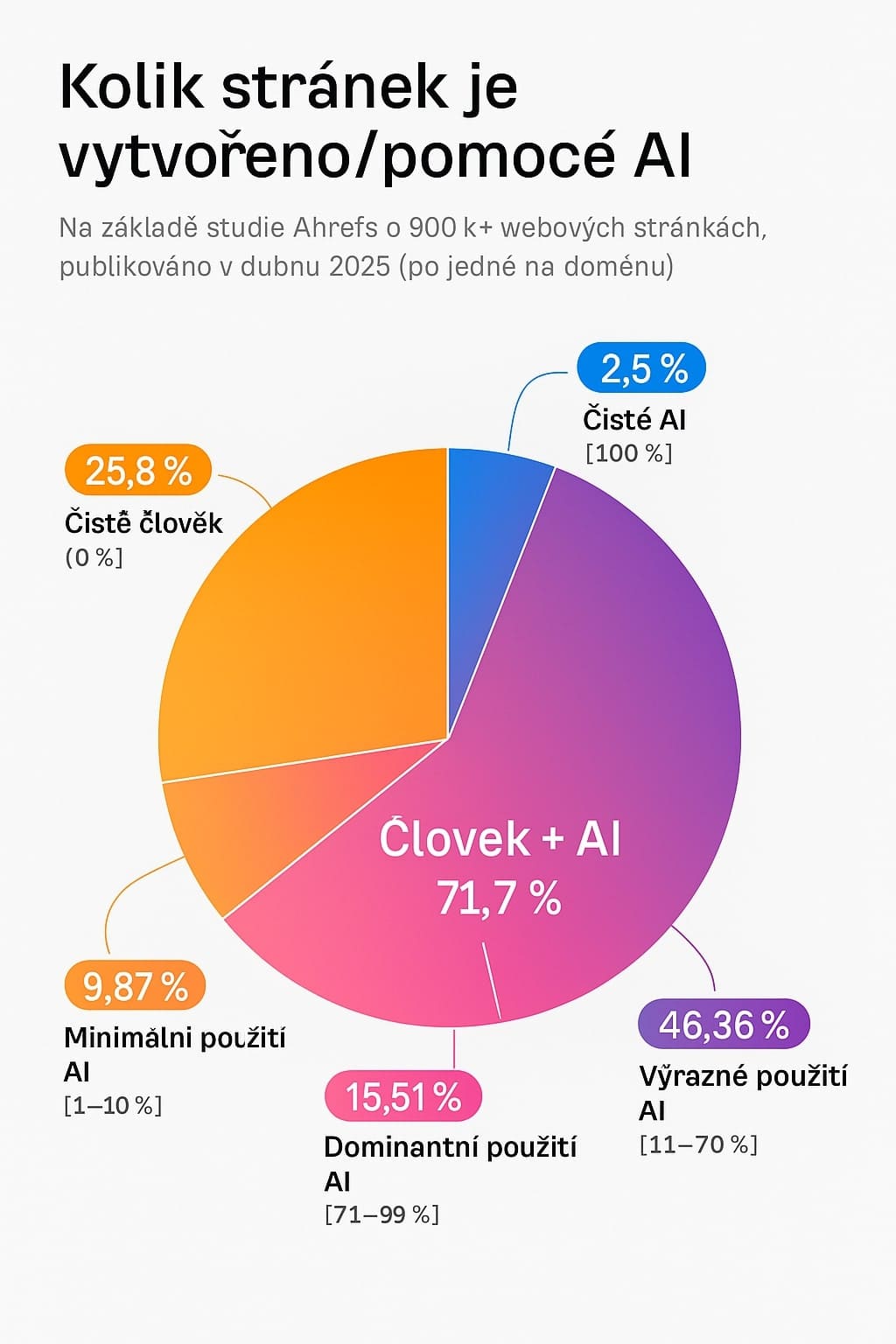
A more detailed analysis of the results reveals even more interesting nuances in exactly how AI is being used in the creation of web content. Of all the pages examined, only 2.5% were classified as "purely AI" content, meaning material that was almost entirely created by artificial intelligence without significant human modifications. At the opposite end of the spectrum, 25.8% of pages were identified as "purely human", meaning they showed no significant traces of AI technology involvement. However, the largest category consisted of hybrid pages that combined human- and AI-generated content—there were 71.7% of these in total. These data clearly show that although fully automated content created exclusively by artificial intelligence remains a relatively rare phenomenon, the overwhelming majority of new web content now includes some degree of generative AI assistance.
The Ahrefs study goes even further and provides a more detailed breakdown of these hybrid cases according to the extent of artificial intelligence involvement. Approximately 25.86% of pages showed moderate AI use, where artificial intelligence contributed to 11–40% of the page’s content. Approximately 20.50% of pages demonstrated substantial use of AI technologies, with AI accounting for 41–70% of the content. Another 15.51% of pages showed dominant but not exclusive authorship by artificial intelligence, with AI making up 71–99% of the content. These granular data provide valuable insight into the various ways content creators integrate AI into their workflows—from using AI as an assistant for creating drafts and sections, through summarizing research, to rewriting texts.
What does this mean?
According to Ahrefs researchers, this dramatic shift toward the use of artificial intelligence in content creation is driven primarily by the broad integration and ease of use of generative tools across various platforms. Whether it is Google Docs, Gmail, Slack, LinkedIn, or other popular services, generative AI is now integrated into many commonly used tools, making it considerably easier to use in content creation. As the study itself notes: "Nearly three-quarters of the pages we analyzed contained AI content... The use of generative AI in content creation is quickly becoming the standard." This trend is further supported by the fact that, according to surveys, approximately 87% of professional marketers report using some form of generative AI to create or assist with the creation of their digital content.
The results of the Ahrefs study have major implications for the future of web content and digital marketing. Approximately 74 percent (that is, three out of four) of newly published web pages now contain at least some amount of AI-generated material. It is important to note that this figure is based on direct detection using Ahrefs’ sophisticated tools, not merely on speculation. The vast majority of content represents a hybrid effort combining both human and machine input. These data clearly signal a significant shift toward an internet where most newly created written material is at least partially created or shaped by artificial intelligence tools.
It is remarkable how quickly generative AI has become a common part of the content creation process. While just a few years ago these technologies were considered experimental and their use was limited, today’s data show that they have become a standard tool for content creators of all kinds. Nevertheless, it is clear that fully automated content without human oversight remains marginal—only 2.5% of pages were identified as "purely AI". This suggests that despite advances in generative AI technologies, human oversight, editing, and creative input remain key aspects of high-quality content creation. For now, AI therefore appears primarily as a powerful collaborator rather than a replacement for human creativity and expertise.


