Sophia: The Pioneering Humanoid Robot by Hanson Robotics
Sophia was one of the first sophisticated robots of the modern era, yet is she no longer the newest—or is she? Let’s take a look at her journey from the very beginning to the present day.
Early Development
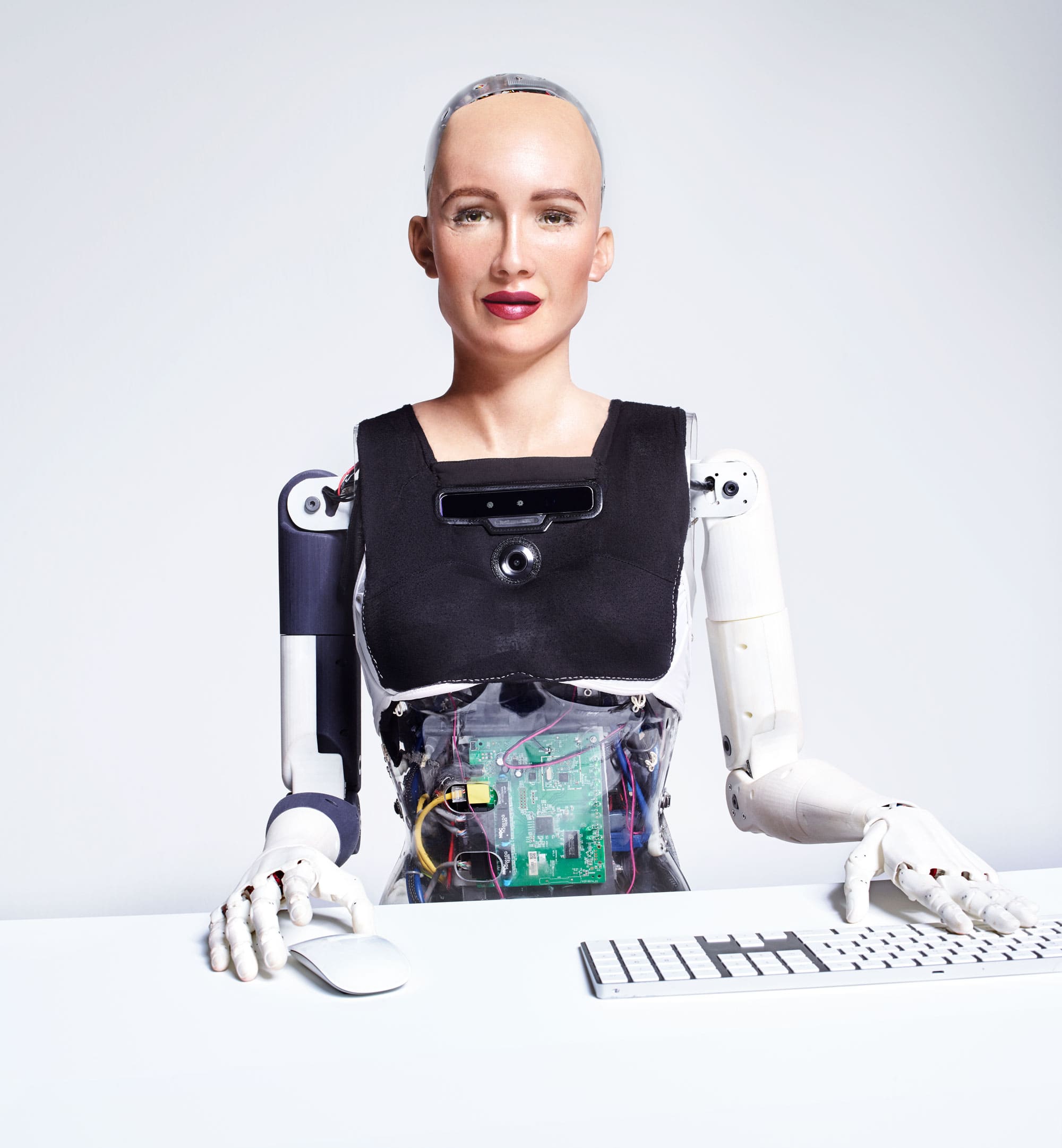
Sophia, one of the best-known humanoid robots of the modern era, was officially introduced to the public in 2016 by the Hong Kong-based company Hanson Robotics, founded by Dr. David Hanson. Sophia’s development was preceded by many years of research in artificial intelligence, robotics, and synthetic skin. Dr. Hanson, a former sculptor and designer for Walt Disney Imagineering, combined his artistic experience with advanced technologies to create the robot’s ultrarealistic appearance. His vision was to create a machine that would not only look like a human but also be able to imitate human expressions and engage in meaningful interaction. Sophia was designed with inspiration from Audrey Hepburn and Dr. Hanson’s wife, while her face features patented silicone "Frubber" skin, which enables the creation of natural expressions through 62 different facial and neck movements.
Technical Specifications and Development
From a technical perspective, Sophia is a highly sophisticated device. She is equipped with several cameras in her eyes to provide visual input, sensors for detecting touch and force, and advanced actuators that allow her to display a wide range of facial expressions. Her operating system is based on Ubuntu Linux and includes a powerful integrated computer. For communication, she uses natural language processing technologies and is connected to the internet via Wi-Fi, allowing her to access current information and data. Since her debut, Sophia has undergone several significant updates that have improved her movement capabilities, facial recognition, and ability to conduct natural conversations. In 2018, Sophia gained legs, enabling limited but symbolically significant movement. Sophia uses a combination of various AI technologies, including neural networks for image recognition, natural language processing for communication, and machine learning to continuously improve her responses based on interactions.
Current Role and Uses
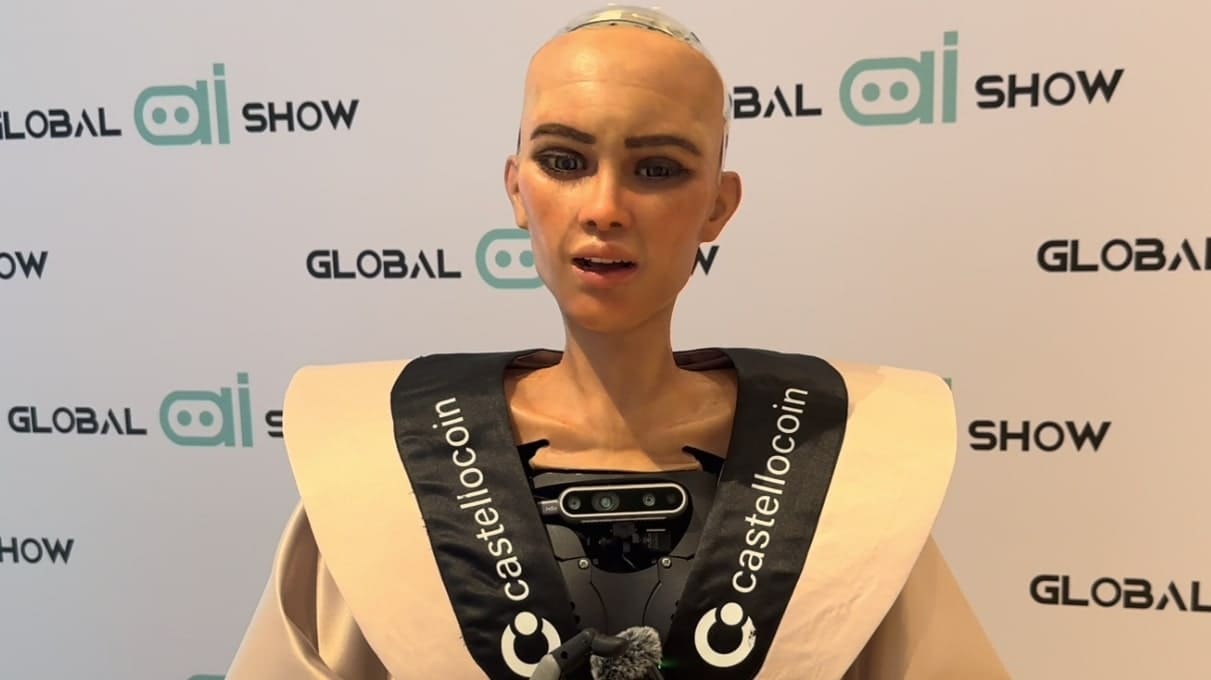
In 2025, Sophia continues in her role as a global ambassador for artificial intelligence and robotics. Her human-like appearance and expressive interactions have made her one of the most recognizable faces in the field of AI. At the beginning of 2024, she was appointed official ambassador for both the Global AI Show and the Global Blockchain Show, which were held at the Grand Hyatt in Dubai. Her presence at these events symbolized not only technological progress but also highlighted ongoing innovations at the intersection of artificial intelligence and blockchain technologies. As an ambassador, she inspired discussions about how AI can shape future societies alongside advances in Web3. Sophia also serves as an advanced research platform in the field of human-robot interaction. She is used in extensive studies examining how robots can adapt emotionally and socially to users’ needs, for example through projects such as Loving AI.
Media Appearances and Social Impact
Sophia has become a cultural phenomenon that transcends the boundaries of the technology world. In April 2025, she took part in high-profile interviews, including one with AeroTime, where she discussed topics ranging from aviation technology to digital travel advice. She emphasized embracing technology for modern travel—using apps for planning or translation—and encouraged travelers to remain open to new experiences while taking advantage of digital tools. In 2017, Sophia became the first robot to be granted citizenship by a country when Saudi Arabia granted her citizenship as a symbolic gesture recognizing progress in artificial intelligence. This decision sparked a worldwide discussion about robot rights and the ethical issues associated with artificial intelligence. Sophia has also appeared at the United Nations, given interviews to leading global media outlets, and appeared on the covers of prestigious magazines, helping to popularize the discussion about the role of robots and artificial intelligence in future society.
Educational Initiatives: Little Sophia
In April 2025, Hanson Robotics introduced "Little Sophia", a smaller version of the original Sophia, designed as an educational companion for children aged eight and up. This smaller robot focuses on STEM education (an acronym for technical fields)—teaching programming skills while also fostering interest in artificial intelligence among young students. This step reflects Hanson Robotics’ efforts to expand awareness of artificial intelligence and robotics among the younger generation and prepare them for a technology-oriented future. Little Sophia represents a bridge between complex technological concepts and children’s imagination, enabling an interactive and entertaining form of education in a field that will become increasingly important for future generations.
Sophia Compared to Other Artificial Intelligence Systems
Despite her impressive appearance and media image, Sophia represents a different approach to artificial intelligence than systems such as ChatGPT, Claude, or Gemini. While these language models focus primarily on text processing and natural language generation, Sophia embodies an effort to create a social robot with a physical presence and the ability to communicate nonverbally. Her artificial intelligence is a combination of several systems, including speech recognition, natural language processing, facial and emotion recognition, and a response generation system. Unlike the latest large language models, Sophia does not have the same depth of knowledge or capacity for complex reasoning, but her strength lies in multimodal interaction and emotional expressiveness. In a sense, Sophia represents a different evolutionary branch of AI—rather than advanced reasoning and content generation, she focuses on social interaction and embodying AI in the physical world.
Future Development
Although Sophia represents remarkable progress in the field of humanoid robotics, her development faces several technological challenges. Achieving fluid movement, genuine contextual understanding, and true autonomy remains a complex task. However, Hanson Robotics continues to work on improving her capabilities. Future development will likely focus on integrating more advanced AI models, improving physical abilities, and expanding her capacity to learn from interactions. The company is also exploring potential uses for Sophia in areas such as healthcare, customer service, and education. With the continued development of technologies such as neural networks, computer vision, and natural language processing, it can be expected that future generations of Sophia and similar robots will demonstrate even more natural and sophisticated interactions with people.
Sophia remains a significant symbol of progress in humanoid robotics and artificial intelligence, inspiring discussions about the future coexistence of humans and intelligent machines. Her evolution reflects both the technical progress in Hanson Robotics’ laboratories and broader social engagement in discussions about intelligent machines and their role in our future.