

OpenAI, best known for its ChatGPT chatbot, is preparing for a fundamental change in how it makes money. The company no longer wants to rely solely on subscriptions. While paid plans will continue, OpenAI is now exploring additional revenue models, such as licensing, profit sharing, advertising, and outcome-based payments. This shift reflects the company's need to finance the massive cost of computing power while supporting growing global demand for artificial intelligence services.
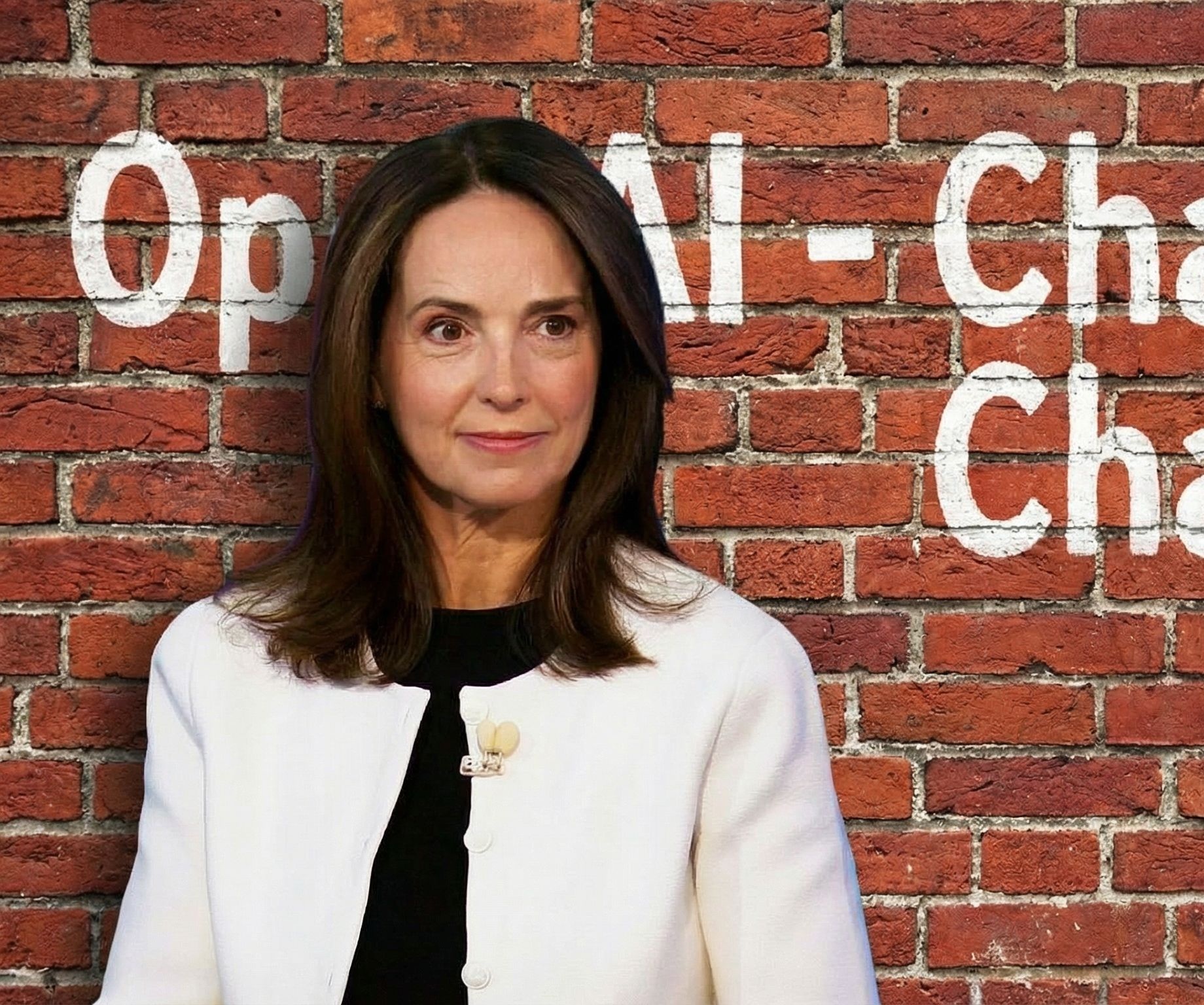
OpenAI Chief Financial Officer Sarah Friar recently published a post that caused mild panic among enterprise AI customers. In it, Friar suggested that OpenAI is open to the idea of sharing in customers' discoveries made using AI. This statement comes at a time when the company has repeatedly emphasized the need to open up more revenue streams, including the recent confirmation of advertising in ChatGPT conversations.
Royalty model and outcome-based payments
Sarah Friar outlined a future in which OpenAI makes money only when its customers succeed. Under this model, OpenAI could receive licensing fees or royalties directly tied to business outcomes. For example, if a pharmaceutical company uses OpenAI tools to develop a successful drug, OpenAI could receive a small percentage of the drug's sales. This approach aligns incentives because OpenAI profits only when customers create real value.
"As intelligence moves into scientific research, drug discovery, energy systems, and financial modeling, new economic models will emerge. Licensing, intellectual property-based agreements, and outcome-based pricing will share in the value created. That is how the internet evolved. Intelligence will follow the same path," Friar writes.
Friar describes OpenAI's strategy as a "Rubik's Cube" of business models. Each side of the cube represents different combinations of technologies, pricing, products, and markets. Unlike in its early days, when OpenAI depended on a single cloud provider, one chip partner, and one main product, the company now works with multiple partners, products, and pricing structures.
Expanding products and reach
OpenAI has significantly expanded its portfolio. Alongside ChatGPT for consumers and businesses, it now offers tools such as Sora for video generation, enterprise AI platforms, industry-specific solutions, and systems for scientific research. The company also works with multiple cloud service providers and chip manufacturers, reducing its dependence on any single partner.
Demand for OpenAI's services is extremely high, but growth is constrained by available computing power. Over the past two years, OpenAI's revenue has increased nearly tenfold, closely tracking the expansion of the company's computing capacity. To support this growth, the company has committed to massive infrastructure agreements with partners such as Oracle and AMD.
According to official OpenAI figures, computing power increased threefold year over year, or 9.5-fold from 2023 to 2025: from 0.2 GW in 2023 to 0.6 GW in 2024 and approximately 1.9 GW in 2025. Revenue followed the same curve, growing threefold year over year, or tenfold from 2023 to 2025: from annual recurring revenue of CZK 51 billion in 2023 to CZK 153 billion in 2024 and more than CZK 510 billion in 2025.
Financial investments
Financially, OpenAI needs to unlock more revenue, and quickly, given its staggering spending commitments. These include the CZK 12.75 trillion Project Stargate data center initiative, a CZK 7.65 trillion agreement with Oracle to power OpenAI's AI infrastructure, and the purchase of AI hardware from Nvidia to build 10 gigawatts of data center capacity. Financial forecasts estimate that OpenAI's operating and research costs mean the company will burn through approximately CZK 2.93 trillion by 2029.
A recently widely reported internal document suggests that the AI company will record losses of CZK 357 billion during 2026, with those losses rising to nearly CZK 1.12 trillion by 2029. OpenAI CEO Sam Altman is reportedly holding talks with investors from the Middle East about an estimated CZK 1.28 trillion funding round, although OpenAI has made no official announcements.
Business sector response
It is highly unlikely that OpenAI will begin demanding a share of profits from consumers who used ChatGPT or OpenAI models to discover a business model or product—they would not have the necessary scale or volume. However, any legal framework defining such an agreement should protect the interests of both parties in any licensing deal.
It is possible that OpenAI will approach enterprise customers because of the aforementioned scale and volume and offer them an agreement that includes revenue sharing with OpenAI for products created using OpenAI tools. At this point, it remains unclear what options enterprise customers will have to accept or reject such an agreement.
This may not necessarily involve a direct transfer of profits or revenue. A careful reading of Friar's quote points us toward "licensing, intellectual property-based agreements, and outcome-based pricing," which clearly means the focus will be on enterprises and companies that create things using ChatGPT. It is unclear how OpenAI would uncover information about a ChatGPT-based success story before approaching a business with revenue-sharing proposals. In practice, this could mean differentiated subscription or API pricing.
Customer concerns and competition
The current scenario is not particularly encouraging. Saad Naja, founder of AI Lab PiP World, noted on the social network X: "Essentially, we pay for a subscription and then give them a commission on our own work." Enterprises and companies are unlikely to appreciate this approach. The question is, if OpenAI believes it deserves a share of the success of its GPT models in enterprise environments, will it also step in to help businesses with OpenAI subscriptions that fail financially?
The plan to insert ads into the ChatGPT conversations of free-tier users and ChatGPT Go subscribers has already attracted negative comments. Google DeepMind CEO Sir Demis Hassabis recently said during a public appearance that he was "a little surprised" that OpenAI had moved to introduce ads in ChatGPT. Hassabis then assured Google Gemini's enterprise and consumer subscribers that the company currently has no plans to include ads in any Gemini subscription tier.
Future outlook
OpenAI is also testing advertising for free users and exploring e-commerce features. The long-term goal is to make AI as reliable as essential infrastructure, much like electricity. As AI agents move from experiments to core business tools, OpenAI believes that diversified revenue models are essential to sustaining its mission and meeting future demand.
OpenAI also recently confirmed the ChatGPT Checkouts feature, which will take a 4% share of sales from Shopify merchants, marking a move into e-commerce for the AI chatbot. People come to ChatGPT not only to ask questions, but to decide what to do next. What to buy. Where to go. Which option to choose.
The priority for 2026 is practical adoption. The priority is to narrow the gap between what AI now makes possible and how people, companies, and countries use it every day. The opportunity is large and immediate, especially in healthcare, science, and business, where better intelligence translates directly into better outcomes.
The advertising plan is already attracting regulatory attention in the US, with OpenAI and other AI companies being questioned about "sponsored" content inside chatbots, also raising concerns about consumer protection, privacy, and child safety.
Sources: theinformation.com and hindustantimes.com


