

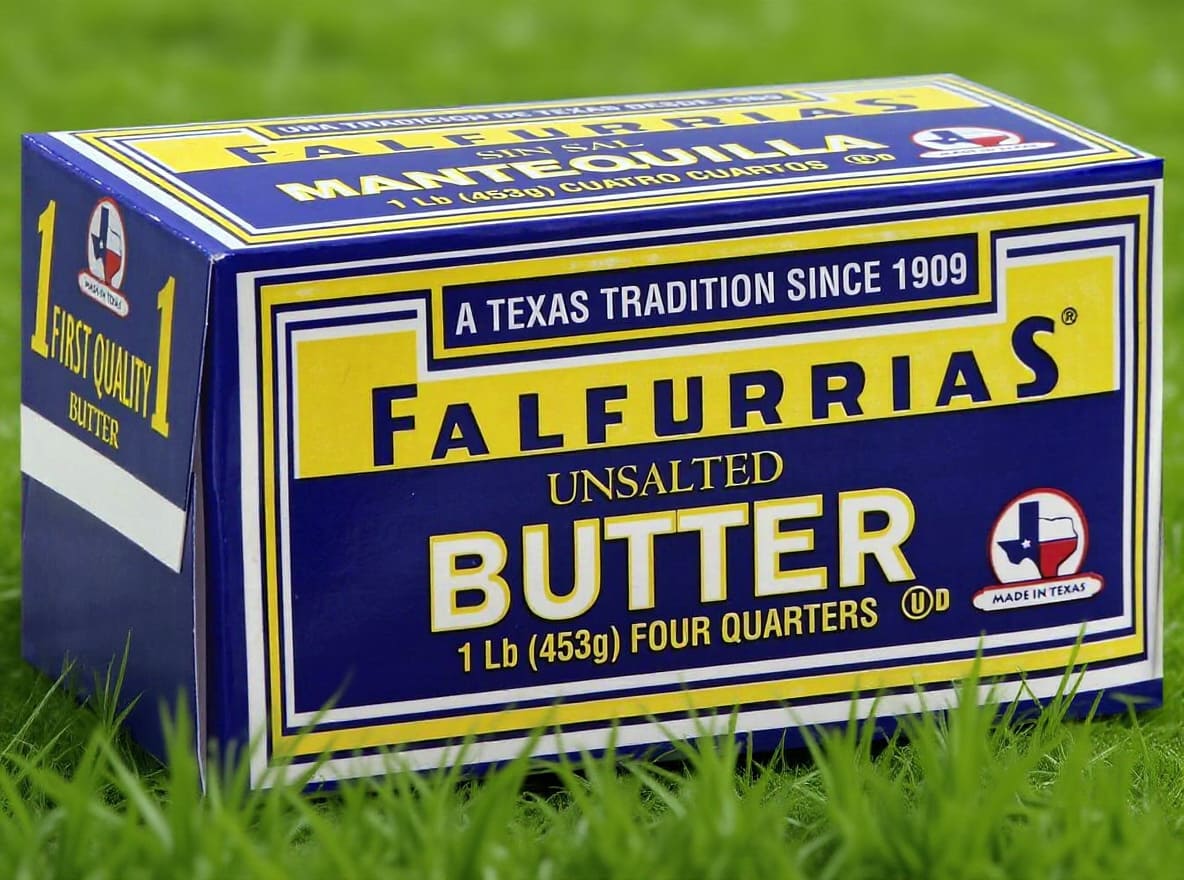
Iconic Texas: FALFURRIAS Butter
Texas is home to a number of nationally and internationally renowned brands, including Blue Bell Ice Cream, Southwest Airlines, Texas Instruments, Lone Star Beer, Dell, Imperial Sugar, and King Ranch.
King Ranch is a brand that literally grew out of a single brand—a cattle brand. King Ranch even has its own edition of Ford pickup trucks. And King Ranch also appears in the history of another venerable Texas brand, Falfurrias Butter.
The story takes a few twists and turns, but here is the shortened version of the connection: In 1895, Mifflin Kenedy, Richard King's partner in the original Santa Gertrudis Ranch, sold 7,000 cows to rancher Ed Lasater. These cows became the foundation of Lasater's cattle-breeding empire. (Incidentally, 35 years later, King Ranch purchased 108,000 acres of land from Lasater, along with a large number of cattle, to create the Encino Division of the King Ranch.)
People wondered whether the butter was named after the town or the town after the butter, but in fact both were named after Lasater's ranch, which was named after a grove of trees called La Mota de Falfurrias. Lasater reportedly claimed that the unique word “Falfurrias” came from the Lipan Apache language and, loosely translated, meant “Land of Heart's Delight.”
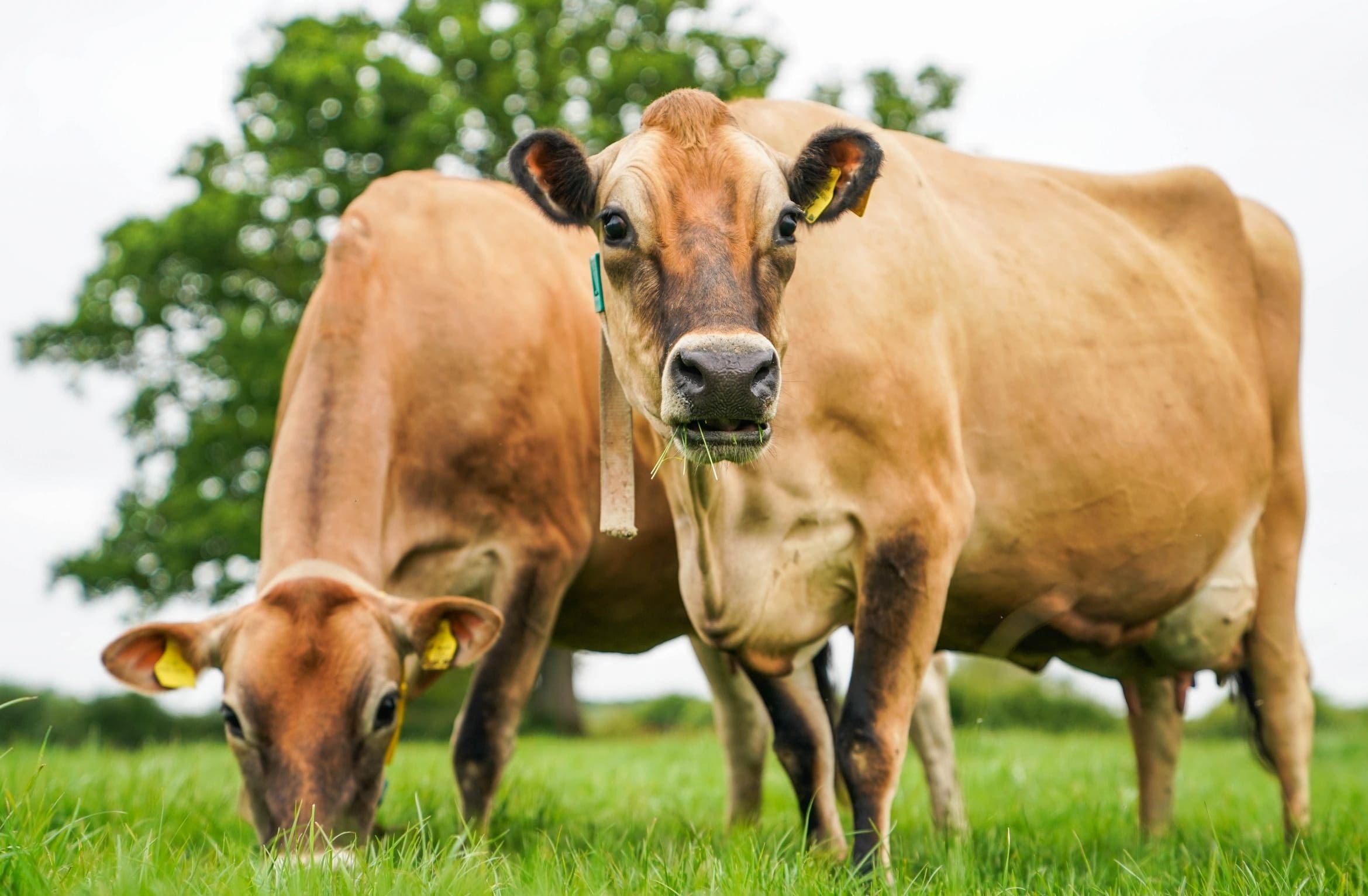
In 1904, he founded the town when he divided part of his ranchland into lots for sale to farmers and settlers. Five years later, Lasater's Falfurrias Creamery began producing Falfurrias Butter from the herd of Jersey cows for which Lasater became famous.
In those early days, butter was the town's best-known export and probably remains so today (although—spoiler alert—it is no longer actually produced in Falfurrias).
Even the school mascot—the Falfurrias Jerseys—was named after the actual makers of the butter: Jersey cows. At one time, Falfurrias was home to the largest herd of Jersey cattle in the world.
And that gave special meaning to the then-popular bumper sticker: “Watch Your Step – You're in Jersey Country.”
Falfurrias Butter remains a popular specialty brand. In Texas, it is sold in all the major grocery chains and some smaller ones as well. It has been very popular in northern Mexico for generations, and its packaging is labeled in both Spanish and English.
A friend told me that, as a child in Saltillo, he remembered his mother bringing him mantequilla dulce (sweet butter) de Falfurrias as a special treat for the children whenever she traveled to Texas.
I remember my father's friend telling me a story that was a common legend in Falfurrias: As a Texas Marine during World War II, he was wading ashore during the Battle of Okinawa when a crate of Falfurrias Butter struck him in the leg with a bolt. He found comfort in it, a reassurance from home that everything would be all right. Because Falfurrias Butter had military contracts, we accepted the story as true and concluded that the crate might have fallen from a Navy ship.
Falfurrias's golden age came in the 1920s, when it was sold “as far away as the East Coast,” Ed Lasater's grandson and namesake told a Dallas Observer reporter several years ago; after World War II, he added, the company restricted its market to Texas. Eventually, in the 1990s, the family sold the creamery; it has changed hands several times since then, but it is now owned by the giant dairy cooperative Dairy Farmers of America, which also produces Borden's and Breakstone's products.
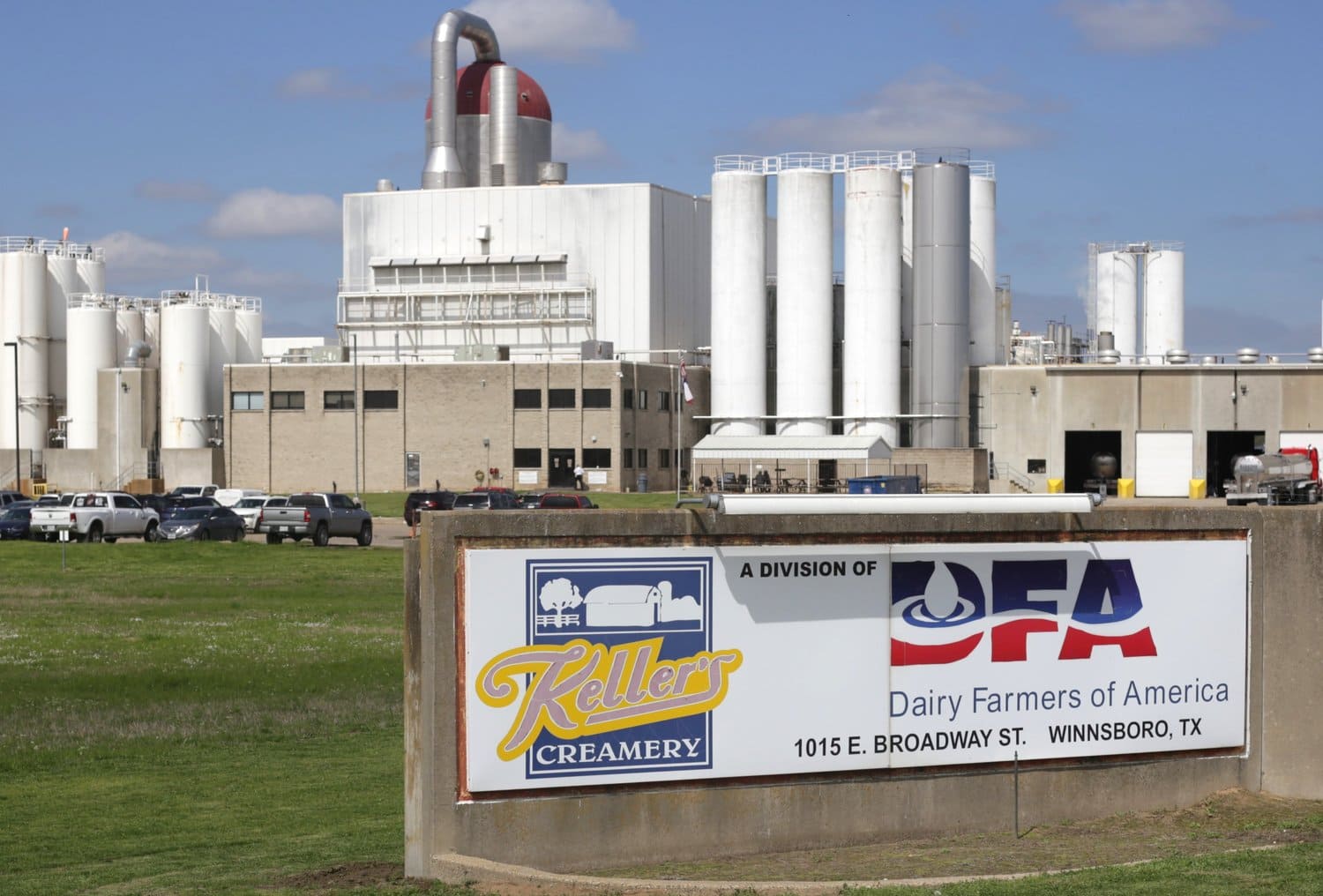
You can rest assured that Falfurrias Butter is still made in Texas—at the enormous Keller's Creamery plant in Winnsboro, east of Dallas, which is owned by DFA.
Today, when you drive through Falfurrias on Texas Highway 285, you can still see the vintage Falfurrias Butter sign on the side of the old Creamery building. The building is now occupied by the town's newspaper, Falfurrias Facts.
In the interest of full disclosure and ethical transparency, I must reveal that I, too, am an export from Falfurrias, and although I know which side my bread is buttered on, as the saying goes, I assure you that this does not affect the truthfulness of this commentary.


